What mushrooms can do: From floating islands to cleaner water
It’s peak mushroom season right now. But it’s not just mushroom hunters who are interested in them. Researchers in Dresden and Zwickau are working with mycelium, enzymes, and dyes. Here’s what they’re up to.
Read Aloud
0:00
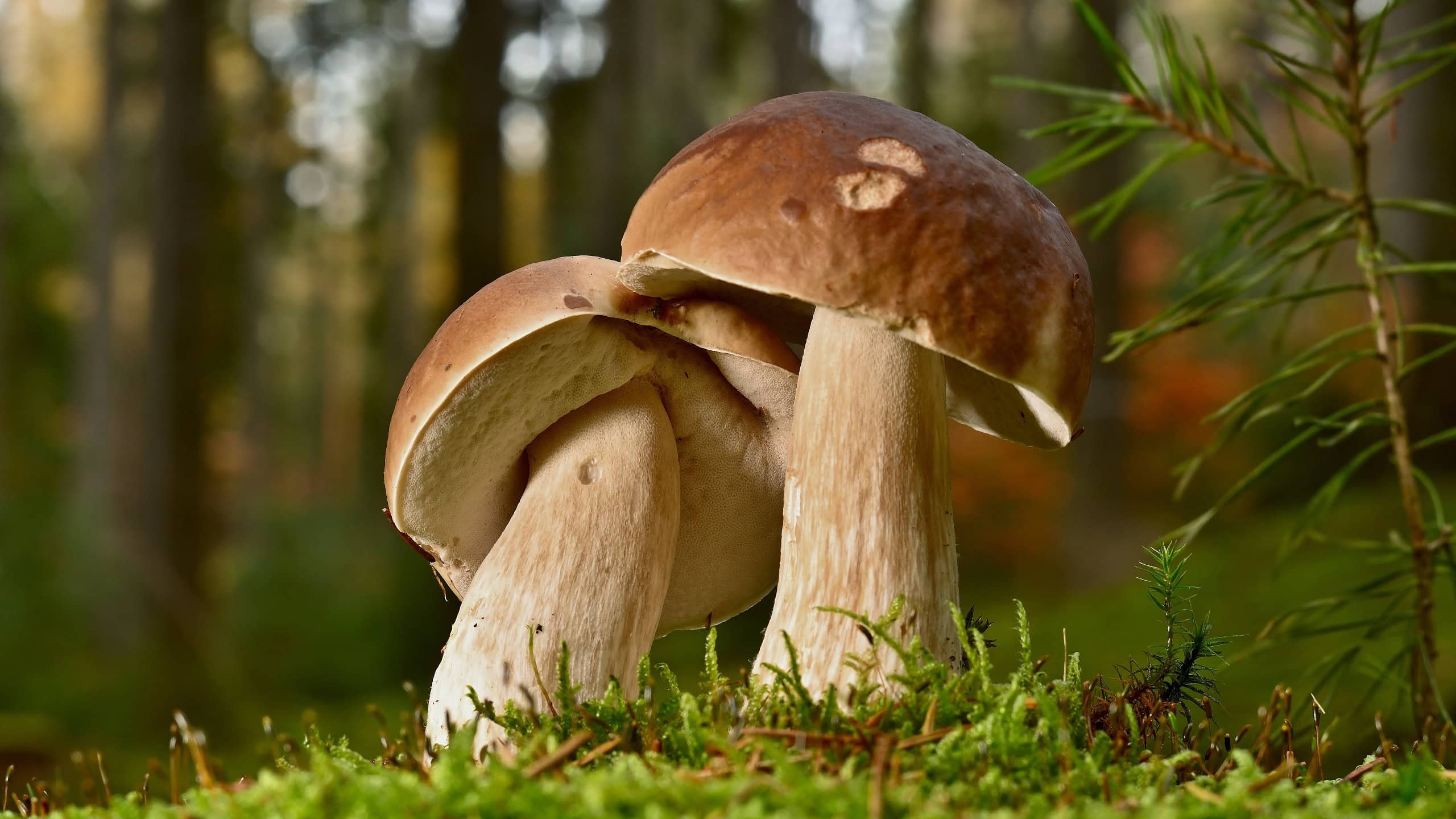
Porcini mushrooms in the forest: Only the fruiting body is visible. The actual mushroom forms a widely branched network in the soil – the mycelium. That is precisely what makes mushrooms so interesting to researchers. © jggrz/pixabay
Reeds and other aquatic plants grow right in the middle of the water. Everything is green on a floating island. However, this island did not form naturally. It was created with the help of a fungus. Researchers from Dresden have launched several such islands into an experimental pond in Pillnitz.
The idea originated from aquatic research at the Dresden University of Applied Sciences (HTWD). There, Lars Baldauf is working on planted floating islands as part of his doctoral thesis in Henning Günther’s research group. These islands could create new habitats in places where ponds, rivers, or other bodies of water have lost their natural shores due to human intervention. A key question is what materials can be used to manufacture the floating structures in an environmentally friendly way.
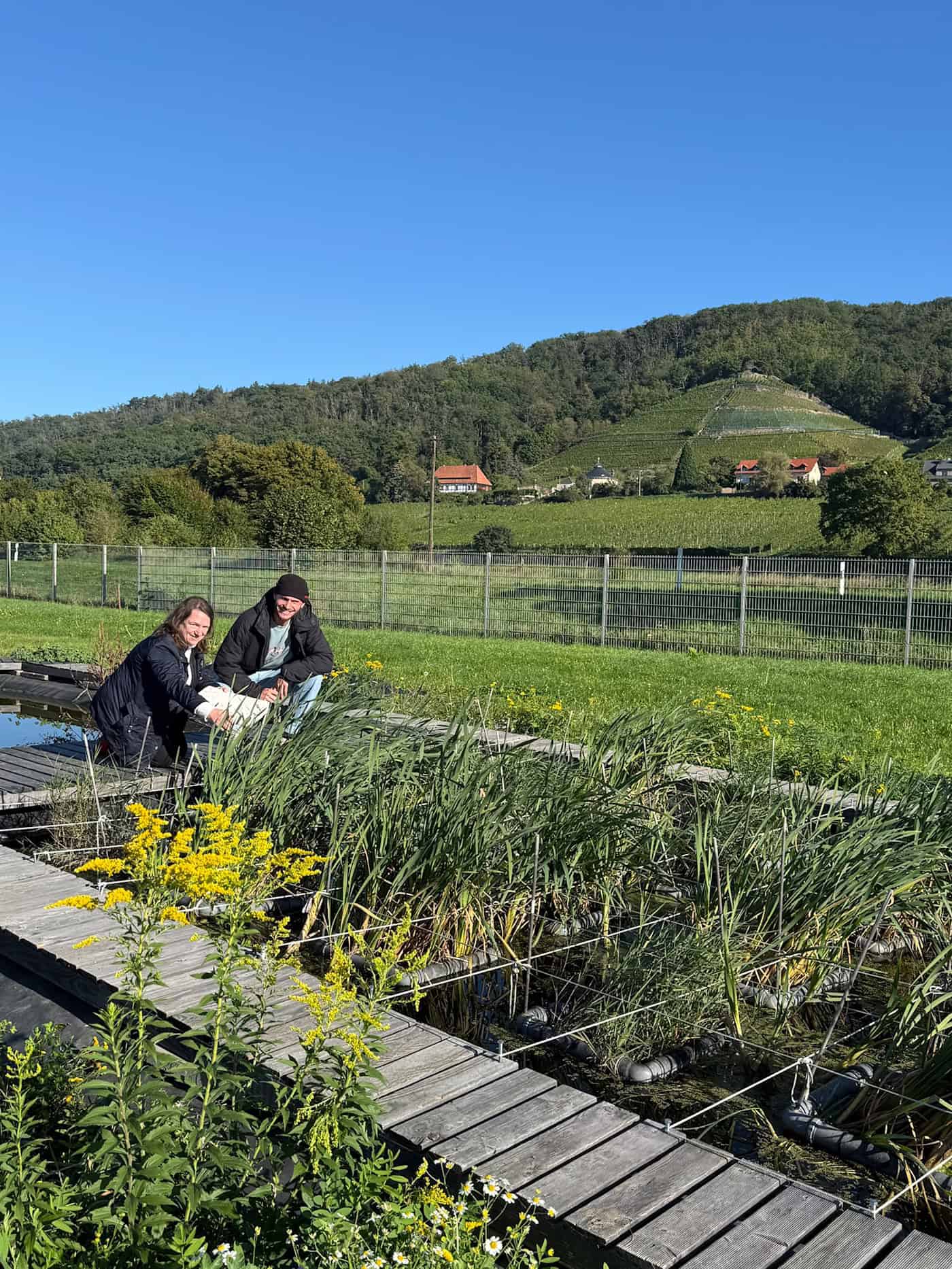
In their search for a suitable material, the researchers turned to Anett Werner. A PhD in bioprocess engineering, she researches at the Institute for Natural Product Technology at TU Dresden how the capabilities of fungi can be utilized technically. When the request from HTWD came, she didn’t have to think twice. “That appealed to me – I’d always wanted to make floating islands,” she recalls.
When fungi hold materials together
When people think of fungi, they usually picture porcini, button mushrooms, or chanterelles. It’s currently peak mushroom season in meadows and forests. Mushrooms are being gathered and eaten everywhere. But what we see is only the fruiting body. The actual fungus is hidden in the soil or in wood, where it forms a network. This mycelium consists of extremely fine fungal threads. They grow, branch out, and spread into ever-new areas. A single fungal network can thus extend across vast areas.
This ability makes the mycelium an attractive candidate for new materials. When it grows among wood chips or plant fibers, the fine filaments envelop the individual components and bind them together. To create the islands, the team first sterilizes the plant material, inoculates it with a fungus, and places it in a mold. There, the mycelium spreads for about two weeks and holds the floating structure together. The island then continues to grow outside the mold and is eventually dried. The fungus is no longer active at this point. Later, aquatic plants grow on the islands. “They serve as refuges for birds and insects,” says Anett Werner. The islands also provide shade for fish.
But floating islands aren’t the only thing that can be built from fungal mycelium. In the MycoMatrix project, Werner and her team investigated how this renewable raw material can be used, for example, to make panels and other building components.
A particularly unusual commission came from the Residenztheater in Munich. Two set designers were looking for an alternative to Styrofoam –which is frequently used in stage construction – for a production. The Dresden team was tasked with testing whether a large stage element could be constructed using fungal mycelium instead.
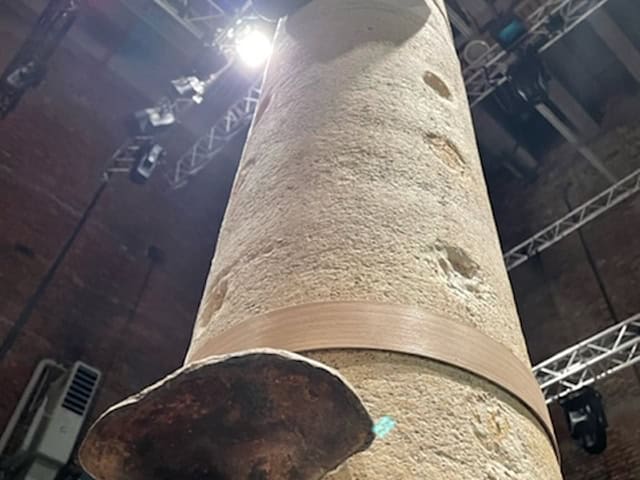
A tree-like column approximately six meters tall was needed. “We built it in six individual segments,” Werner explains. The individual parts were first grown in their molds and later assembled into the finished column.
Enzymes to combat residues in water
Originally, it wasn’t the mycelium that interested Werner in mushrooms. Her research group focuses on enzymes – proteins that enable or accelerate chemical reactions. Certain fungi release such enzymes to break down lignin, which gives wood its stability. The researchers want to harness this ability for water purification. “The goal is to remove drug residues and trace substances from the water using fungal enzymes.”
For XenoKat, the team attached these enzymes to metal spheres just a few millimeters in size. In the lab, this allowed them to break down residues of painkillers, antibiotics, and blood pressure medications, among other substances. For practical application, however, the method proved too inefficient. “The devices would have become much too large,” says Werner.
The researchers are now pursuing a different approach. The enzymes are to be enclosed as a solution between two membranes. These membranes retain the enzymes while allowing them to react with the unwanted substances. Once their effectiveness wanes, the solution can be replaced. In addition to TU Dresden, researchers at the West Saxon University of Applied Sciences in Zwickau are also working on this method.
Fungi can also produce dyes. Chlorociboria aeruginascens, for example, turns wood blue-green. The pigment responsible for this is xylindein. In the POET project, Werner’s research group is investigating how xylindein can be produced biotechnologically. The pigment could be used, for example, in textiles and wood. Production is already working in the laboratory. It becomes more challenging, however, when larger quantities need to be produced reliably.
Mycelium off the roll
The FungiMat early-career research group at the West Saxon University of Applied Sciences Zwickau (WHZ) is also exploring how fungi can be utilized on a larger scale. Instead of growing individual molded parts, the researchers aim to produce mycelium in a flat, continuous sheet. Simply put: mycelium off the roll.
“We want to develop the technology to grow fungi over large areas,” explains Guido Sopp. The professor of general business administration is primarily investigating whether such a process can also be operated economically. The mycelium is intended to grow evenly and thinly. If successful, it could be used, for example, in textiles, as a leather substitute, or in vehicle interiors. But Sopp cautions against unrealistic expectations. “There’s still a long way to go.” Together with companies, the team now wants to determine for which products the process is actually suitable and where it could replace conventional materials.
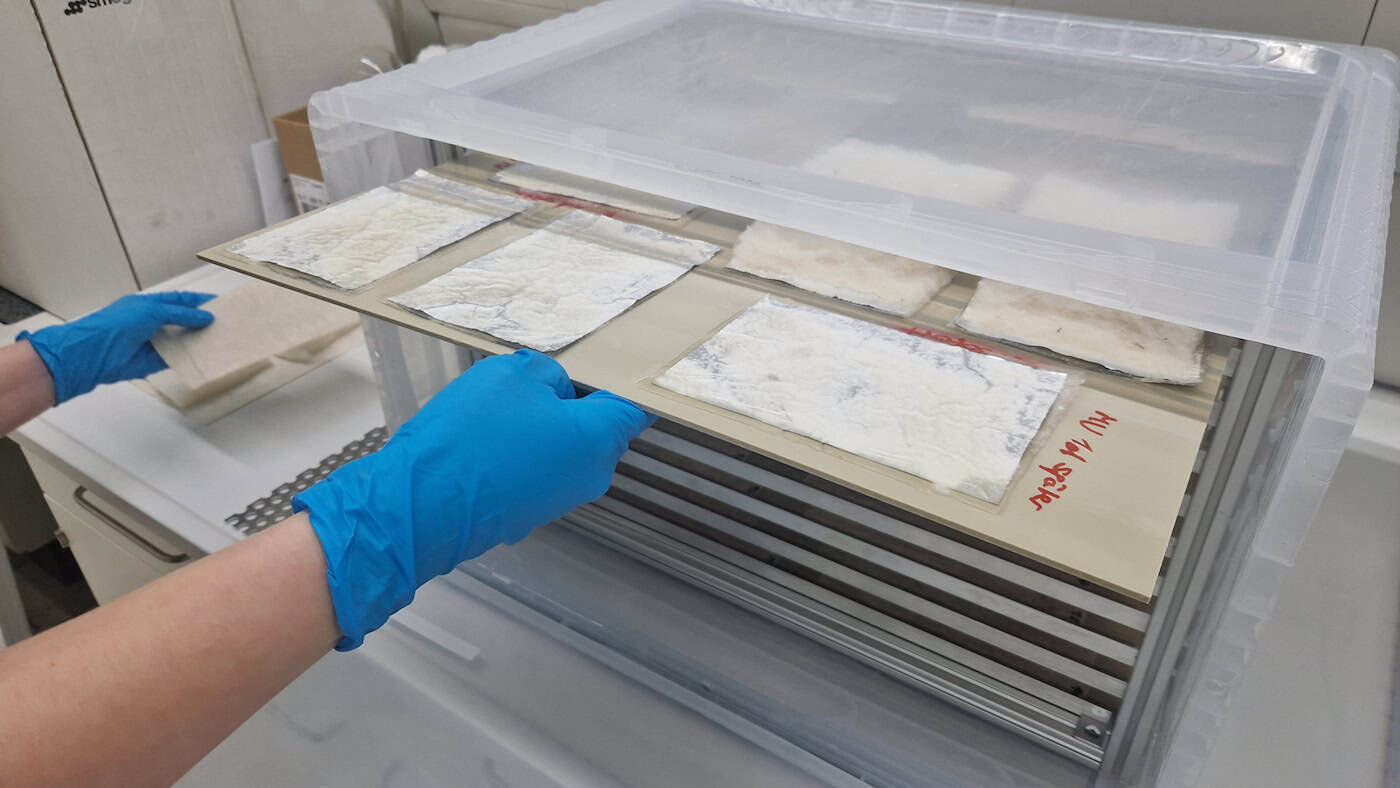
Anett Werner is familiar with the challenges of mushroom-based production from her own projects. A mushroom doesn’t grow at the push of a button. “We need energy to prepare the substrate,” she says. The finished product also has to be dried, and the fungus must be inactivated. “In between, we mainly need storage space.” With thicker components, there’s an additional challenge. If the layer becomes too thick, less oxygen reaches the interior and the fungus grows less effectively. Ten to twenty centimeters are no problem. Beyond that, they have to consider how to get additional oxygen into the interior. For Sopp, questions like these also determine whether production can be economically viable. “Storage isn’t cheap,” he says. A longer production time, however, could have other advantages, such as greater independence from disruption-prone supply chains.
FungiMat is therefore investigating not only the manufacturing process but also the life cycle and economic viability. What raw materials are needed? What emissions are generated? Can components be separated and reused later? After all, a material doesn’t automatically become sustainable just because a fungus is involved. Whether it actually offers benefits will only become clear over its entire life cycle.
A duck made of fungus
Through Biotopa, the Dresden-based company she co-founded, Werner is also bringing fungal biotechnology into schools. Together with the Bürgerwiese High School, she has been running a project for years in which young people experiment with mycelium themselves. This led to the creation of something that, at first glance, has little to do with biotechnology: a duck.
“We want to show the students what the bioeconomy means,” explains Werner. The students first learn how to cultivate fungi. They then fill molds with the fungus-infused material. After about three weeks, a duck has grown from it. The students then dry and decorate their ducks. At the end, the mycelium ducks compete against each other in a big race.
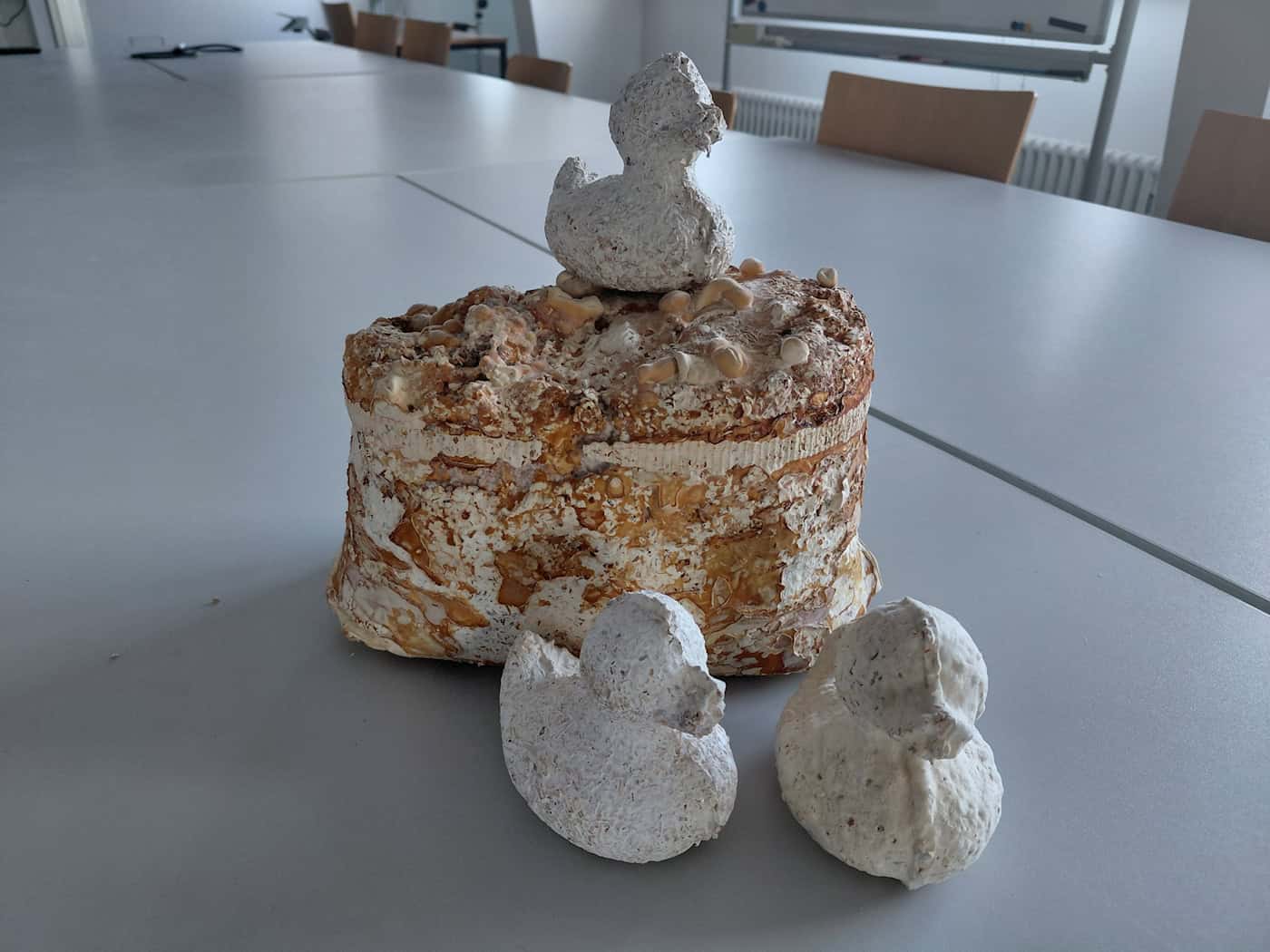
This allows young people to see how renewable raw materials can be used to create alternatives to fossil-based products.“ And along the way, we show them just how fascinating nature can be,” says Anett Werner. Sometimes, an interest in biotechnology might start with a duck.