"Fungal species are going extinct before we've even had a chance to get to know them"
Some fungi help plants, while others can damage entire crops. Yet many species have hardly been studied. Mycologist Ulrike Damme explains what makes fungi so elusive.
Read Aloud
0:00
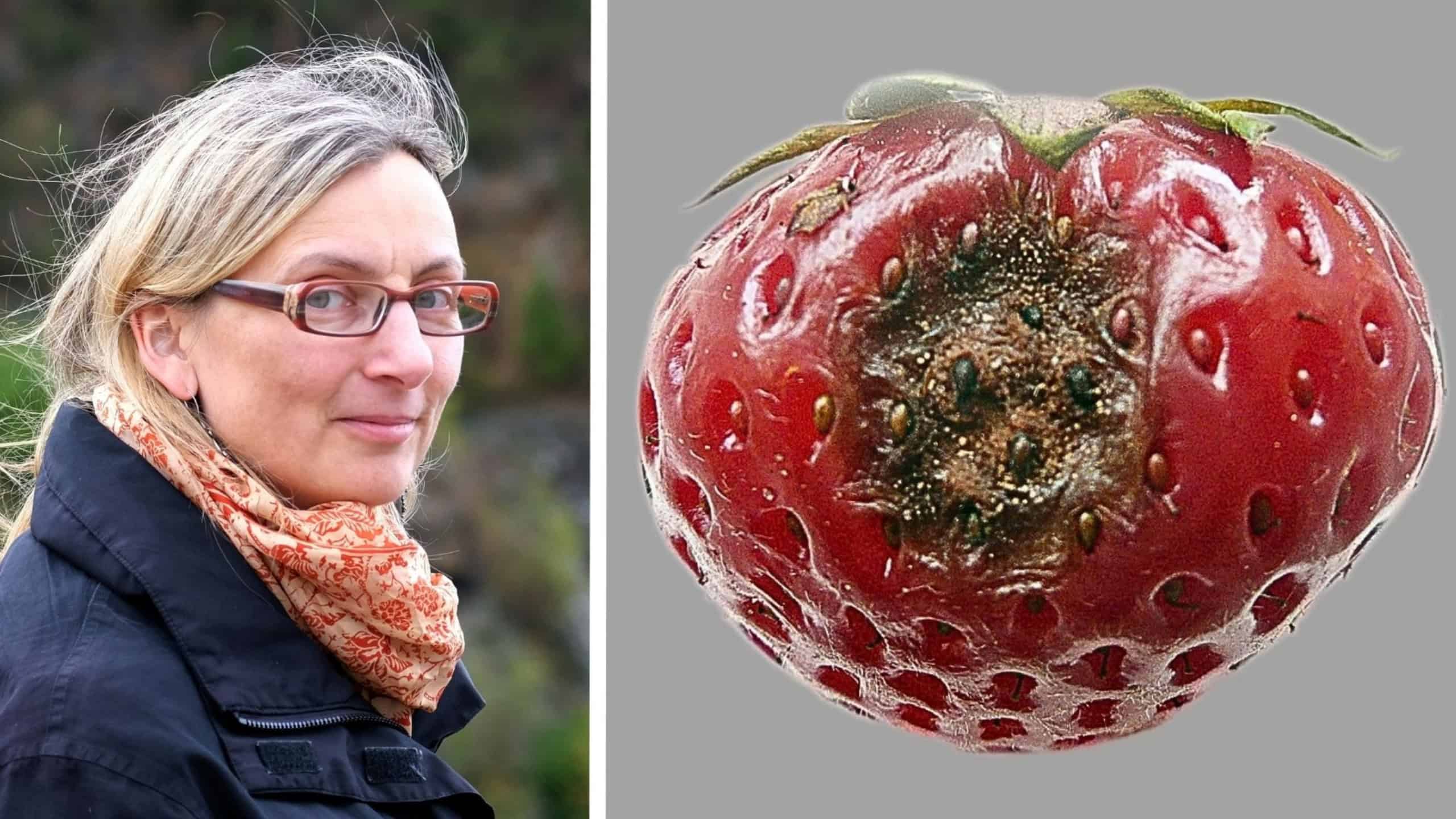
Mycologist Ulrike Damme of the Senckenberg Museum of Natural History in Görlitz is researching the diversity of fungi. On the right is a strawberry with fruit rot caused by the fungus Colletotrichum nymphaeae. © Ulrike Damm
Dr. Ulrike Damm studies the diversity of fungi at the Senckenberg Museum of Natural History in Görlitz. Many of them are tiny and barely visible to the naked eye. Some can cause diseases in plants and threaten crops. Yet of the estimated millions of fungal species worldwide, science has identified only a fraction so far. Here, the head of the Mycology Section explains why fungi are so difficult to identify and why climate change may lead to them causing plant diseases more frequently.
Ms. Damm, when we talk about fungi, many people think of porcini mushrooms, fly agaric, or button mushrooms. How much of the actual fungal world do we actually see?
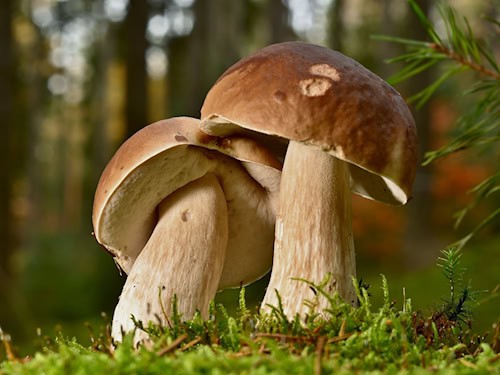
Only a tiny fraction. What we see as a mushroom in the forest, for example, is merely the fruiting body. The majority of the fungus exists as mycelium in the soil. This network can connect trees to one another and help them obtain water and nutrients. Fungi also break down organic matter. They live in and on plants and animals, are found in the air, and we even encounter them in our homes. Fungi are truly ubiquitous.
How many species of fungi are there, anyway?
So far, about 155,000 species have been described. We don’t know how many actually exist. Estimates range from just under one million to 16 million species. The general assumption is that there are between two and four million. Based on that, we would currently know only four to eight percent of all fungal species. Every year, about 2,000 to 3,000 new species are described.
How is it possible that we still know so little about such a large group of organisms?
Many fungi are very small and have only a few characteristics by which we can distinguish them. Furthermore, we repeatedly discover unknown species through molecular environmental analyses. For some, we know only their DNA sequence and the location where they were found. But we don’t know what they look like or how they live.
You focus primarily on these types of microfungi. How do you determine whether you’re dealing with a known species or a new one?
First, I isolate the fungus on an artificial culture medium and examine it under a microscope. This allows me to make a preliminary classification. But many microfungi look very similar. There are even different species that cannot be distinguished by their appearance. That’s why we also analyze the DNA. There’s a specific region of the genome that we use as a barcode for fungi. Often, this alone is enough to identify a species. Sometimes we need additional gene sequences. If neither the external characteristics nor the DNA match any known species, we may have discovered a new species.
How often has that happened to you personally?
Very often. I’ve described 137 species so far. And in our collection, there are well over 100 additional species that I already know are likely new. I’m still a long way from having sequenced all the isolates. So the work will keep me busy well beyond my retirement.
One focus of your work is the genus Colletotrichum. What kind of fungus is that?
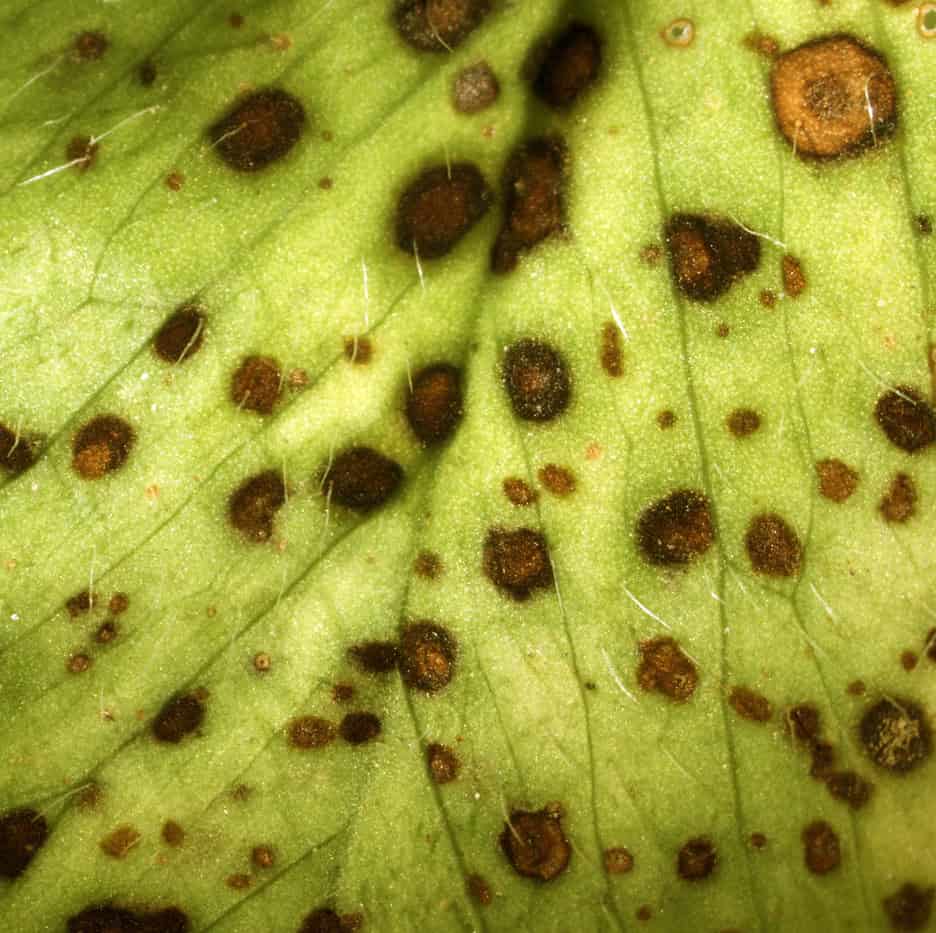
Colletotrichum is not a single species, but a very large genus with many different species. It is one of the world’s most significant genera of plant-pathogenic fungi. Some species, for example, cause dark spots on leaves or fruits and can trigger fruit rot. When I first began studying this genus, it was already known that it must be more diverse than previously assumed. By analyzing several genes, we were able to show that what were thought to be individual, variable species are in fact numerous distinct species.

Why is it so important to know exactly which species it is?
Because different species can have different biological characteristics and, for example, infect different host plants. Accurate identification is also important for plant protection and international trade. If a pathogen is misidentified during import, in the worst-case scenario, a quarantine pest that was not previously present here could be introduced and cause significant damage. That is why we have established a DNA database that allows us to identify such organisms as reliably as possible.
What consequences can fungal plant diseases have for us humans?
If crops are infested, leading to significant crop losses, this can, for example, affect the availability and prices of food. Fungi can damage plants in a wide variety of ways. Some attack the roots, others the leaves, stems, or fruits. Fungi can also grow inside woody plants, causing tissue to die off. This can lead to the death of individual branches or even entire trees.
Is climate change altering these fungal diseases?
Definitely. For a plant disease to break out, several factors must align: a susceptible host plant, an aggressive pathogen, and suitable environmental conditions. We call this the disease triangle. Climate change can influence all three factors. Higher temperatures can make fungi that originally come from warmer regions feel more at home here. At the same time, drought weakens plants and makes them more susceptible. Some fungi are already present in a plant and only cause disease once the plant is weakened.
The Senckenberg Museum of Natural History in Görlitz preserves approximately 150,000 fungal specimens. Why does research still need such collections in the age of DNA analysis?
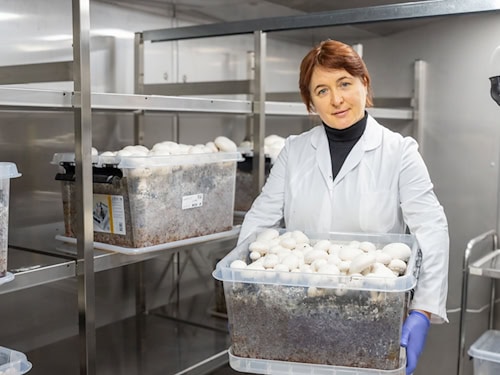
We need the collections precisely for genetic studies. Our fungarium includes fungi from a wide variety of groups, ranging from forest fungi to tree and bark fungi, as well as many plant-pathogenic fungi. In addition, we have a collection in which fungal isolates are preserved alive. For fungal systematics, we need material from as many regions as possible and, in the case of pathogens, from different host plants. That’s why other specialists also borrow specimens from our collection.
Can such a collection also reveal anything about changes over the past decades?
Yes. Our collection was established about 50 years ago. We can compare older fungi with those of today – for example, in terms of their contaminant levels, genetic changes, or fungal diversity. The collection may also preserve species that have since become extinct. And in the future, there will certainly be research methods we haven’t even thought of yet.
Intensive research is currently underway to use fungi for new materials, food, or other applications. Are you pleased by this growing interest?
The applications are interesting. But another point is very close to my heart: In my view, the focus is too heavily on the application. The importance of basic research is underestimated. I’ve seen people working with fungi without knowing exactly what organism they’re actually dealing with. But for resistance testing, for example, I need to know my test organism very precisely.
Is there a lack of funding for basic research?
It’s difficult to get funding for this. Funding programs often come with the expectation that an application will also be delivered. But basic research needs to be supported more strongly, especially when it comes to fungi. We still know far too little about their diversity.
At the same time, we talk a lot about species extinction. Do we even know which fungal species we’re losing?
Especially among microfungi, species are likely going extinct without us ever having learned about them. When larger organisms like plants or animals disappear, we may simultaneously lose microorganisms that are specialized to live with them. That’s another reason why it’s so important to document their diversity in the first place.
If people were to take away just one thing from this interview, what should they know about fungi?
That there are far more fungi than we currently know of. We encounter them all the time, even if we aren’t aware of it. Their lifestyles are extremely diverse. And they are incredibly important to nature.