
Only 5% of construction companies track CO₂ emissions
Every liter of diesel and every metric ton of cement comes at a cost to the climate. Construction companies have been paying that price for a long time. Yet hardly any company knows how much CO₂ it emits itself.
Read Aloud
0:00
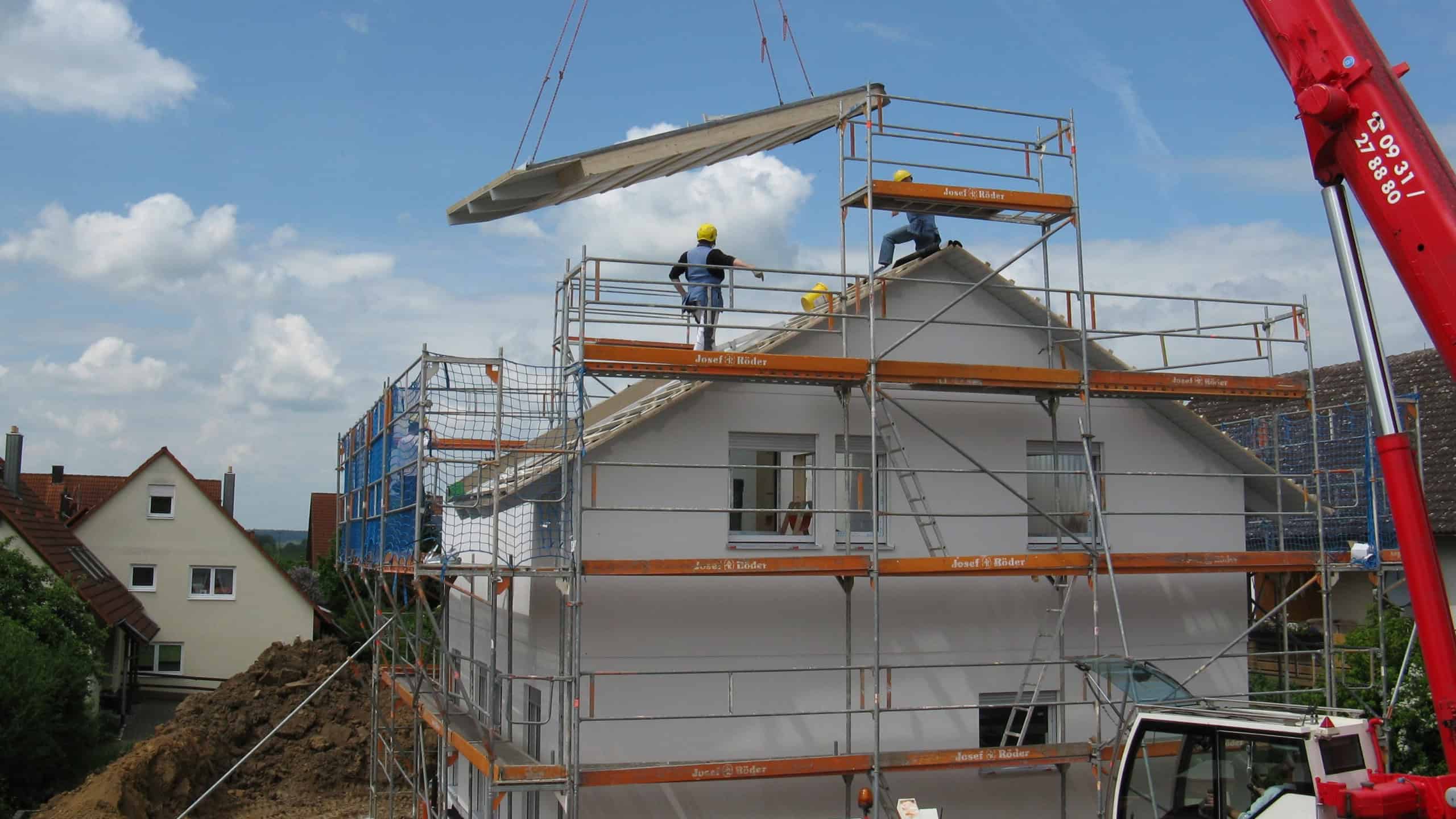
Whether it's building materials, machinery, or transportation: Building a house generates CO₂. According to a study by the Technical University of Dresden, only five percent of German construction companies track their CO₂ emissions. © pixabay
Anyone who fills up with diesel is helping to pay for climate protection. Since 2021, every liter has included a surcharge for the greenhouse gas carbon dioxide, or CO₂. Construction companies pay such surcharges in many areas. They’re included in the fuel for excavators, in electricity, in cement, in truck tolls, and in waste disposal. Yet very few companies systematically track how much carbon dioxide they generate themselves.
This is shown by a study from the Technical University of Dresden (TUD). To this end, researchers from the Faculty of Economics surveyed 601 construction companies nationwide in the winter of 2025/2026. According to the study, only five percent track their carbon footprint. This figure indicates how much greenhouse gas a company emits within a year. This also includes CO₂ generated during the production of purchased building materials.
The researchers initially published the results in a study report. A peer-reviewed scientific publication is still pending.
Over 60 companies from Saxony included
22 percent of the surveyed companies take CO₂ emissions or environmental costs into account when calculating the costs of their construction projects. Small businesses do this about as often as large ones. The situation is different when it comes to the carbon footprint. Among micro-enterprises with fewer than ten employees, 2 percent track it, while 38 percent of companies with 250 or more employees do so.
Sixty-four companies from Saxony participated. Here, only 3 percent systematically track their emissions. However, one in five companies already factors in CO₂ or environmental costs in its construction projects.
“Smaller construction companies include CO₂ in their bids just as often as large ones,” says study director Philipp Richter. “They hardly know their own emissions, even though the data is right there in their accounting records.” All that’s missing is the decision to take a closer look.
The pressure comes indirectly
Under the new EU rules, only very large companies are required to report their emissions. Nevertheless, the issue is also affecting small firms. Large clients are asking their subcontractors for this information. For certain public contracts, CO₂ emissions are factored into the evaluation. Banks also take climate risks into account when granting loans.
In addition, there are new requirements for buildings. According to an EU directive, starting in 2028, a full life-cycle CO₂ assessment must be prepared for new buildings with more than 1,000 square meters of floor space. Starting in 2030, this requirement will apply to all new buildings. It’s not just about how much energy a building will consume later on. The production of building materials, the construction process, and the eventual demolition are also taken into account.
Compared to other industries, the construction sector lags behind. According to an older survey by the state-owned development bank KfW, across all industries, about 16 percent of companies in Germany know their carbon footprint. However, the Dresden researchers point out that the surveys are not directly comparable.
Much data is already available
At the same time, the construction industry generates significant amounts of greenhouse gases. According to the UN Environment Programme, the construction and operation of buildings account for about 37 percent of global energy- and process-related CO₂ emissions. The production of building materials such as cement and steel, as well as the heating and cooling of buildings, are particularly significant contributors.
The Dresden-based scientists therefore see untapped potential. By tracking emissions, for example, companies can identify where machinery consumes large amounts of diesel or where energy can be saved. This could also reduce operating costs.
To get an initial overview, companies don’t have to start from scratch. Invoices for diesel, heating oil, gas, and electricity are usually already on file in the accounting department. The amounts consumed can be used to calculate how much carbon dioxide is produced as a result. For a more comprehensive assessment, data on building materials, transportation, and waste disposal must also be included.
The study may even overestimate how widespread CO₂ tracking actually is. The researchers suspect that companies already addressing this issue were more likely to participate in the survey.
Study report:
Richter, P. & Leistner, P. (2026): CO₂ Management in the German Construction Industry. Benchmark and Guide for Small and Medium-Sized Enterprises. Study Report. Dresden University of Technology.