Wood-fiber insulation without petroleum? New bonding fiber put to the test
Until now, wood-fiber insulation mats have mostly contained plastic fibers made from petroleum. Researchers at the IHD in Dresden are now testing an alternative made from cellulose and hope this will also make recycling easier.
Read Aloud
0:00
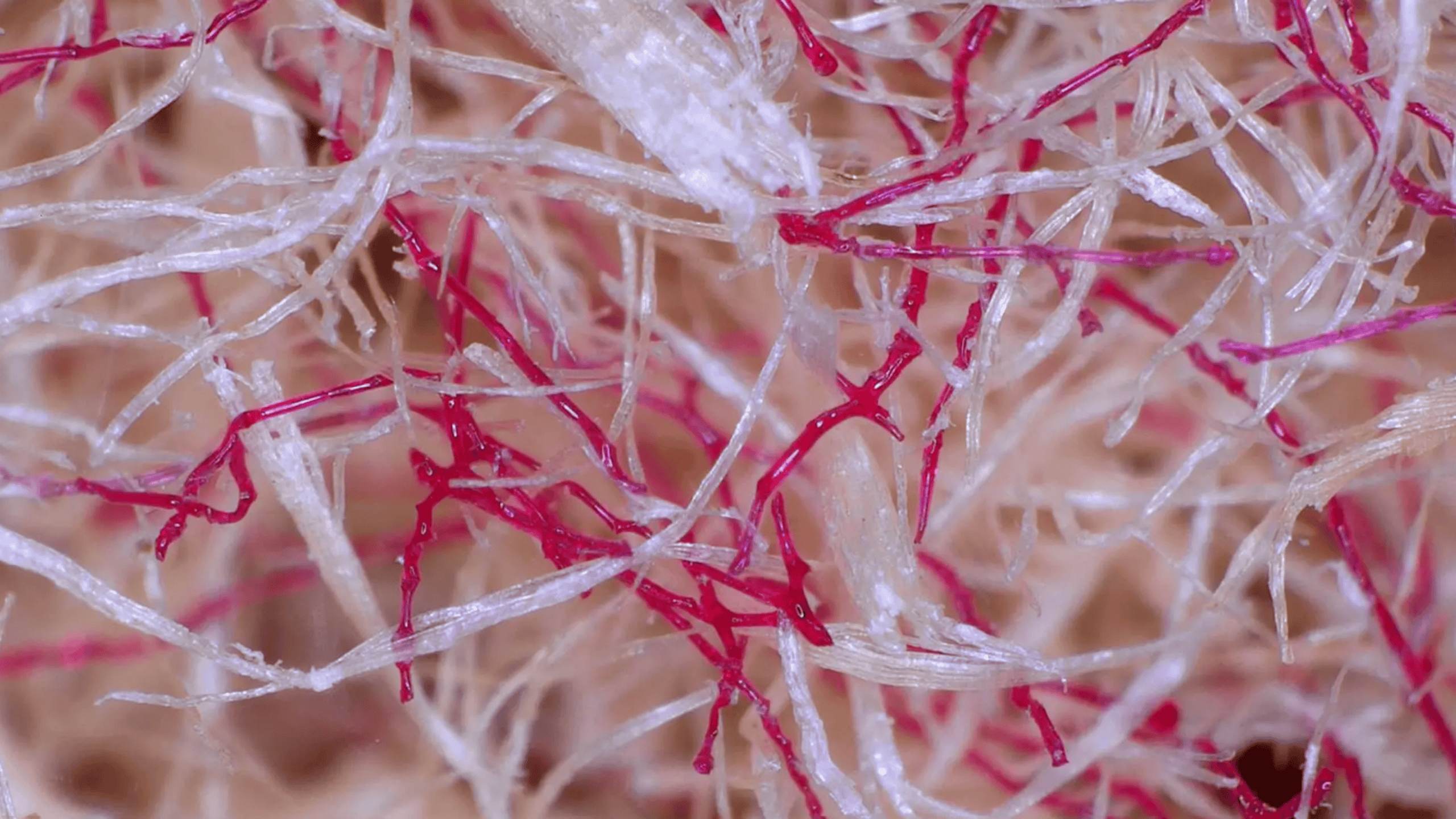
The red-colored binding fibers show how they are distributed among the wood fibers. Researchers are testing them as an alternative to the petroleum-based plastic fibers used to date. © IHD Dresden
More and more people are turning to natural materials when building homes. Wood fibers are used to insulate houses. However, such insulation mats have generally not been able to do without plastic entirely. Special plastic fibers are embedded between the wood fibers to hold everything together. These are made from petroleum and make recycling difficult later on.
The Dresden Institute for Wood Technology (IHD) and the German Institutes for Textile and Fiber Research in Denkendorf (DITF) are therefore searching for an alternative. In the “CelluWoodFlex” project, they are developing new binding fibers made from bio-based cellulose esters.
Cellulose instead of petroleum
Cellulose is a natural substance and, among other things, an important component of wood and cotton. For the new binding fibers, the researchers are using so-called cellulose esters, which are produced from cellulose. The material initially comes in granule form. It is melted and spun into fine fibers. The fibers are then cut to size and mixed with the wood fibers. During the production of the insulation mat, they bind the wood fibers together.
The idea behind this goes beyond simply replacing petroleum. After use, the wood fibers and binding fibers should be separable from one another as much as possible. Both could then be reused as raw materials. Whether this actually works remains to be seen.
First insulation mats produced
For initial tests, the researchers dyed the new binding fibers red. This allowed them to see how evenly they were distributed among the wood fibers. According to the IHD, this worked satisfactorily. The first flexible insulation mats made with the new fibers have also already been produced.
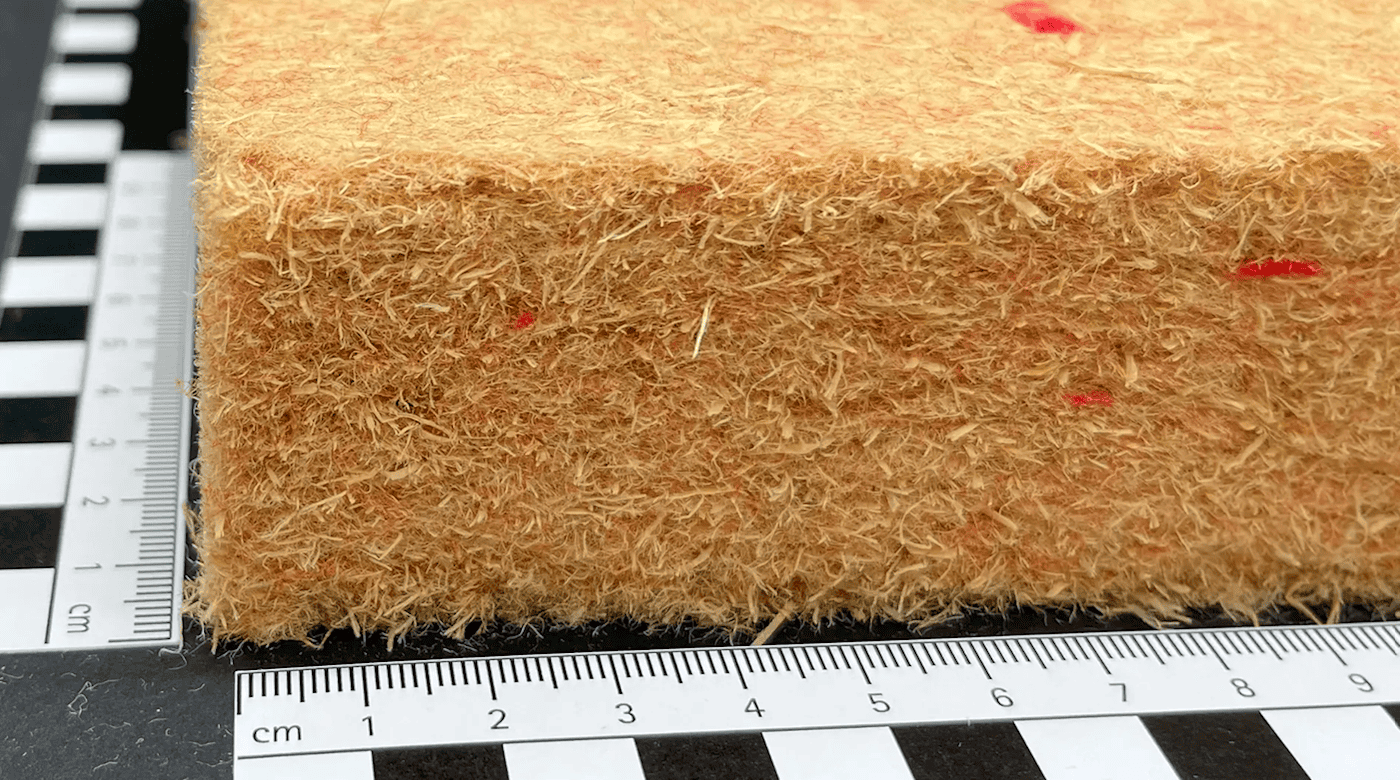
However, this does not yet prove that the new fibers are suitable for use in wood fiber insulation. The project is still in its early stages. Next, the DITF aims to improve the production of various cellulose ester fibers. At the same time, the IHD is working on how to dose the fibers and integrate them into the existing production process for insulation mats.
Future tests will need to show how well the new fibers hold the mats together. The crucial question of recycling also remains unanswered: Can wood fibers and binding fibers actually be separated and reused after use? Fourteen partners from academia, industry, business, and the construction sector are supporting the project. “CelluWoodFlex” is funded by the Federal Ministry for Economic Affairs and Energy.