Dresden-based rocket startup RATLOG makes the leap to Silicon Valley
Four students at TU Dresden want to develop reusable heavy-lift rockets. Their startup, RATLOG, is working on an engine designed to use significantly fewer components. The founders have now been accepted into one of the world’s most renowned startup programs.
Read Aloud
0:00
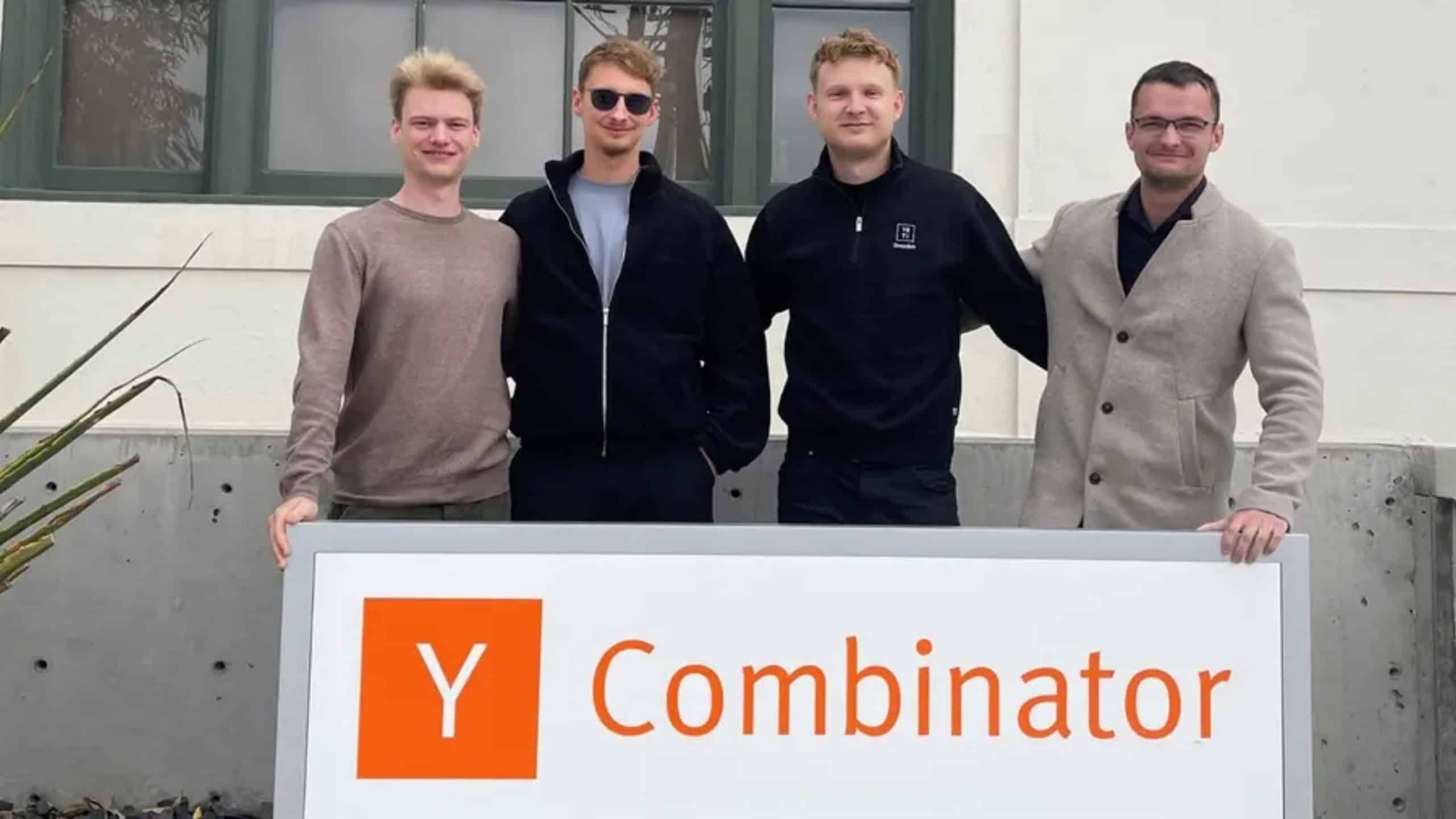
The four founders of the Dresden-based aerospace startup RATLOG have been accepted into Y Combinator in San Francisco with their company. There, they are working on their technology for reusable heavy-lift rockets. © RATLOG
Without satellites, our daily lives would look very different. Satellites guide our GPS systems. They provide data for weather reports and bring TV images into our living rooms. But every satellite needs a rocket to carry it into space. As more and more satellites are set to enter Earth’s orbit, there is a growing demand for additional launch capacity and rockets.
Four students from the Technical University of Dresden (TUD) aim to address this very need with their startup, RATLOG. They have now been accepted into Y Combinator in San Francisco, one of the world’s best-known accelerator programs for startups. Charlie Weise and Paul Kunhart are studying aerospace engineering, Felix Kelm is studying electrical engineering, and Matty Driesnack is studying business administration. The four founded their company in 2025. They aim to develop reusable heavy-lift rockets capable of launching large payloads into space.
To this end, they are working on a novel propulsion system. It is designed to require up to 90 percent fewer components than conventional designs. This could make manufacturing significantly easier and more cost-effective.
After just a few months, the team had developed and successfully tested a first functional prototype. Exactly what was tested in this trial and how capable the technology already is is not clear from the information provided by TU Dresden. The first potential customers have submitted letters of intent for future rocket launches. The founders received support from Thomas Kirchner and the Dresden-based YETI Fellowship program, among others.
Europe is looking for new rockets
The space industry is unlikely to lack potential customers. In 2025, there were 329 attempts worldwide to reach Earth orbit – more than ever before. About half of these were carried out by the U.S. company SpaceX. Its Falcon 9 rockets can be partially reused after flight, which reduces the cost of subsequent launches.
Europe has not yet put any comparable reusable orbital rockets into regular service. The European Space Agency (ESA) is therefore supporting new rocket companies to become more independent from other spacefaring nations.
In September, the Munich-based company Isar Aerospace achieved a breakthrough. Its Spectrum rocket launched satellites from Norway – the first time a commercial rocket from the European mainland has placed satellites into Earth orbit. However, Spectrum is designed for smaller payloads and is not yet reusable.
From the lecture hall to Silicon Valley
For the four Dresden-based founders, the focus for now is not on a rocket launch, but on further developing their technology and securing funding for their company. Y Combinator is set to help them with this. Under its standard terms, the U.S. program invests $500,000 in each accepted startup and supports the teams with advice and connections to investors.
“I first heard about Y Combinator two years ago in Prof. Schefczyk’s lecture on ‘Financing with Venture Capital.’ The fact that we’re now part of it ourselves is really something special,” says co-founder Matty Driesnack. Venture capital is risk capital. Investors provide funding to young companies even though it’s still uncertain whether their business idea will succeed.
Currently, the four are working on their technology in Silicon Valley, seeking additional customers, and preparing for the next round of funding. The so-called Demo Day is scheduled for December. There, they will present their company to international investors.
It will likely be some time before the first RATLOG rocket takes off. So far, the team has tested a prototype. In December, they’ll first have to master a completely different task: convincing international investors of their idea.