Saxony: A land of science – research with impact
Research can save lives, create jobs, and transform entire regions. A journey through Saxony shows what science can achieve – and why its value sometimes becomes apparent only decades later.
Read Aloud
0:00
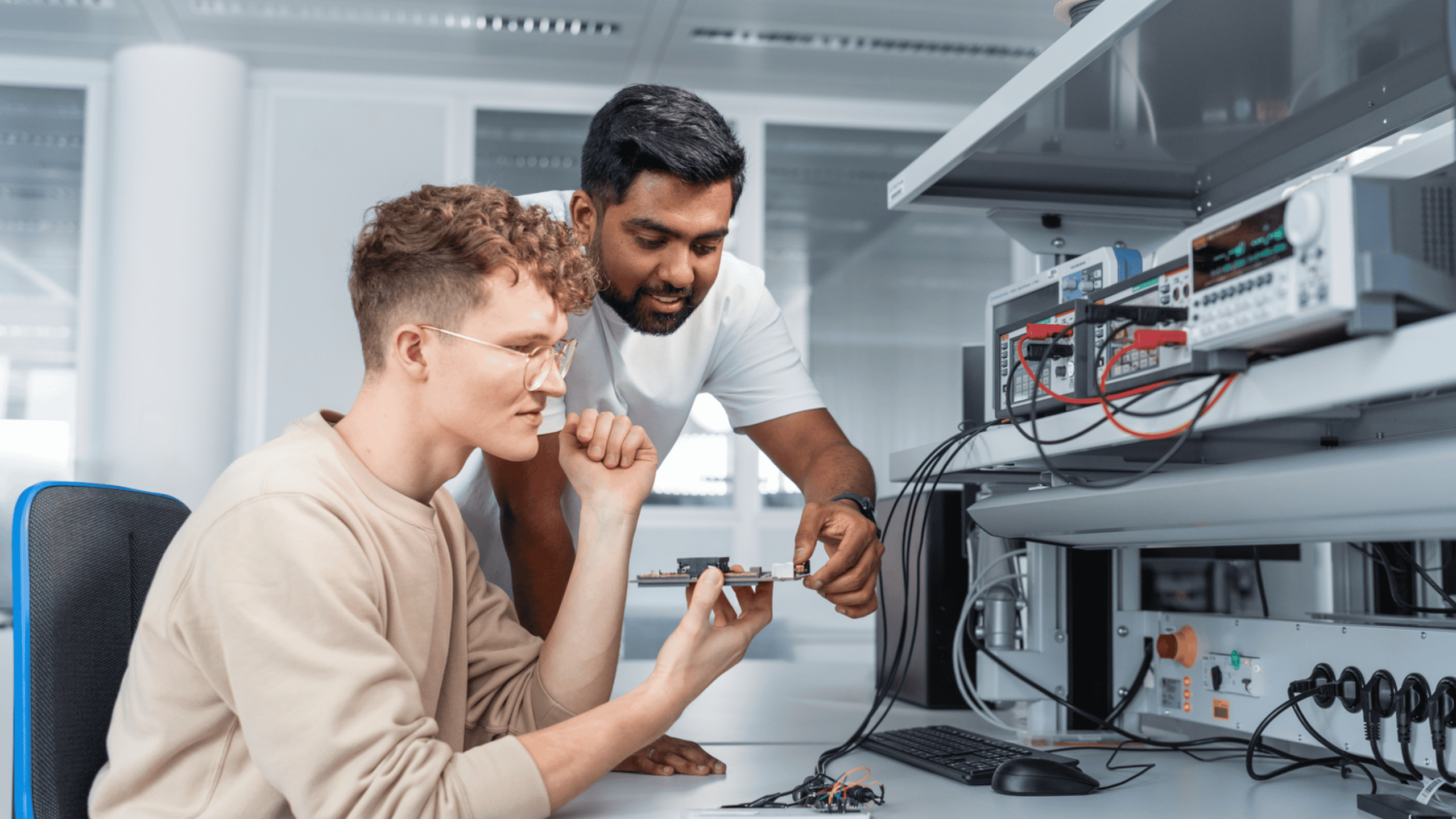
From research to technology: At Infineon’s development center in Dresden, experts are working on new solutions for automotive electronics and artificial intelligence. © Infineon
Martin Wermke is a physician. To determine whether a cancer treatment is working, he relies on data. He analyzes lab results and diagnostic images. But when it comes to one of his patients, the doctor uses a word that seems completely out of place with this clinical approach: miracle. That patient is Stefan Ebert. In 2022, doctors in Dresden diagnosed him with an aggressive form of lung cancer. “The fact that, more than three years later, he hasn’t developed any new metastases is truly nothing short of a miracle.”
Ebert was 38 when doctors discovered a lung tumor with metastases in the lymph nodes between his lung and heart. “I went to Dresden University Hospital, where I received chemotherapy and radiation,” recalls the 43-year-old. But none of that stopped the cancer. Half a year later, he was offered the opportunity to participate in a study on a novel immunotherapy. “I didn’t hesitate for a moment because I was glad there was still a chance.”
For six years, scientists at the National Center for Tumor Diseases Dresden (NCT/UCC) at Dresden University Hospital have been conducting research on this therapy. It influences the immune system in such a way that it effectively combats the cancer. To do this, doctors remove tumor tissue that also contains immune cells. “A laboratory in the U.S. selectively multiplies the tumor-targeting immune cells from this tissue and, so to speak, prepares them for our patients so that they can better recognize and fight tumor cells,” Wermke explains the principle. These trained immune cells are then returned to the patient.
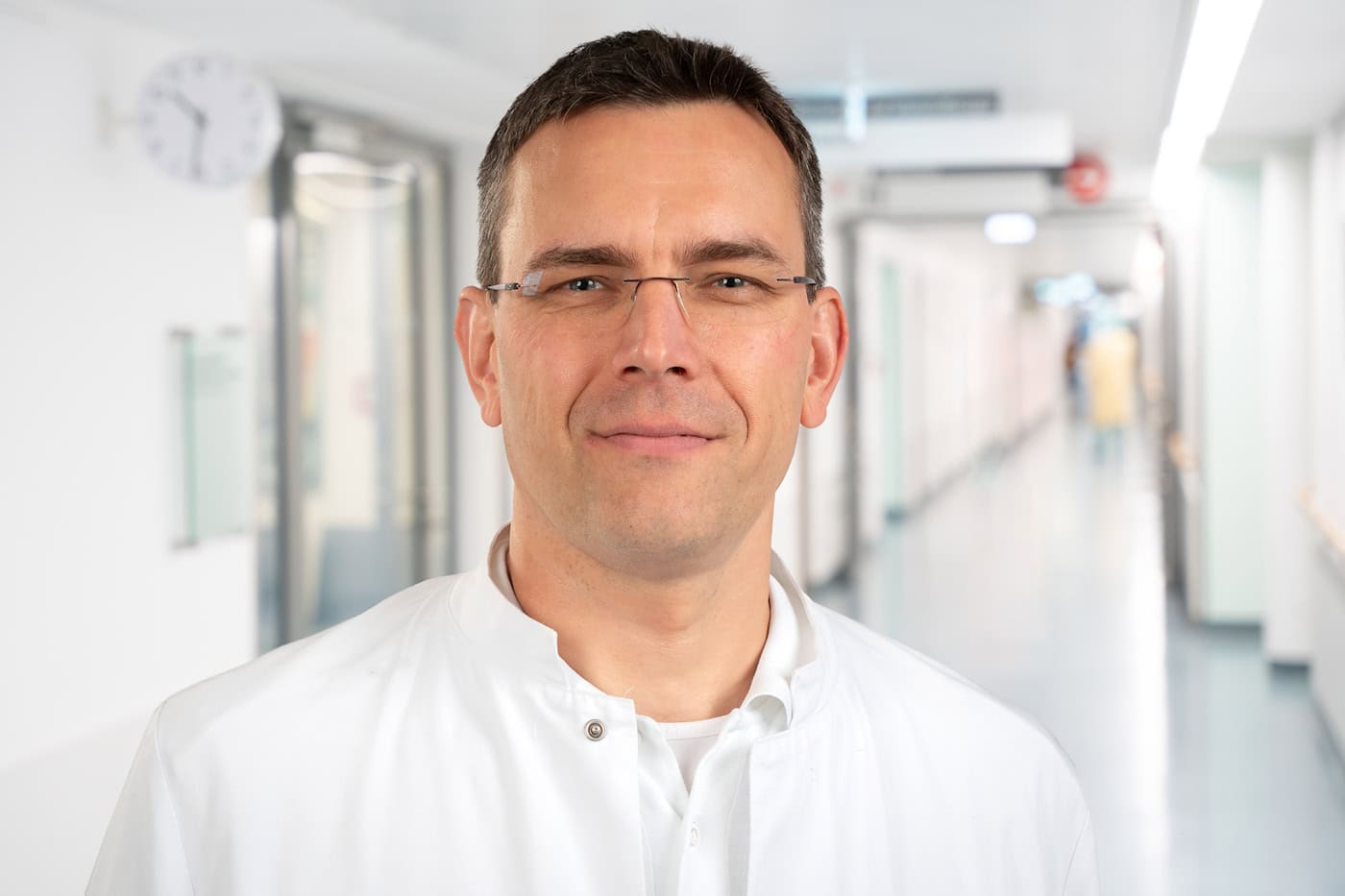
Ebert’s tumor shrank significantly after just a few weeks. “We know from other studies that about 20 percent of patients respond well to this type of therapy,” says his treating physician. Scientists in Dresden are continuing their research to determine how the success rate can be increased. In as little as four to five years, this therapy could become part of the standard of care for patients with lung or skin cancer.
A Research Hub in Numbers
Ebert’s story demonstrates what science can achieve. It is an example of the many questions researchers in Saxony are working on. The Free State boasts a dense research landscape. This includes, among others, 15 state universities and over 50 non-university institutions. The Fraunhofer Society alone operates 18 institutes in Saxony. In addition, there are locations run by the Max Planck Society, the Helmholtz Association, the Leibniz Association, and other organizations.
In 2024, approximately 3.9 billion euros were invested in research and development in Saxony. The total working hours of all employees in this sector are equivalent to over 29,000 full-time positions. Saxon institutions are also successfully applying for European research funding. Since 2021, universities, research institutes, companies, and other organizations have secured nearly 425 million euros from the Horizon Europe research program. “Science and research are indispensable drivers of Saxony’s economy and social progress,” says Minister of Science Sebastian Gemkow.
From Knowledge to Microchips
Sometimes it takes decades for research to bear fruit. Dresden is a prime example of this. More than 60 years ago, work began here on semiconductors, the foundation of modern microchips. Semiconductors allow us to control whether and how well electric current flows. This results in tiny electronic switches, millions of which work together on a single chip.
In 1961, physicist Werner Hartmann founded the Research Center for Molecular Electronics in Dresden. There, work was conducted on semiconductor devices and, later, on integrated circuits. In the decades that followed, the city became the center of microelectronics in the GDR. After reunification, many companies left, but the knowledge and skilled workers remained.
One of them was Uwe Gäbler. During the reunification, he studied electrical engineering at TU Dresden and then moved to what is now the Fraunhofer Institute for Photonic Microsystems (IPMS). There, he worked on the development of chips. When Siemens built a new semiconductor plant in Dresden in the 1990s, Gäbler made the move to the private sector in 1997. Today, he heads the development center for automotive electronics and artificial intelligence at Infineon. “The history dating back to the GDR era is a key reason why Dresden is such a strong hub for microelectronics,” he says. “It was the knowledge and the skilled workforce that were already here.”
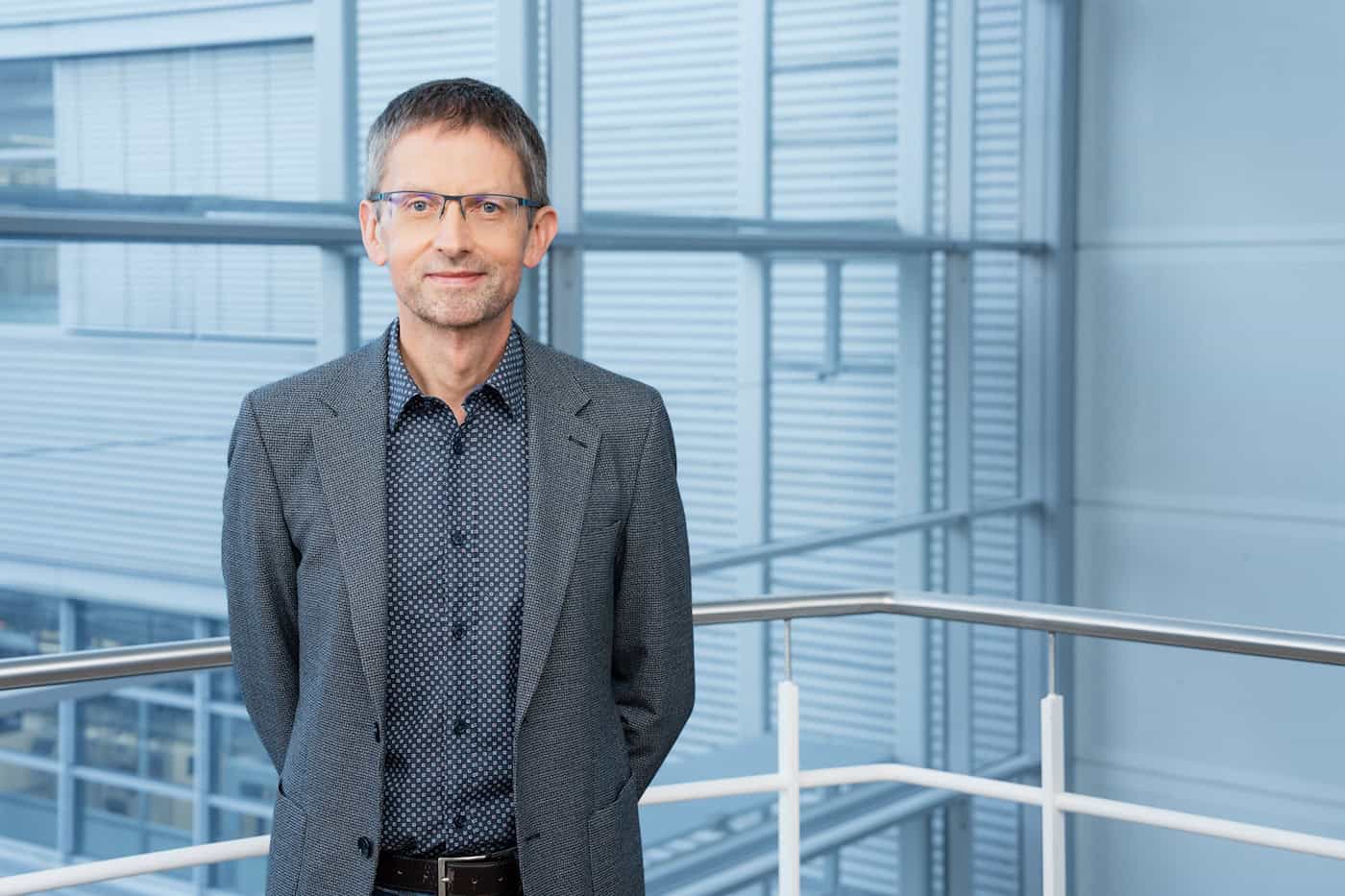
Today, Dresden is the center of Europe’s largest microelectronics cluster. According to Infineon, one in three chips produced in Europe comes from Saxony. “We are world leaders in specialized areas of microelectronics,” says Gäbler. This doesn’t refer to the smallest and most powerful chips, but rather to semiconductors for a wide range of applications, such as in cars, industrial plants, or medical technology.
Research Attracts People
Proximity to research is crucial for Gäbler. “It was one of the reasons we chose to locate the development center here.” Universities provide foundational knowledge and train many of the engineers and developers that companies need. Around 82,500 people work in microelectronics and information technology in Saxony. Infineon alone employs over 4,000 people from 50 countries in Dresden. In July 2026, the company opened a new chip factory here. Around 1,000 additional jobs will be created. The planned ESMC semiconductor factory will also create around 2,000 jobs – not just for college graduates. Gäbler also expects a high demand for well-trained specialists to operate and maintain the equipment and monitor production.
These specialists must also be recruited from outside Saxony. Around 200 employees work at Gäbler’s development center, and just under 40 percent of them come from abroad. “The international experts we’ve brought on board help us enormously and are what make us so strong in the first place,” says Gäbler. To ensure they stay, the environment must be right: international schools, jobs for family members, and good infrastructure.
A Catalyst for Structural Change
What Werner Hartmann set in motion over 60 years ago continues to influence an entire region today. In Lusatia, such a process is just beginning. This time, it is explicitly part of the plan. With the German Center for Astrophysics (DZA), a new major research center is taking shape in and around Görlitz. There, researchers will investigate fundamental questions about the universe, for example using radio waves and gravitational waves. At the same time, they are developing technologies capable of processing massive amounts of data.
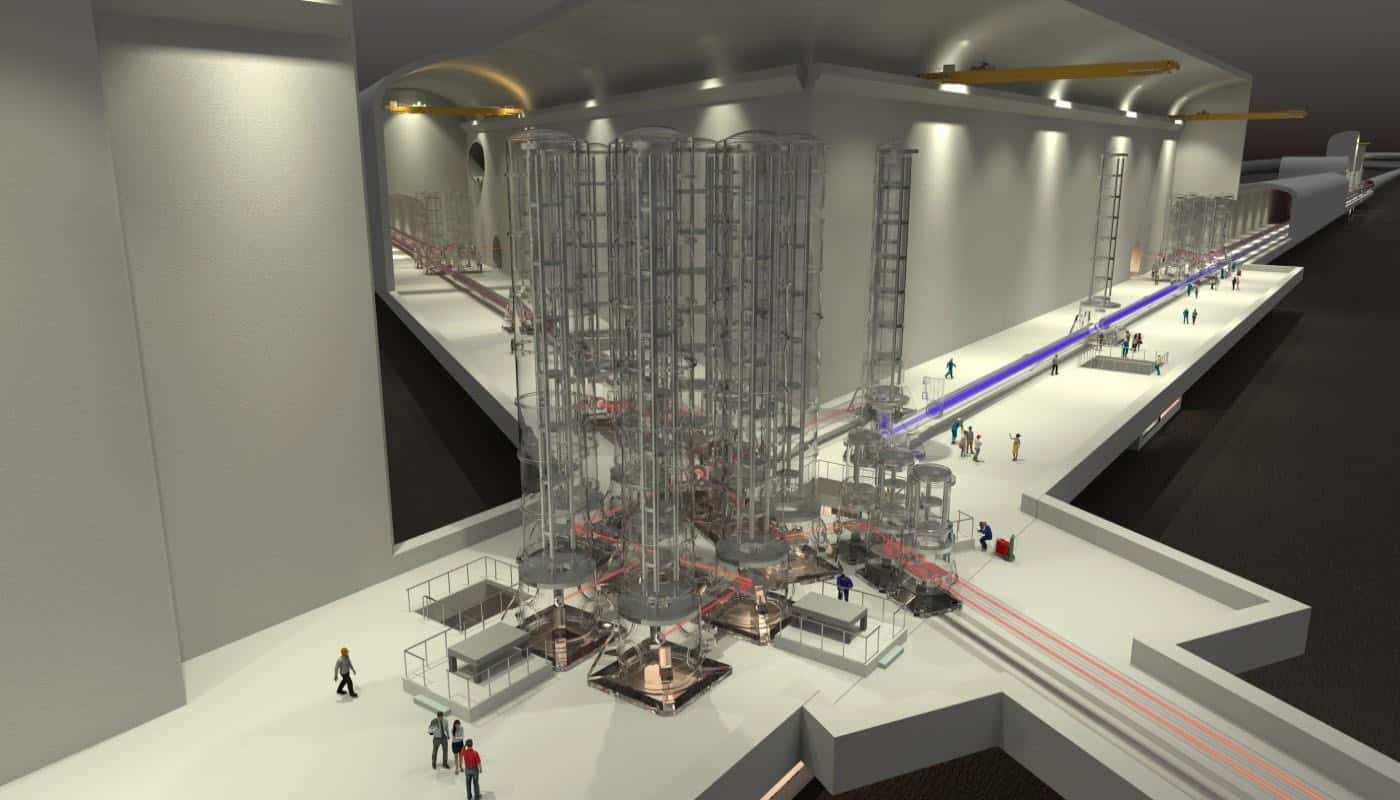
Something unique is taking shape deep beneath Lusatia. At a depth of about 200 meters, a research laboratory will soon be housed within the granite bedrock. There, vibrations will have less of an impact on the sensitive measurements. In this environment, new instruments for measuring gravitational waves, among other things, will be developed and tested.
But the DZA is not only intended to generate knowledge, but also to transform the Lusatia region. About 1,000 jobs will be created, more than half of them in science support roles. “So you don’t necessarily have to be a leading expert in gravitational wave physics to be part of the DZA’s story in Lusatia,” says Sebastian Heer, who conducts research on structural policy and regional development at the DZA.
But jobs alone aren’t enough to attract people to the region. “We need to get people excited about the DZA and make it easy for them to put down roots in the region,” adds Heer. The DZA is working with the Leibniz Institute for Ecological Spatial Development on the “Probewohnen meets DZA” project to investigate what is needed to achieve this.
Ten employees lived rent-free in Görlitz for three months to experience what it’s like to make the city their home. Seven decided to move there. Short commutes, nature, and affordable housing won them over. However, concerns remained about accessibility and medical care. Some were also concerned about right-wing extremism before their stay. In Görlitz, this concern was put into perspective for some because they did not have any negative experiences of their own.
The DZA wants to avoid creating a state-of-the-art research facility in Görlitz that has little contact with the people around it. “We don’t want to work on a research island or in an ivory tower, but rather to collaborate within the region and with the region.” Whether all of this will trigger lasting structural change will only become clear many years from now. “It remains to be seen what specific future opportunities will emerge – innovations are simply too unpredictable for that.”
Research Without Ready-Made Answers
It is impossible to predict today what new technologies and companies will eventually emerge from the DZA. A large part of the work there is devoted to basic research. This follows a different logic than product development. The starting point is not necessarily the question of what can be done with a new finding, but rather the initial attempt to understand something.
Martina Hentschel is well acquainted with the question of the practical value of her work. The professor of theoretical physics at Chemnitz University of Technology first studies physical systems on paper and on the computer. She wants to understand why things are the way they are. Whether this will ever lead to a concrete application is unclear at the outset.
Sometimes, however, it does lead to something tangible. “One of my favorite projects has a very clear practical connection to the development of microsliced lasers.” These lasers are tiny: the light inside them repeatedly travels along the edge of a disk measuring just a few micrometers in diameter. Hentschel and a colleague analyzed what happens when the disk isn’t perfectly round. They demonstrated that the light can be specifically directed out of the laser by a certain shape without losing much intensity – a finding with potential practical applications.
For Hentschel, this does not contradict basic research. “Before an application can be truly effective, you have to understand the system.” A discovery may eventually lead to a new technology, a company, or a therapy. Sometimes it remains unclear where it will lead. Often, however, its benefits only become apparent years or decades later.
For Stefan Ebert, this benefit is very concrete today. More than three years after his immunotherapy, he has not developed any new metastases. He still goes for regular checkups. And each time, he hopes it stays that way.