
Neanderthal genes continue to influence our muscle mass to this day
A genetic legacy from Neanderthals continues to have an effect on some people to this day. Researchers from Leipzig and Stockholm have identified the reason behind this.
Read Aloud
0:00
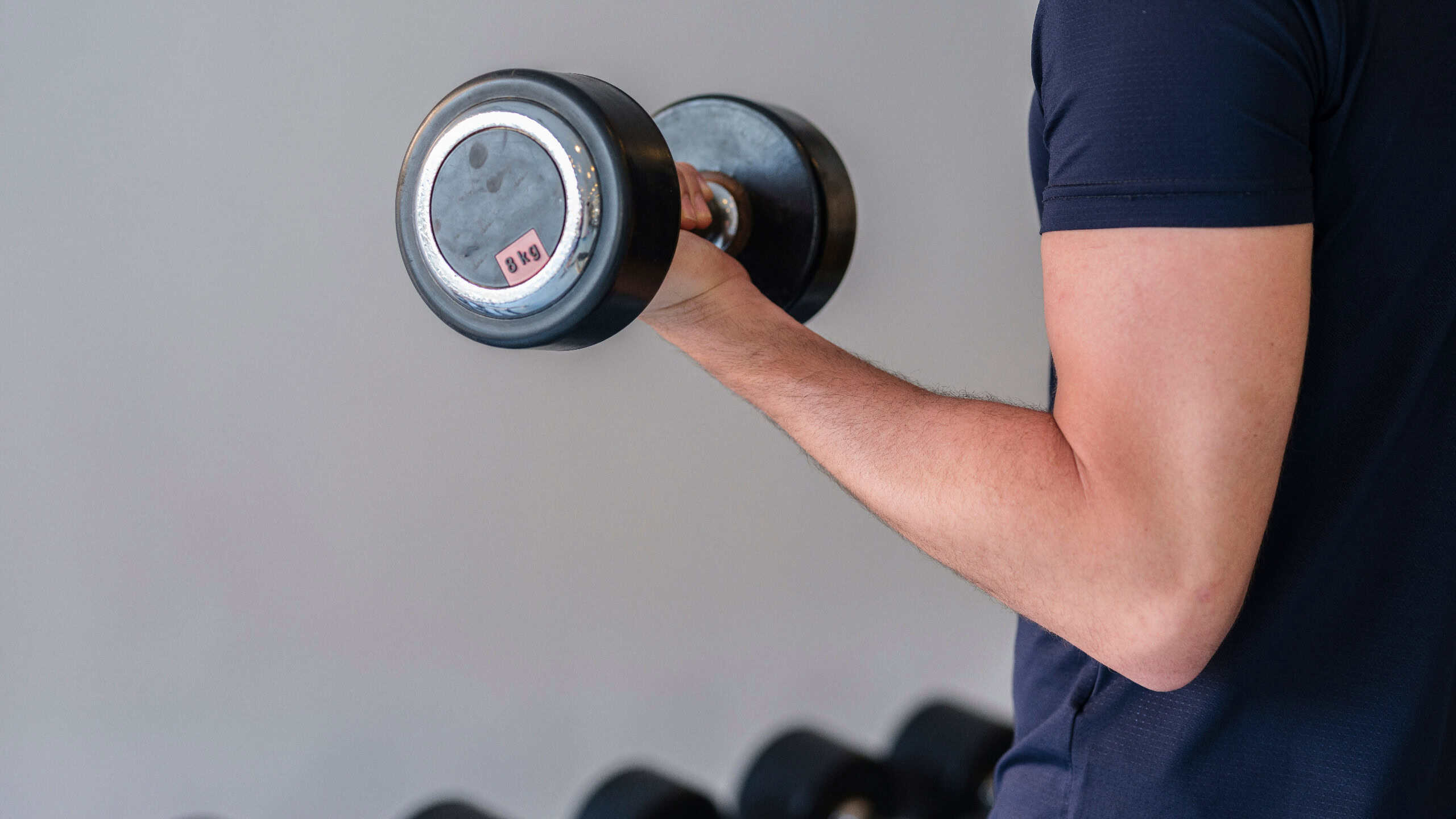
A person's muscle mass is also influenced by their genes. A gene variant inherited from Neanderthals is associated with slightly greater muscle mass in people who carry it today. © Engin Akyurt/pixabay
How much muscle mass a person has depends not only on exercise and lifestyle. Genes also play a role – and some of them are still inherited from Neanderthals. An international research team has now taken a closer look at one such gene variant. It influences the effect of growth hormone and is associated with slightly greater muscle mass in people who carry it today. The Max Planck Institute for Evolutionary Anthropology in Leipzig also participated in the study.
The research focuses on the growth hormone receptor. It is located on body cells and receives growth hormone from the pituitary gland, thereby triggering the growth of muscles and bones. The researchers discovered two changes in this receptor that are characteristic of the Neanderthal variant.
Neanderthal variant responds more strongly to growth hormone
The difference was clearly evident in the laboratory. When the researchers added growth hormone to the cells, those with the Neanderthal variant grew 40 percent more than cells with the variant that is more common today. This variant entered the genes of modern humans about 47,000 years ago, when Homo sapiens and Neanderthals interbred. It has persisted to this day, though its distribution varies widely. In parts of South Asia, up to 24 percent of people carry it, whereas in Europe, only about 0.5 percent do.
“What impressed me most was that two completely different types of evidence tell the same story,” says Philipp Kanis, first author of the study and a postdoc at the MPI-EVA. On the one hand, laboratory cells responded more strongly to growth hormone. On the other hand, data from over one million people showed the same effect in the body. It is rare for laboratory data and population-based data to agree so clearly, the scientist adds.
Differences only after childhood
During childhood, the gene variant does not yet appear to make a difference. In a study of more than 6,000 children, the researchers found no association with growth up to the age of eleven. Only later, possibly during puberty, might the effect become noticeable. That is also when growth hormone levels rise significantly. Among adults, carriers of the Neanderthal variant had, on average, about 270 grams more muscle mass.
“As a CrossFit athlete, I was very excited to see Neanderthal genetics and muscle mass combined in a study,” says co-author Miriam Berreiter. “But even a Neanderthal growth hormone receptor is no substitute for training.”
The researchers also found small differences in the skull and teeth. Carriers of the variant tended to have a slightly shorter posterior mandible and shorter tooth roots. The latter are among the typical characteristics of Neanderthals. “It’s fascinating that a genetic change inherited from Neanderthals can still have an impact on the human body today,” says study leader Hugo Zeberg of the Karolinska Institutet in Sweden. However, the gene variant is only one of many factors that influence growth and body shape. It cannot explain the Neanderthals’ robust physique on its own.
Original publication:
Philipp Kanis, Miriam Berreiter, Daniel Sieme, Olivia Wootton, Xiang-Chun Ju, Nicholas E. Holzwart, David Ziliang Hu, Shu Tadaka, Makiko Taira, Kengo Kinoshita, Richard Ågren, Johan G. Olsen, Tomislav Maricic, Hilary C. Martin, Birthe B. Kragelund, Svante Pääbo, Andrew J. Brooks, and Hugo Zeberg
Increased signaling of the Neanderthal growth hormone receptor, Current Biology, 2026.