
Knowledge for everyone: Why Wissensland is needed now
"Wissensland" is a new online platform covering research and innovation topics from Saxony. In this commentary, founder Jana Mundus explains why this is important right now.
Read Aloud
0:00
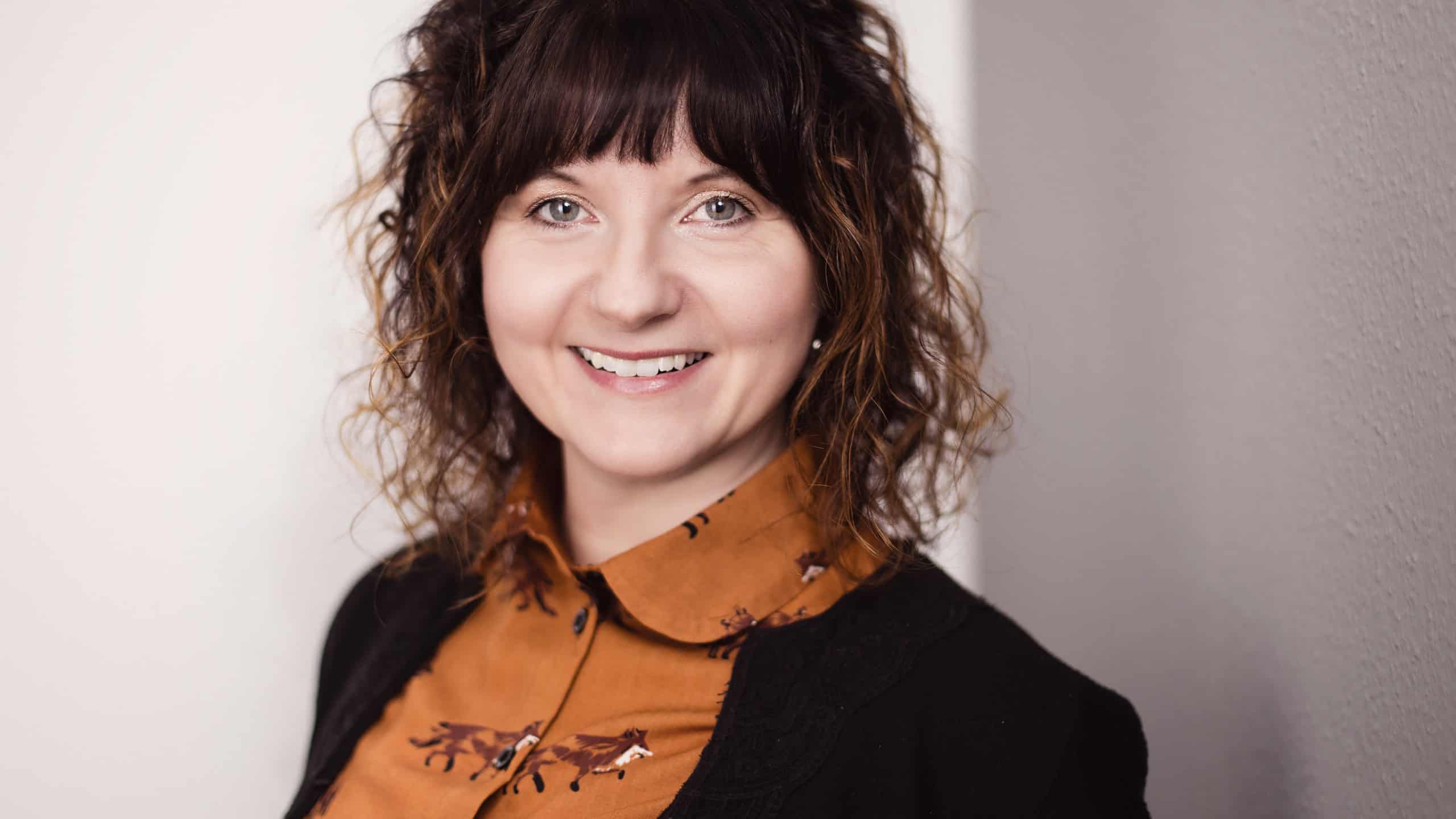
Jana Mundus, founder of Wissensland. © Stefan Mundus-Weichert
Science and I – we didn’t have a close relationship for a long time. In school, I was in a language class, studying English, French, and Russian. I loved history, was passionate about German, and enjoyed debating in ethics class. It was never my plan to one day write professionally about physics, medicine, biology, or new materials.
I ended up in science journalism more by chance. When an editorial team was looking for a freelance journalist in this field, I had my doubts about whether my understanding of the natural sciences was sufficient. The section chief saw this as an advantage: “You ask exactly the questions that other people have, too.”
He turned out to be right. In interviews, I keep asking questions until I truly understand the topic. I long ago put aside any concern that this might come across as silly or unprofessional. While researching and writing, I often think of my grandmother, who, even at over 90, reads every one of my articles. She, too, should understand what it’s all about.
And over the years, I’ve discovered for myself just how fascinating research can be. I especially remember a visit to a specialized laboratory. There, through an electron microscope, I was able to see individual atoms. Until then, I’d known them mainly as schematic diagrams from physics textbooks. Suddenly, something became visible that had been completely abstract to me until then.
Moments like these have changed my perspective on science. I’ve seen the perseverance with which people work on research questions. And I’ve seen just how diverse research in Saxony alone is.
What’s the truth? Finding your way through the flood of information
Science tackles many of the big questions of our time. How can we treat diseases more effectively? How do we deal with climate change? Where will our energy come from in the future? How can new technologies make our lives easier, and where do they create problems? Researchers are driven by curiosity and the desire to understand such problems and find solutions for them.
At the same time, science and journalism face a common problem today. A segment of society no longer trusts them. This is partly because, amid the flood of information, it’s becoming increasingly difficult to distinguish reliable information from false claims. It’s never been easier to publish information. Anyone can produce content that reaches a wide audience. Amid all this information, we must decide every day: What is substantiated? What is opinion? What is misunderstood, and what is simply made up?
That is why we need places where information is verified, contextualized, and explained in an understandable way. Wissensland aims to be such a place. It is a showcase for research in Saxony – not just for people who already know what quantum computers, gene scissors, or nanomaterials are, but especially for those who don’t yet know. Because the questions behind this research concern us all; they shape our future.
Science journalism must remain accessible
That’s why I find it all the more troubling that, of all things, science journalism is being given less space in many places. Newsrooms are under economic pressure. Science sections are being downsized or eliminated. Yet the number of topics isn’t decreasing.
That’s why Wissensland now exists – a new media outlet that creates space for science topics. From the very beginning, one thing was clear to me: Everyone should be able to get information on Wissensland – without a subscription and without a paywall.
But how do you finance quality journalism if readers don’t pay for it? My answer has repeatedly drawn surprised looks from colleagues in journalism over the past few months. One pillar of funding comes from scientific institutions and research-based companies. They can support Wissensland and thereby cover part of the infrastructure costs.
How independent can Wissensland be?
It’s true that this model raises questions about journalistic independence. It must be preserved without compromise. Simply promising this is not enough. That is why this separation is enshrined in a contract. Supporting institutions and companies cannot dictate what Wissensland reports on, what appears in an article, or how research is framed journalistically. Critical reporting is also expressly included. Anyone who provides financial support to Wissensland will be publicly named. An independent advisory board also provides critical oversight of Wissensland.
When I was first asked to write about science many years ago, I thought the many questions swirling in my head would be a problem. However, this gave rise to something that continues to shape my work to this day. Science eventually found me. I hope that as many people as possible from Saxony and beyond will now find stories on Wissensland that surprise them, explain things to them, make them think, and sometimes perhaps even give them hope.
Research shouldn’t remain a world understood only by those who are part of it.
Welcome to Wissensland!