
Dive first, then run: Where our endurance might come from
People can run a marathon and hold their breath for an astonishingly long time while diving. Two researchers suspect that the two are related.
Read Aloud
0:00
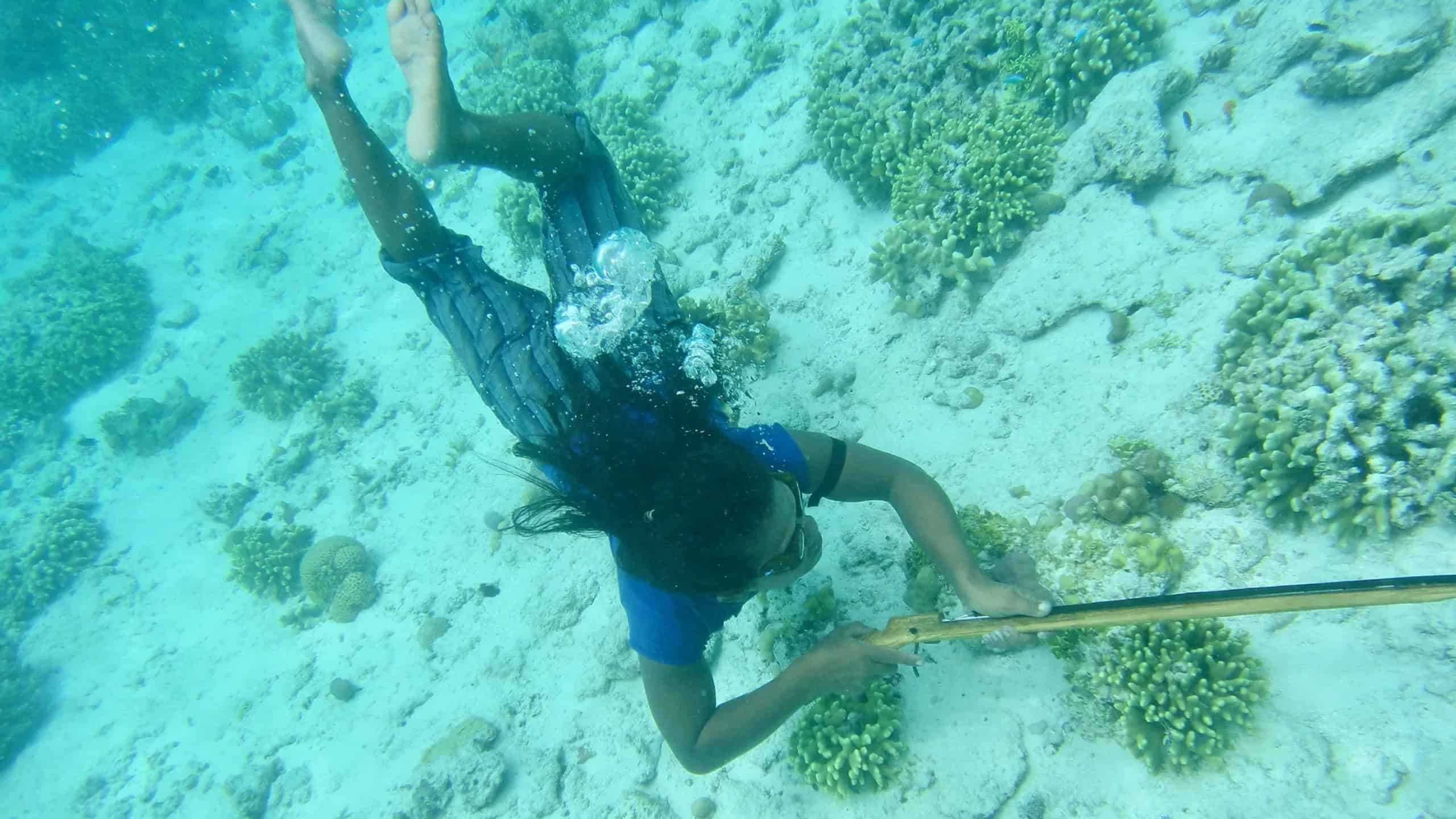
A Sama-Bajau diver fishing in shallow water. She dives without modern free-diving equipment and reduces her buoyancy by exhaling air from her lungs. © Erika Schagatay
Running a marathon or diving for minutes at a time without an oxygen tank. Among primates, humans are exceptionally good at both. Where does this endurance come from? Did our ancestors chase prey until it gave up from exhaustion? Or did foraging in water also play a role?
Josephine Joordens of the Max Planck Institute for Evolutionary Anthropology in Leipzig and Erika Schagatay of Mid Sweden University in Östersund propose a new explanation. To do so, they look at both our early ancestors and what happens in the human body during diving. Their thesis is: “Diving first, endurance running later.” They do not reject the well-known endurance-running hypothesis; rather, they expand it to include water.
Spending hours gathering food from the sea
Diving communities such as the Ama in Japan or the Sama-Bajau in Southeast Asia demonstrate what humans are capable of when free diving. For hours on end, they dive repeatedly to gather fish and shellfish. The researchers call this “endurance diving.”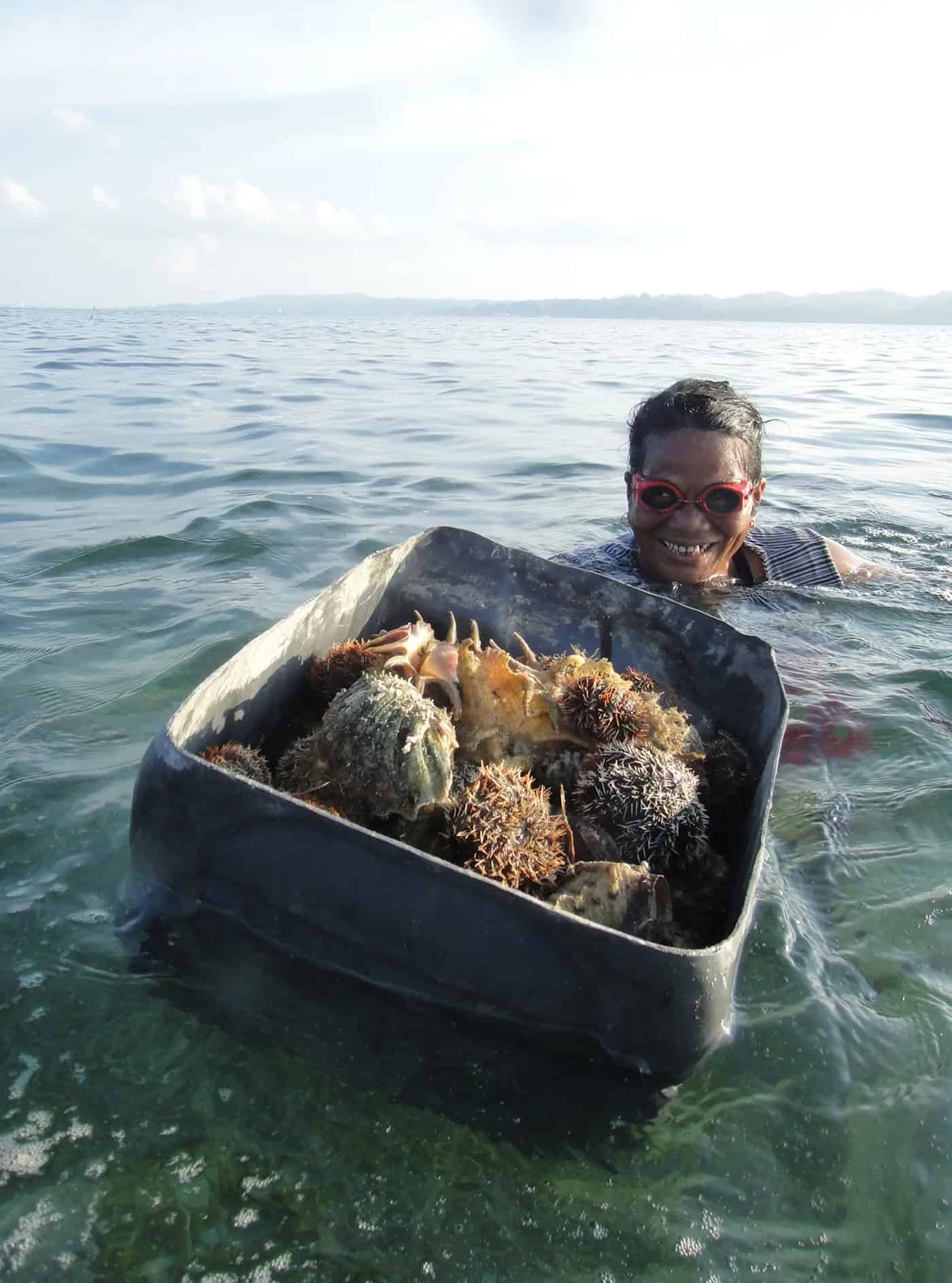
One Ama diver completed 50 dives in two hours at depths of eight to ten meters, remaining underwater for 45 percent of the time. "This diving method allows people to work underwater for hours every day while repeatedly holding their breath," says Schagatay, a professor of animal physiology. Anyone who dives repeatedly while holding their breath must conserve their available oxygen. The researchers speculate that this may have led to the development of respiratory and circulatory abilities that later proved advantageous for long-distance running.
Heavy bones as evidence of early divers
Fossils also provide clues to the researchers. Homo erectus and Neanderthals had comparatively massive bones. Until now, this was often explained by heavy physical exertion on land.
But heavy bones have another effect as well. They help control buoyancy when diving in shallow water. In endurance running, on the other hand, they tend to be a disadvantage. Robustly built early Homo erectus populations may therefore have also searched for food underwater. Groups with a lighter build were possibly better adapted to life and foraging on land.
Two abilities converge
The authors take it a step further. DNA models suggest that modern humans may have emerged from the interbreeding of two ancient populations. Joordens and Schagatay speculate that one was more specialized in diving, while the other was more specialized in running. Thus, both abilities may have ultimately converged in modern humans.
This is still just a hypothesis. To test it, the researchers plan to examine additional characteristics of our ancestors – even the nose. “The external human nose, for example, may have evolved as an important feature: it allows diving in shallow water without water entering the nasal passages,” says Schagatay. Further research will have to show whether our exceptional endurance is, in fact, a story of water.
Original publication:
Josephine Joordens, Erika Schagatay: “Dive First, Run Later? The Role of Endurance Diving in Human Evolution.” PaleoAnthropology, September 17, 2026.