

Children help everywhere – but not in the same way
Whether in Germany, Kenya, or Bolivia: Children help their peers when they get stuck. However, an international study involving researchers from Leipzig also shows that the type of help provided is shaped by the environment in which children grow up.
Read Aloud
0:00
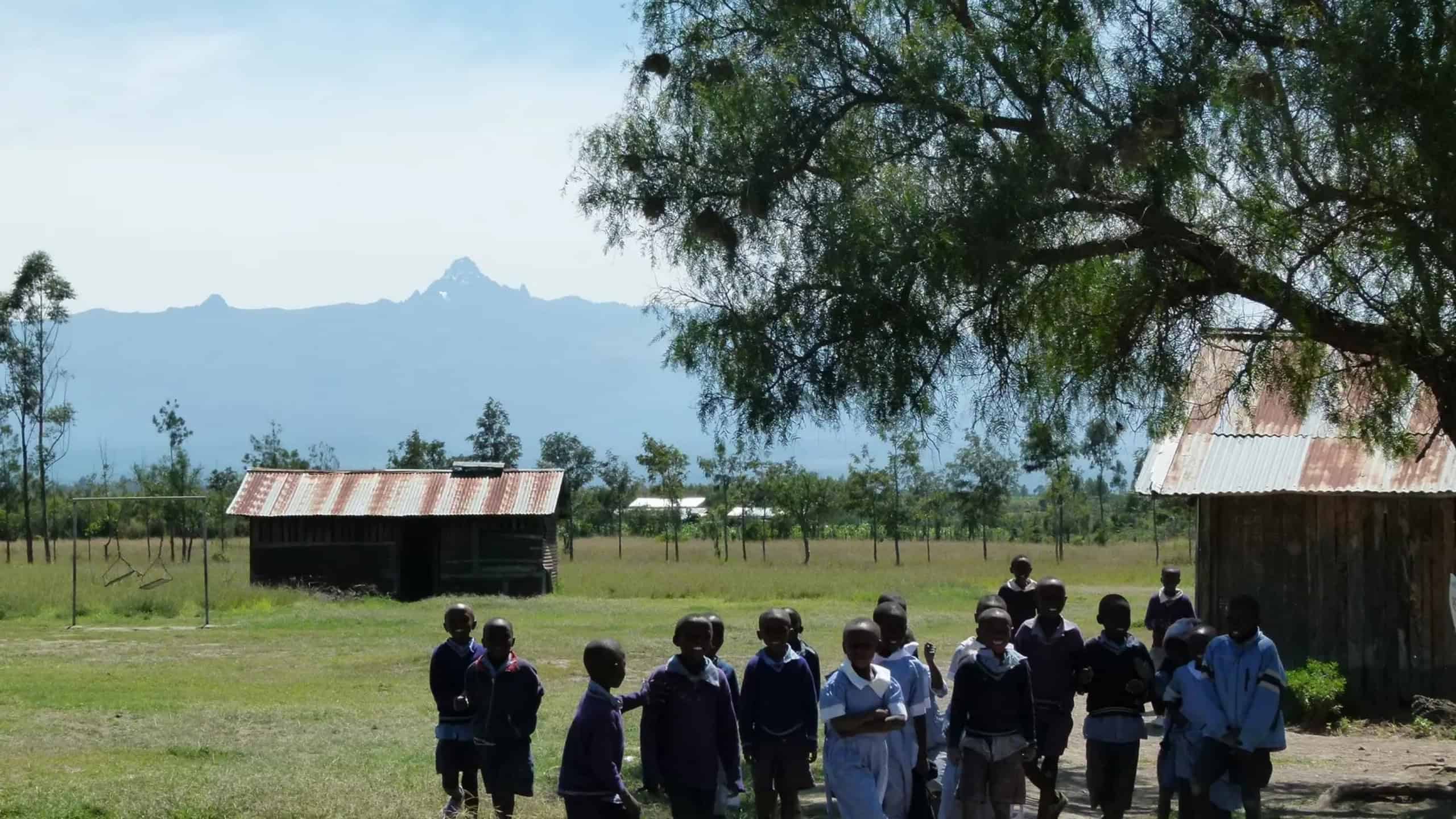
Ikuyu children in Kenya. How children help their peers varies from community to community. However, the underlying principles of this behavior are similar across cultures. © Henriette Zeidler
When another child gets stuck – the youngest ones immediately step in to help. Parents and grandparents are familiar with moments like these from the playground or the kids’ room. But do children help one another in similar ways all over the world? An international team, including researchers from Leipzig, has systematically investigated this question for the first time.
The study involved the Max Planck Institute for Evolutionary Anthropology (MPI-EVA) and the University of Leipzig, as well as researchers from Rome, Portsmouth, Plymouth, and Duke University in the U.S. They observed 336 children between the ages of four and nine from six communities in Germany, Argentina, Namibia, Kenya, and Bolivia.
This allowed them to include a wide range of living environments, from modern industrial societies to smaller communities of hunter-gatherers, farmers, and herders. Until now, research had primarily focused on how children help adults.
A marble game as a test
To this end, the team developed a simple marble game. One child watched as a peer encountered problems. Sometimes a box got stuck; other times, marbles fell to the floor. The observing child knew the solution and could decide for themselves whether and how to help. “It was immediately striking how similar the children’s reactions were – regardless of where they grew up,” says lead author Henriette Zeidler of Sapienza University in Rome.
In all six cultures, the children helped reliably, especially when their peer actually needed support. They were more likely to intervene when a box was stuck than when marbles had fallen to the floor and could easily be picked up on their own. As they got older, the children became increasingly adept at distinguishing when their help was truly needed. Younger children were more likely to pitch in themselves, while older children were more likely to explain how to solve a problem.
Helping doesn’t look the same everywhere
Subtle cultural differences emerged nonetheless. German children were significantly more likely than any other group to pitch in and, at the same time, explain what needed to be done. Kikuyu children from Kenya, on the other hand, provided practical help somewhat less frequently. The researchers found no significant differences between boys and girls.
“These patterns reflect the everyday interactions with which children are familiar,” explains Zeidler. In many rural communities that are largely self-sufficient, children learn primarily by watching and participating. In Germany, parents often combine guidance with detailed explanations. Children seem to adopt this style when helping their peers.
“Helping is one of the clearest expressions of human cooperative ability,” says Daniel Haun, director at the MPI-EVA. This ability is evident in children everywhere. However, how children help also depends on how they grow up. So children don’t just learn to help; they also learn how to help others in their community in meaningful ways.
Original publication:
H. Zeidler, M. Schäfer, E. Herrmann, P. Kanngiesser, L. Maurits, D. Haun, & M. Tomasello: Children from six cultures reliably help their peers – but in different ways, Proc. Natl. Acad. Sci. U.S.A. 123 (40) e2515233123, (2026).