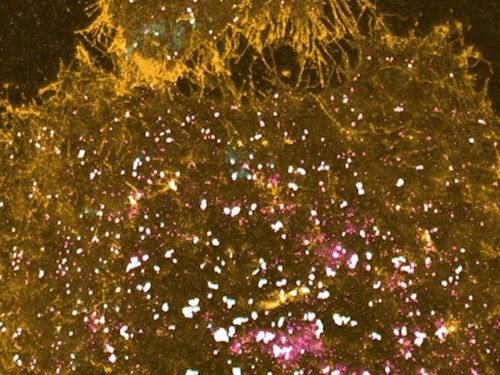

The first bats likely came from Europe
A large-scale genomic study traces the origin of bats to Europe around 65 million years ago. Researchers from Dresden also participated in the investigation.
Read Aloud
0:00
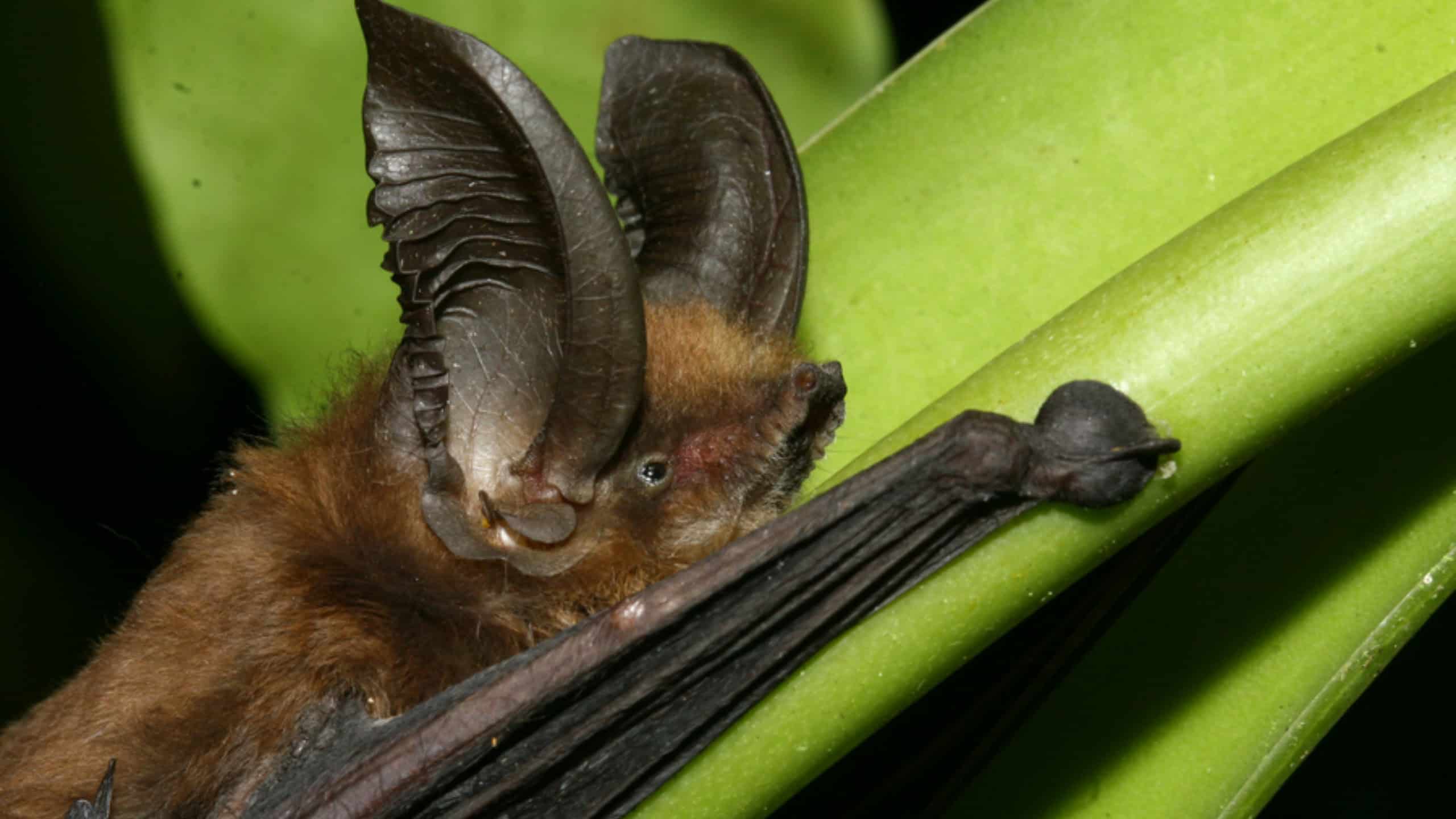
The genome of the Malagasy disc-winged bat is one of 30 bat genomes that were sequenced and analyzed for the study in Dresden. © Manuel Ruedi, Muséum d'histoire naturelle de la Ville de Genève
On balmy summer evenings, they flit through gardens and parks. Many people know bats only as fluttering shadows at dusk. But where do these animals actually come from? This has long been a subject of debate. A major international study now provides a surprising answer. The ancestors of today’s bats likely lived in Europe around 65 million years ago. According to the analysis, their descendants first spread from there to Africa and later to other parts of the world.
Dresden was also involved in the search for clues. The sequencing facility at the Max Planck Institute for Molecular Cell Biology and Genetics (MPI-CBG) and the DRESDEN-concept Genome Center sequenced and assembled 30 of the 42 new genomes for the study. A total of 137 researchers from 64 countries compared the genomes of 103 species. This means that all 21 bat families recognized today are represented.
Genomes meet ancient fossils
A living organism’s genetic information is contained within its genome. Researchers can decipher the sequence of DNA building blocks and compare species with one another. This allows them to investigate how closely related different species are and to reconstruct their evolutionary history.
But the genome alone does not tell the whole story. That’s why the team also included 44 bat fossils from around the world. However, only a few fossils have survived from the time when the first bats are thought to have emerged. It is therefore not possible to simply determine where their common ancestor lived based on a single fossil find.
The researchers combined genetic data, fossils, and other characteristics to calculate the most likely place of origin. The result is clear-cut. Their model assigns a 99.2 percent probability to Europe. It places the origin of bats in the late Paleocene, around 65 million years ago. Earlier studies had suggested origins in Asia, Africa, or North America, depending on the method used.
Echolocation existed very early on
The fossils also reveal something about a ability for which bats are known: echolocation. In this process, the animals emit sounds. When the sound waves hit an obstacle or prey, they return as an echo. This allows bats to detect what is in front of them even in the dark.
The fossil bat Vielasia is particularly interesting. According to the new analysis, it belongs to a very early branch of the evolutionary tree. This suggests that bats were already using echolocation before their ancestors split into the various groups living today. Active flight, too, appears to have emerged very early on.
The new data also alter the bat family tree. According to the findings, some groups are more closely related to one another than previously assumed. Such relationships are difficult to determine. Many bat groups emerged within a relatively short period of time, and until now, high-quality genomic data had been lacking for numerous species.
“Bats never cease to surprise us. They are one of evolution’s greatest experiments,” says Sonja Vernes of the University of St Andrews. The new genomes now also provide a foundation for further research. This will allow scientists to investigate more precisely how traits such as their unusual longevity and resistance to disease have evolved.
Original publication:
Morales, A.E., Liang, Y., Thomas, W.R. et al. Reference genomes and fossils revise bat family phylogeny and biogeography. Nature (2026).