
Beautiful butterflies have an advantage
Bright colors, large wings, eye-catching patterns: We find some butterflies particularly beautiful. A study shows that these butterflies get more attention. But this is a problem for less conspicuous species.
Read Aloud
0:00
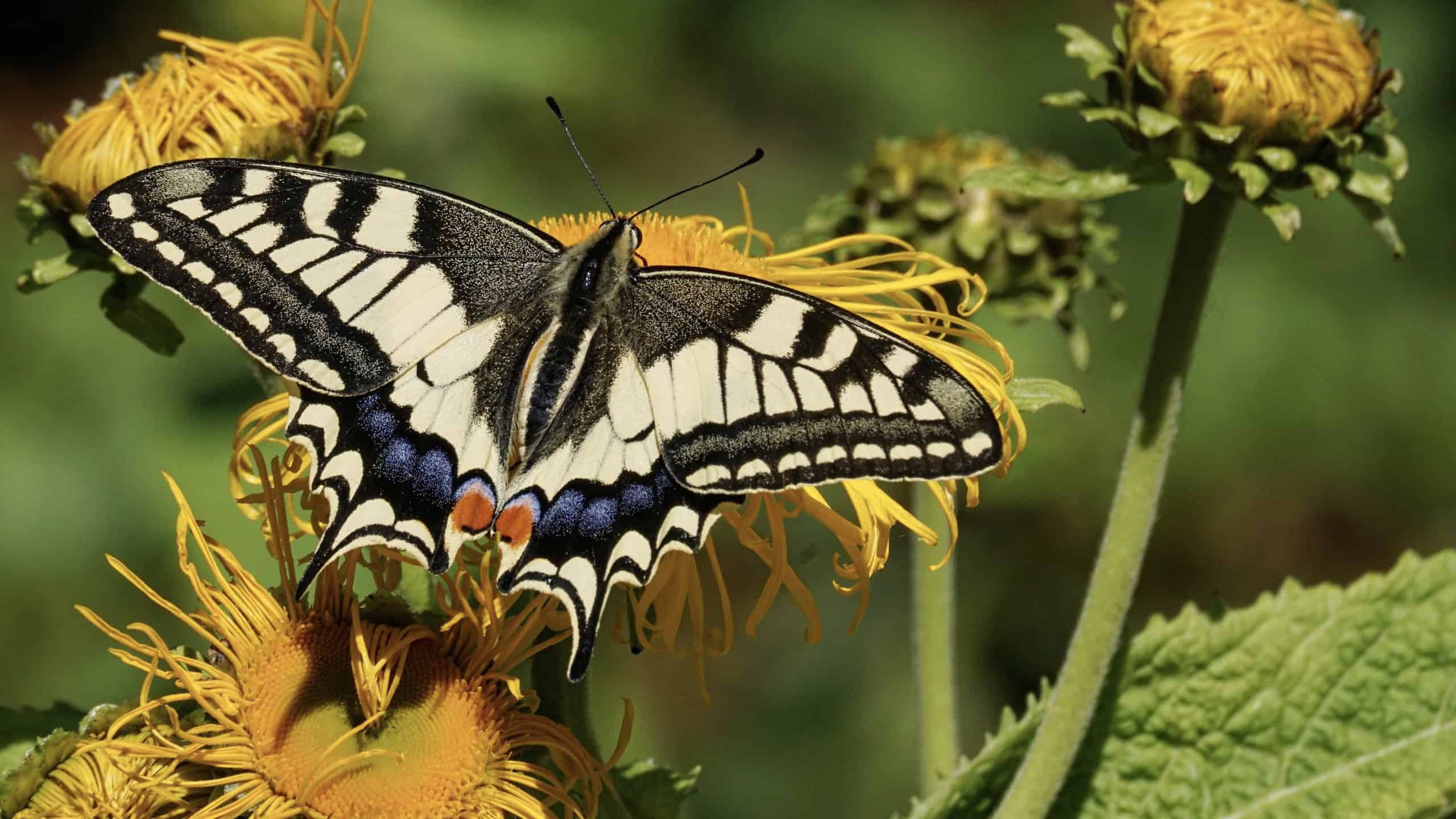
The swallowtail is one of the butterflies that people find particularly attractive. Is that why it is studied more? © Susanne Jutzeler/pixabay
A pale yellow butterfly flutters across the meadow. Its hindwings end in delicate points. Hardly anyone walks past this pretty swallowtail without noticing it. Some people pull out their smartphones to quickly snap a photo. In contrast, few people notice the many small brown butterflies. An international study now makes it clear that striking butterflies don’t just get more attention – they’re also studied more frequently and are more commonly included in European conservation regulations. The Helmholtz Center for Environmental Research (UFZ) in Leipzig participated in the study.
A team from the University of Florence launched an online survey for this purpose. More than 21,000 people from over a hundred countries rated photos of European butterflies on a scale from one to ten. Elisabeth Kühn from the UFZ coordinated the survey in Germany. Bright colors were well-received, especially yellow and blue. Strong contrasts and large, jagged wings also scored highly.
“The vast majority of respondents shared this assessment,” says Elisabeth Kühn. “It didn’t matter whether they were familiar with butterflies or not.” Based on the ratings, the researchers calculated a beauty index for nearly 500 European species.
The beautiful ones get more attention
There are more photos of the beautiful ones online. Even on Wikipedia, attractive species receive more attention. “We had expected this to be the case in terms of public perception,” says Elisabeth Kühn. “What surprised us, however, was that the same phenomenon is also evident in scientific studies.” Significantly more studies are published on attractive butterflies. Gene sequences published for them are also more common.
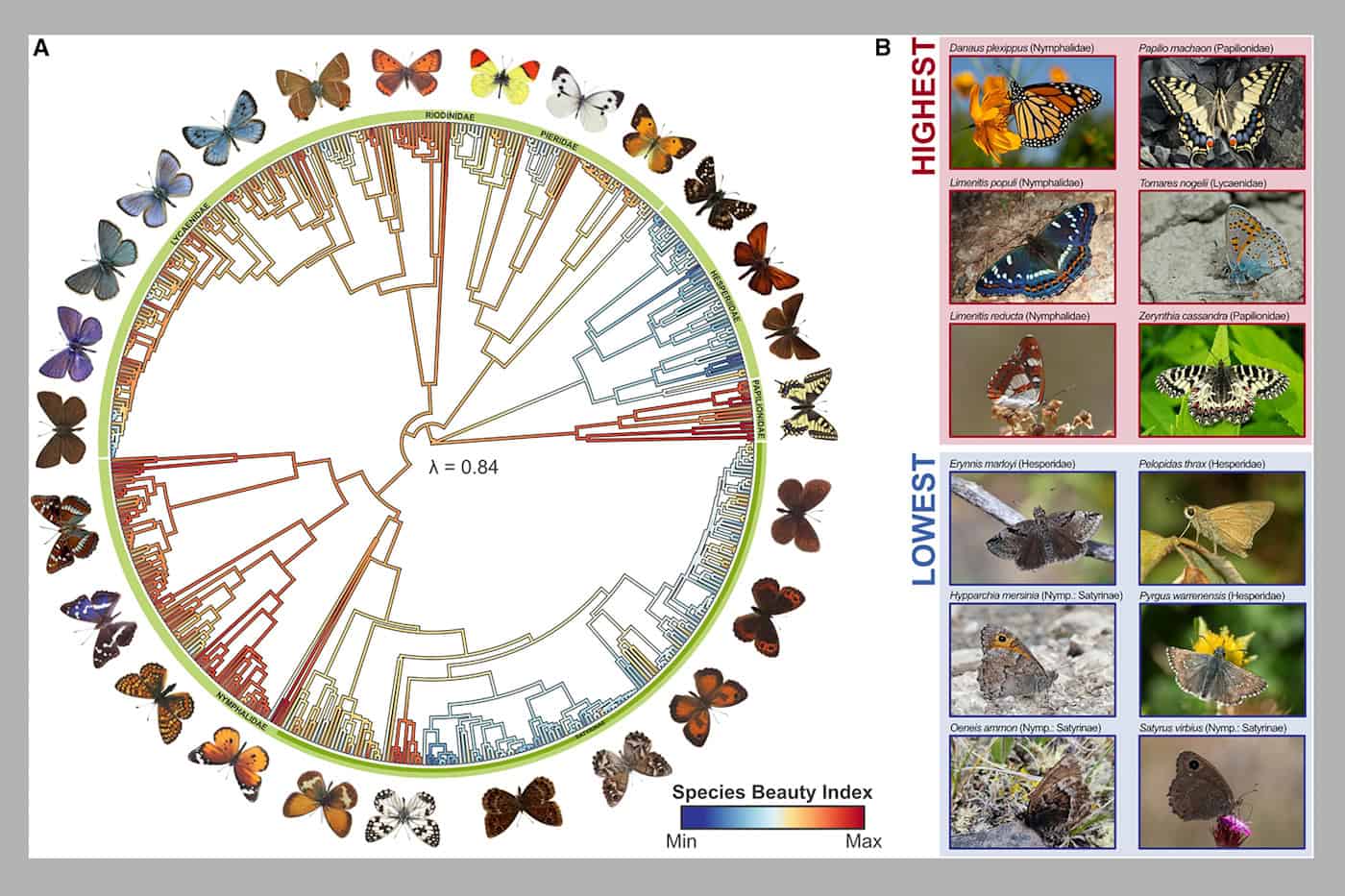
This pattern is also evident in European conservation regulations. In the EU’s 1992 Fauna-Flora-Habitat Directive, attractive species are represented at an above-average rate. This also influences which species benefit from conservation measures and funding.
However, the analysis initially reveals a correlation. It cannot be conclusively determined from this whether an attractive appearance is the reason why some species receive more attention.
The inconspicuous fare worse
The Red Lists paint a different picture. There, it is not appearance that matters, but rather how rare a species is or how rapidly its populations are declining. According to the 2025 lists, the less attractive species tend to be faring even worse. “For example, there are many inconspicuous brown species in the Alps that are severely threatened by climate change,” says Elisabeth Kühn. The glacier fritillary, for instance, is fleeing the heat to ever higher elevations until it can go no further. More than half of the butterfly species classified as endangered are now struggling with rising temperatures.
Nevertheless, the biologist believes it makes sense to use beautiful butterflies as figureheads. “It simply draws much more attention and improves the chances of preserving habitats,” she says. Other species can benefit from this as well.
But data is needed on as many species as possible. That’s why the UFZ and the Society for Butterfly Conservation founded the German Butterfly Monitoring Program over 20 years ago. From April through the end of September, hundreds of volunteers regularly count butterflies along designated routes. Every species is recorded – even the small brown ones.
Original publication:
Leonardo Dapporto et al.: Beauty bias in butterfly research and conservation; Current Biology, 2026; 36, 4520–4529.e7