Mountain gorillas are recovering
More than 1,000 mountain gorillas now live in Central and East Africa again. A new assessment led by a researcher from Görlitz shows the impact of conservation efforts. However, another species of gorilla is threatened.
Read Aloud
0:00
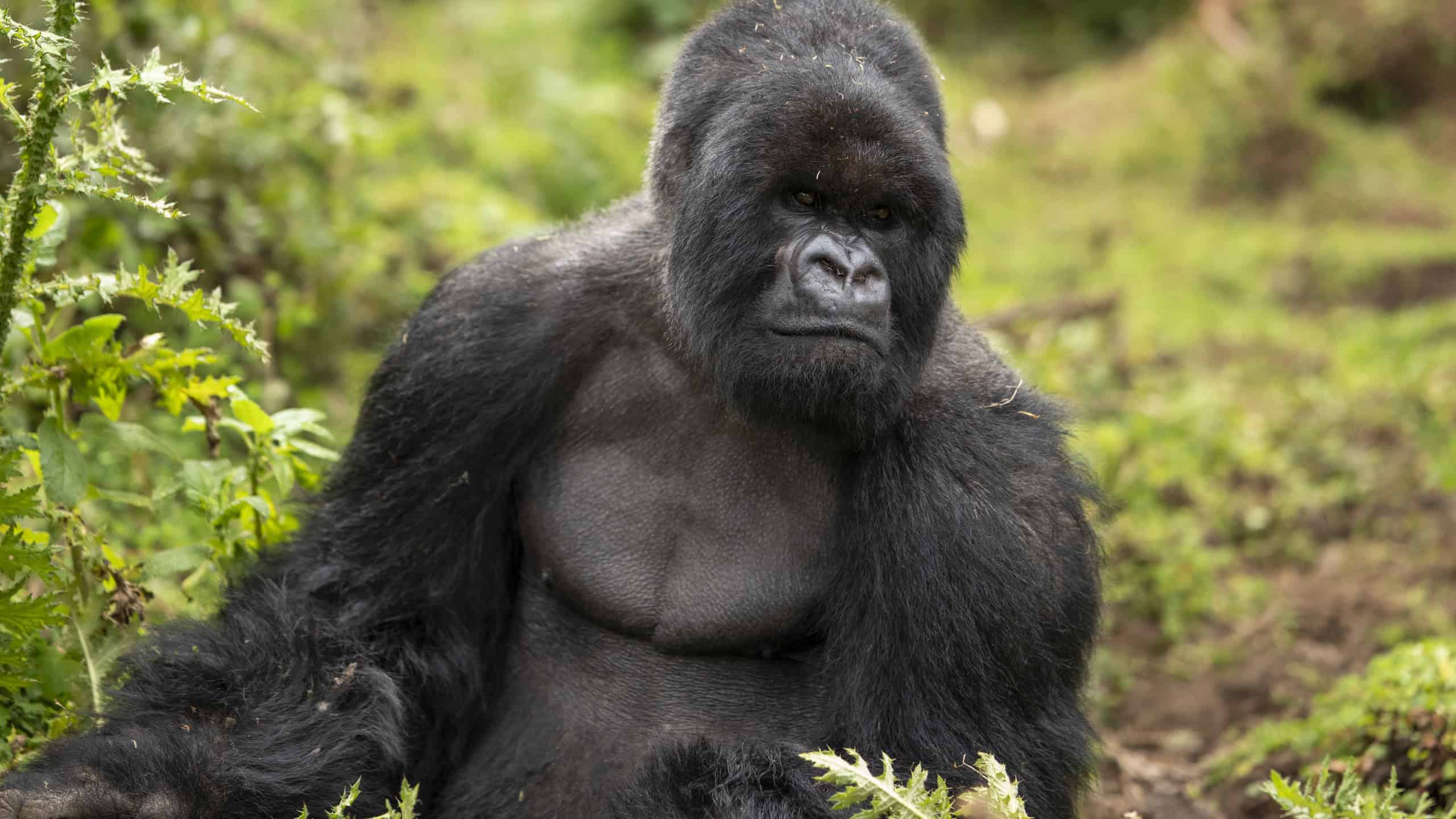
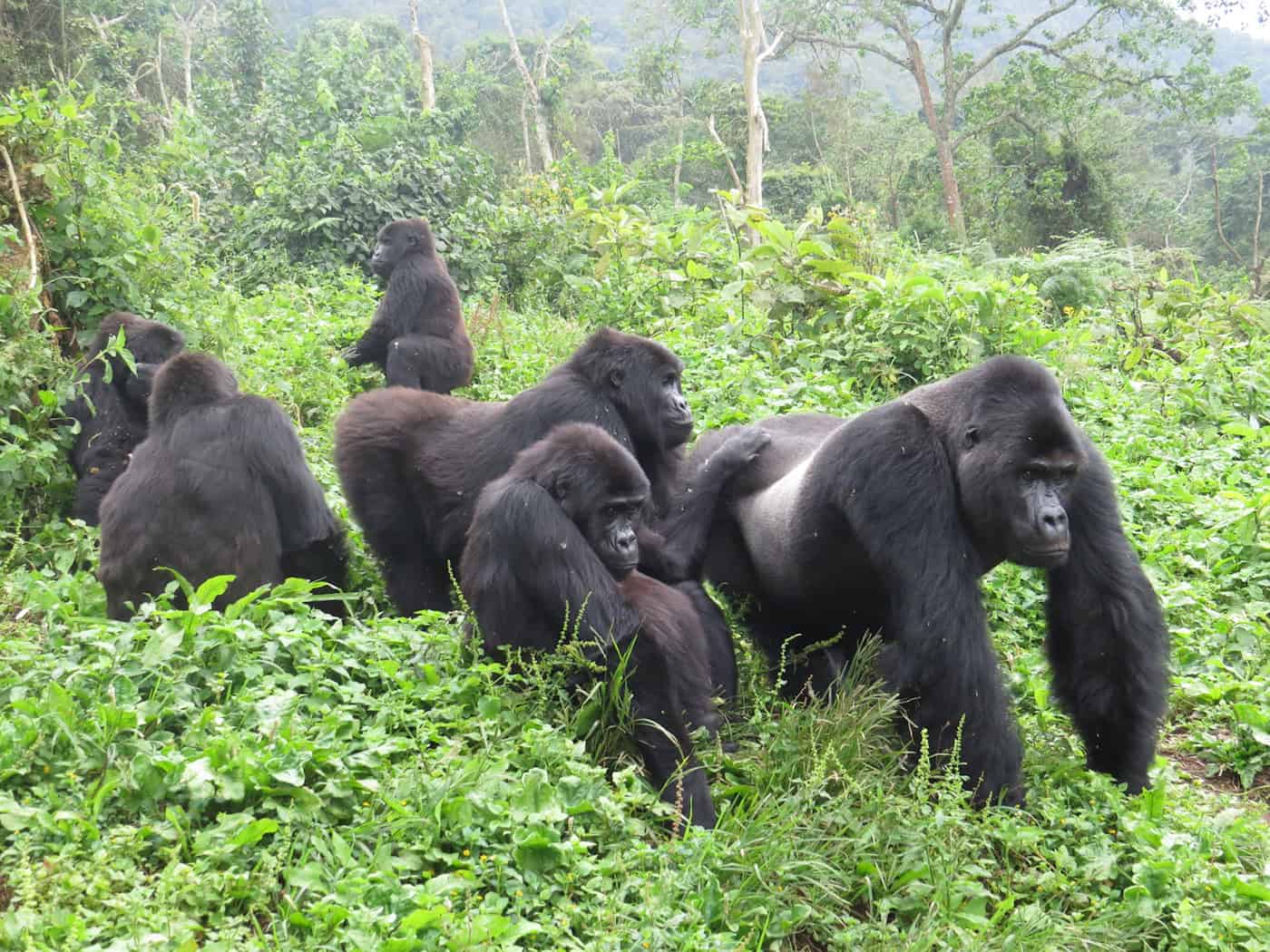
The mountain gorilla population has grown in recent decades. Today, there are once again more than 1,000 gorillas living in the Virunga Mountains and Bwindi Impenetrable National Park. © Dian Fossey Gorilla Fund
More than 1,000 mountain gorillas now live in Central and East Africa. In the 1980s, there were fewer than 620. The situation is quite different for the eastern lowland gorilla. Its population has plummeted by about 60 percent in roughly 20 years. A new assessment by the International Union for Conservation of Nature (IUCN) now shows how effective conservation efforts have been for both subspecies. The assessment was led by Jessi Junker of the Senckenberg Museum of Natural History in Görlitz.
For the first time, the IUCN has assigned a so-called “Green Status” to the Eastern Lowland gorilla. Unlike the Red List, which assesses the risk of extinction, this status focuses on the recovery of a species. The key factor is not just how many animals there are. The populations must also be present in their natural habitats and able to fulfill their ecological role there.
Two subspecies, two trends
The eastern lowland gorilla lives in the eastern part of the Democratic Republic of the Congo. Its population has declined by about 60 percent over the past 20 years. Today, there are fewer than 7,000 individuals remaining. Habitat loss, mining, agriculture, and armed conflicts are taking their toll. In the "Green Status" assessment, the subspecies has a recovery rate of 15 percent and is therefore classified as "critically depleted."
Nevertheless, species conservation efforts have not been entirely without effect. In some areas of the Democratic Republic of the Congo, populations have remained relatively stable over the past two decades. These include the Oku Community Reserve, which is managed by a local community.
The numbers are better for the mountain gorilla. In the 1980s, its population had shrunk to fewer than 620 individuals. Today, more than 1,000 live in the Virunga Massif and Bwindi Impenetrable National Park. “In the case of mountain gorillas, long-term, intensive conservation efforts have even enabled measurable population growth,” says Jessi Junker. The recovery rate stands at 25 percent. However, the mountain gorilla population is still far from fully recovered.
What happens if conservation efforts wane?
More than 60 experts participated in the assessment, the majority from the Democratic Republic of the Congo, Rwanda, and Uganda. Based on the data, they calculated various scenarios—such as how populations would have developed without the conservation measures taken so far and what might happen if conservation efforts wane.
For the eastern lowland gorilla, the prognosis is clear. If conservation measures are reduced or discontinued, the population is likely to continue declining rapidly. A rapid recovery is hardly possible anyway, because the animals reproduce slowly. In the long term, however, the population could grow again – if conservation efforts are strengthened and continued indefinitely.
Success for the mountain gorilla is not guaranteed either. Its population can only continue to recover if conservation measures remain in place. “The ‘Green Status’ demonstrates that applied conservation works,” says Junker.
Original publication:
Junker, J., Bikaba, D., Eckardt, W., Fawcett, K., Pintea, L., Plumptre, A.J., Robbins, M.M., Scholfield, K., Stoinski, T.S., & Williamson, E.A. 2026. Gorilla beringei (Green Status Assessment). The IUCN Red List of Threatened Species 2026.