
Lusatia supports the Einstein Telescope
All 57 cities and municipalities in the Bautzen district support Lusatia’s bid for the Einstein Telescope. It remains to be seen where the European gravitational-wave observatory will be built.
Read Aloud
0:00
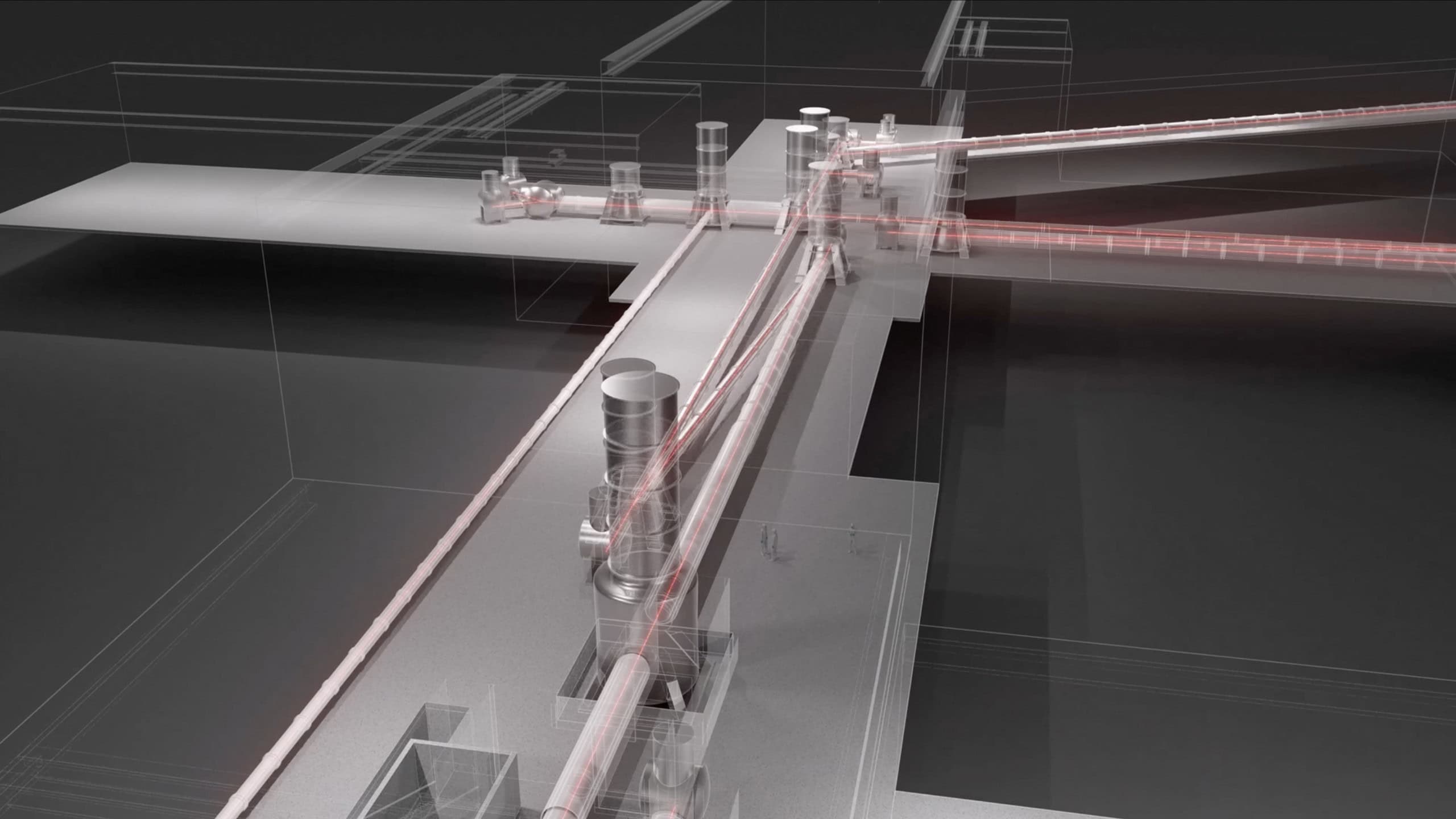
This is what the Einstein Telescope in Lusatia might look like one day. The planned observatory is designed to detect gravitational waves. © Visualization: Science Communication Lab for TU Dresden
For decades, coal shaped the Lusatia region. Now, the region could become a place where researchers listen to the cosmos. Lusatia is bidding to host the Einstein Telescope, a planned European observatory for gravitational waves. All 57 cities and municipalities in the Bautzen district are now supporting the bid. The district would serve as a central location if Lusatia is selected.
An ear for the tremors of the universe
The Einstein Telescope is not a telescope with lenses. It is designed to measure gravitational waves. These waves are generated, for example, when two black holes merge. They expand and compress space by minuscule amounts. This requires extremely sensitive equipment that is disrupted by even the slightest vibrations. That is why the facility needs a location that is as still as possible.
The Lusatian project team sees this as one of the region’s strengths. Prof. Andreas Rietbrock, who serves as the project’s scientific director alongside Prof. Christian Stegmann, points to stable geological conditions and low seismic activity. In addition, the region possesses a high level of technical expertise.
Backing from 57 town halls
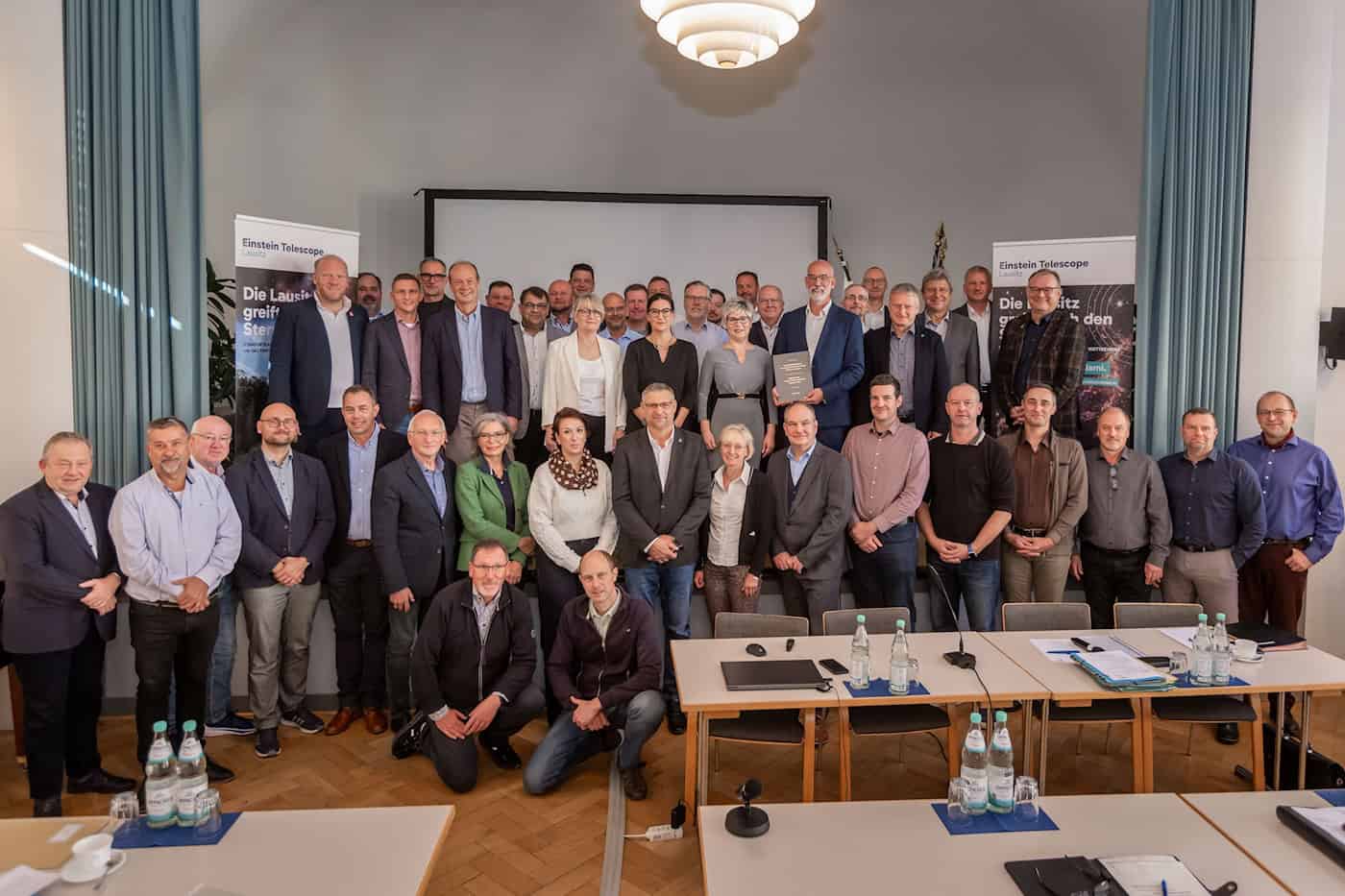
The Bautzen district and the Bautzen district association of the Saxon Association of Cities and Municipalities presented the letters of support on September 23 in Königsbrück. They were addressed to the “Einstein Telescope Lausitz” project team at the Technical University of Dresden. “The fact that all 57 cities and municipalities in the Bautzen district support the application sends a strong signal,” says Heiko Driesnack, mayor of Königsbrück and chairman of the district association.
District Administrator Udo Witschas also links the project to the structural transformation in Lusatia. “The Einstein Telescope would provide a decisive boost – for science, the economy, and the people in our region.”
The location where the Einstein Telescope will be built has not yet been decided. Lusatia is one of three candidate regions, along with Sardinia and the Euregio Meuse-Rhine. Sardinia and Lusatia plan to jointly implement a variant with two observation facilities. One of these would be built in Saxony, the other in Sardinia. Each facility consists of two long underground tunnels running at right angles to each other, forming an “L” shape. Inside the tunnels, laser beams will measure the minute changes caused by passing gravitational waves.
According to the current schedule, the site selection decision is expected in 2027. Until then, the geological conditions and technical feasibility of the potential sites, among other factors, will be examined.