

Sensors on trees could help detect forest fires early
Sensors attached to tree trunks are designed to detect a developing wildfire as early as possible and alert the fire department. Researchers at HTWK Leipzig are developing a wireless network for this purpose, in which the sensors activate one another.
Read Aloud
0:00
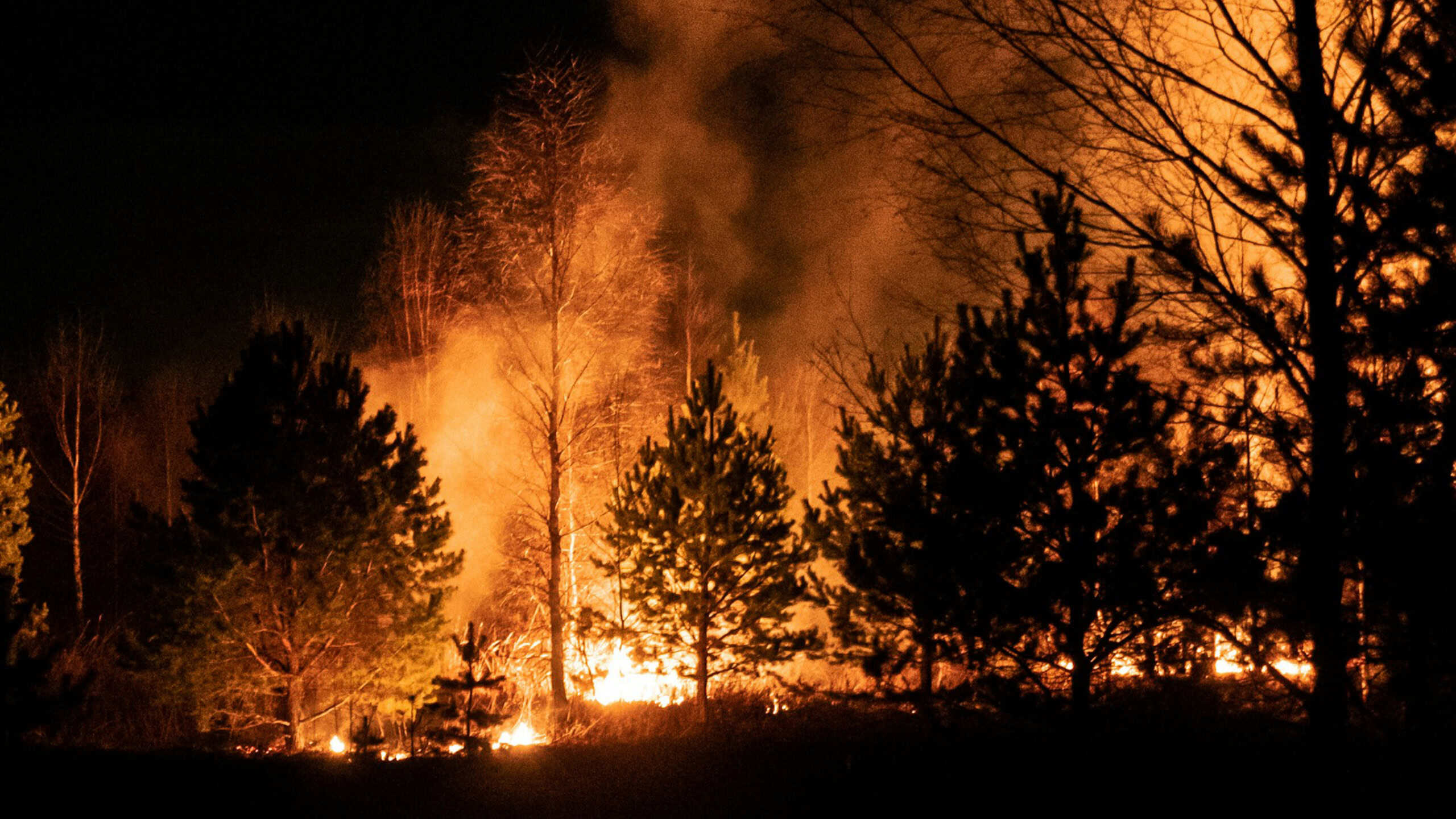
In the event of a forest fire, every minute counts. Researchers at HTWK Leipzig are developing a sensor network designed to detect emerging fires as early as possible and alert the fire department. © Egor Vikhrev/Unsplash
Every minute counts during a wildfire. That’s why researchers at HTWK Leipzig want to detect fires as early as possible. As part of the “ZUBAT” project, they are developing a network of small sensors that detect changes in the forest. If there are signs of a fire, a warning should be sent to the fire department as quickly as possible.
ZUBAT stands for “Future-Oriented Wake-Up-Based Opportunistic IoT Platform for Early Forest Fire Detection.” Two research groups at HTWK Leipzig are working on the project: the Chair of Communications Engineering led by Marco Krondorf and the Chair of Smart Diagnostics and Online Monitoring led by Faouzi Derbel. The Federal Ministry of Research is funding the project through the end of 2028.
Sensors wake each other up
The sensors are designed to remain in the forest for as long as possible. Frequent battery replacements would be costly. That is why the team is relying on so-called wake-up receivers. Not all sensors need to be active at all times. When necessary, they can “wake each other up.” This is expected to make the wireless technology up to 500 times more energy-efficient than previously established systems.
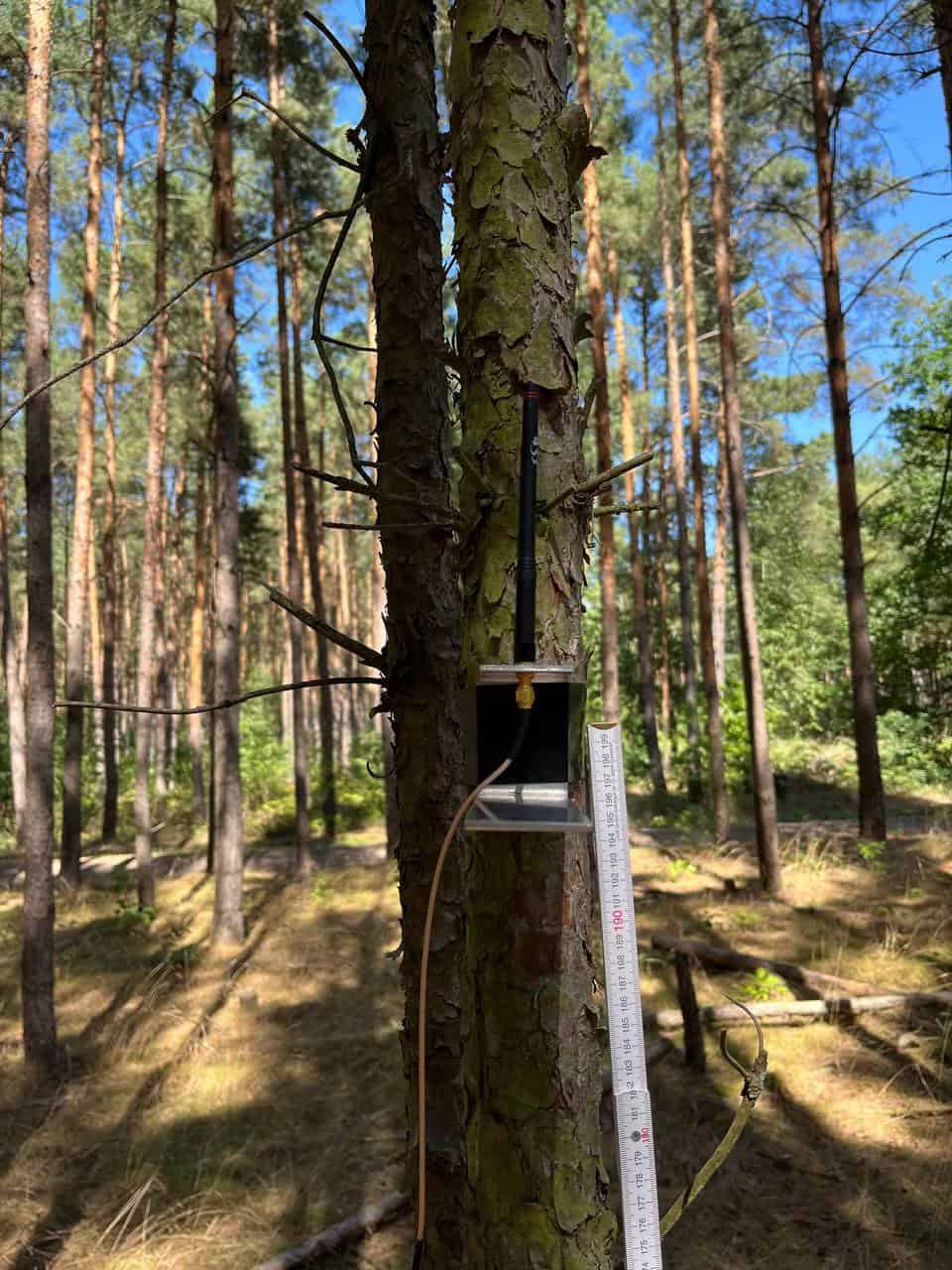
A sensor continuously measures particles in the air. If their concentration exceeds a certain threshold, additional sensors are activated. For example, they determine whether the particles are organic. Others measure carbon monoxide and carbon dioxide.
A microphone is also intended to be part of the system. If it detects human voices, additional sensors can be activated. According to the project team, more than 90 percent of wildfires are caused by humans. Combining multiple measurement values is intended to help better assess a potential fire and avoid false alarms.
The forest attenuates the radio signal
But detecting a fire is of little use if the warning cannot leave the forest. The sensors must transmit their data to a central base station. Trees and other plants can attenuate the radio signals. Marco Krondorf’s team is investigating the extent of this attenuation. To this end, the researchers have already conducted fieldwork in the Dübener Heide, the Leipzig floodplain forest, and the Ore Mountains. Sachsenforst provided them with forest areas for this purpose.
Based on the measurements, the researchers are currently calculating how often and to what extent radio signals are attenuated in the forest. At the same time, they are further developing the radio technology and building the first prototypes of the transmitters.
Next year, a controlled test fire is scheduled to take place on the grounds of HTWK Leipzig. Toward the end of the project, a test fire is planned in a Saxon forest, in collaboration with Sachsenforst and the fire department. This will reveal under what conditions the system operates reliably. In the long term, the results are intended to serve as the basis for technical standards for the early detection of wildfires.