Data gaps in Antarctica complicate sea-level projections
It is difficult to predict to what extent Antarctica will contribute to sea-level rise in the future. An international study involving TU Dresden highlights which measurement data are missing along the coast and why they are so important.
Read Aloud
0:00
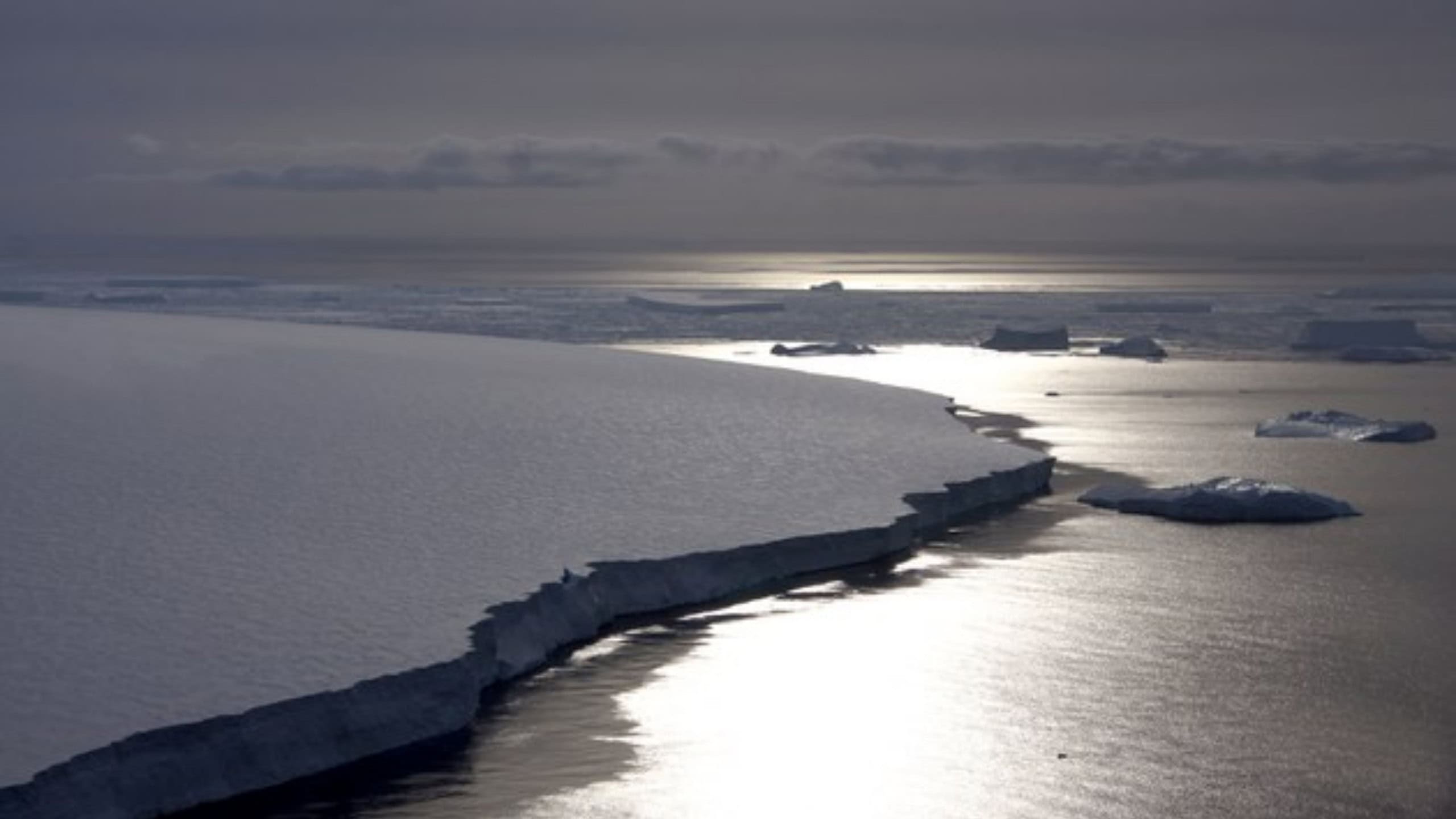
An aerial view of Pine Island Bay in West Antarctica. It is precisely along the coasts of Antarctica that there is a lack of key measurement data needed for more accurate sea-level rise projections. © Mirko Scheinert
How much will sea levels rise in the future? Antarctica plays a key role in this. Yet it is precisely along its coastline that important measurement data is lacking. An international study shows why these gaps make it difficult to predict sea-level rise.
Eighty researchers from 16 countries have compiled what is known about the Antarctic coastal zone – and where critical data is missing. The review article was published in the journal “Reviews of Geophysics.” Dr. Mirko Scheinert from TU Dresden is one of the authors. Additional German contributions come from Kiel, Bremen, Tübingen, Erlangen, Bremerhaven, and Hanover.
The coast determines ice loss
Along the Antarctic coast, the continent’s ice meets the ocean. The zone where the ice detaches from the solid ground and begins to float is particularly important. Processes in this area determine how much ice flows from the continent into the sea. “In the Antarctic coastal zone, the ocean, ice, atmosphere, and the underlying seafloor all converge – which is why it plays a central role in predicting future sea-level rise,” says Kenichi Matsuoka, head of the RINGS research group. The few observations in this region leave critical gaps in our knowledge.
Measurements from the past decades show that Antarctica is losing ice at an increasing rate. It’s not just surface ice that’s melting. The ocean and the movement of ice at the edges of the ice sheet also play an important role. Satellites are good at tracking how the ice on the surface moves and changes. However, what lies beneath the ice remains hidden from them. Yet the shape of the subsoil and the seafloor is particularly crucial for understanding the movement of the ice and improving models.
“We cannot rely solely on satellite data to estimate the mass loss of the Antarctic ice sheet. Nor can we rely solely on computer models to predict future changes,” says Mirko Scheinert of TU Dresden.
Cross-border collaboration
To close these data gaps, the researchers are calling for greater international coordination. No single country can conduct the necessary measurements across the entire coastal zone on its own. Without coordination, some teams study individual areas multiple times, while data continues to be missing elsewhere.
The RINGS Action Group of the Scientific Committee on Antarctic Research coordinates the international effort. Support comes from the Council of Managers of National Antarctic Programs, which assists with planning measurement campaigns, for example. The new overview shows where particularly important data is missing and where measurements should be better coordinated. According to Matsuoka, such international projects could also serve as a starting point for further research programs during the next International Polar Year in 2032/33.