
Electronic skin for patient monitoring
People in the hospital are often hooked up to a lot of machines. Researchers at Chemnitz University of Technology and Dresden University of Technology are working on an alternative solution. Here's what they're planning.
Read Aloud
0:00
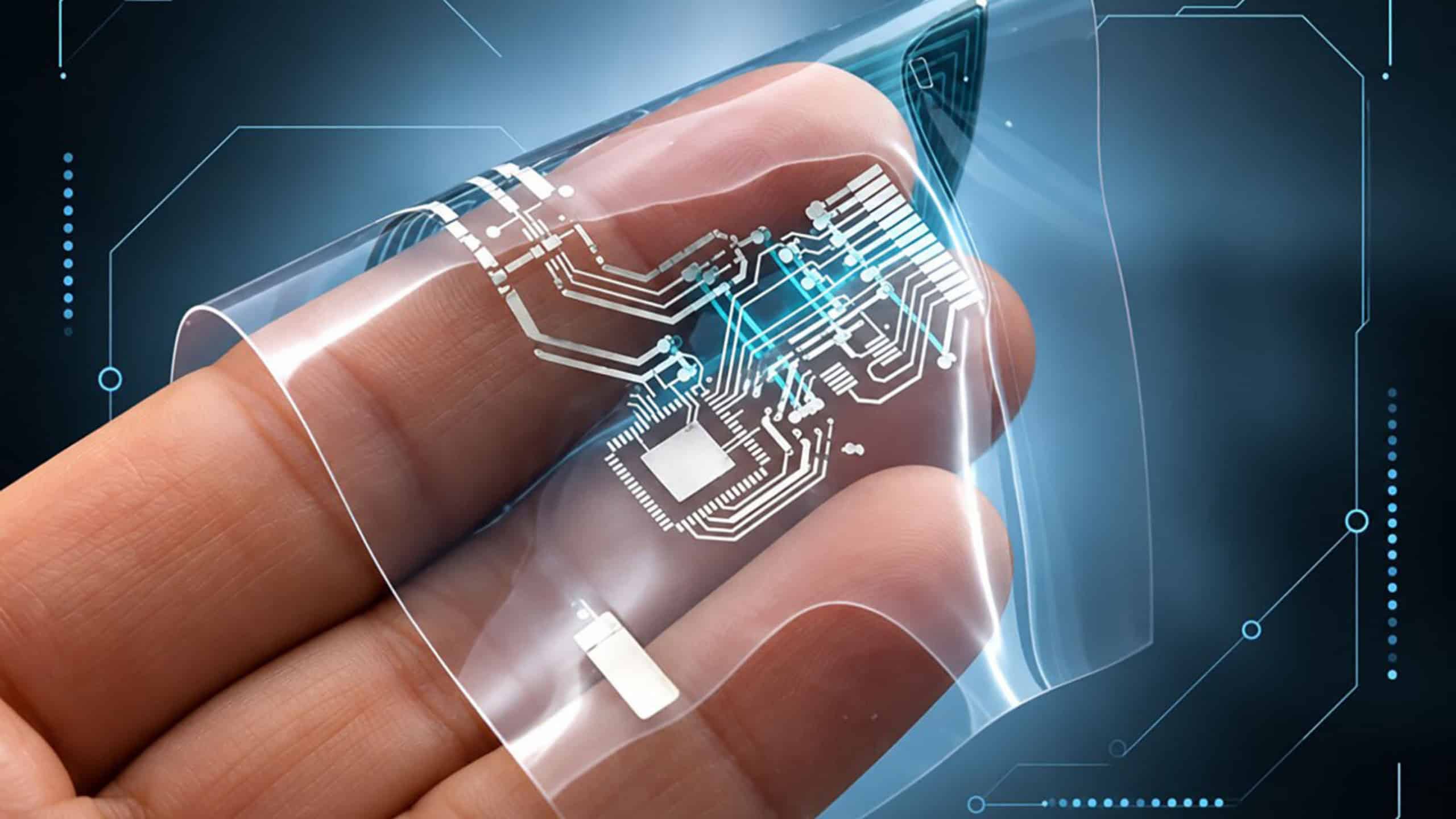
This is what the electronic skin of the future is expected to look like: An ultra-thin sensor platform monitors vital signs and environmental data. The individual sensor modules can be swapped out as needed. © Graphic: MORPHEUS
Monitoring patients in the hospital can sometimes be uncomfortable for them. Adhesive electrodes on the chest, cables, or a blood pressure cuff provide important vital signs. However, this doesn’t always allow for free movement. Researchers from Chemnitz and Dresden will be working on an alternative in the coming years. Together with partners from across Europe, they are developing a kind of electronic skin. In the future, it will measure important physiological parameters without restricting patients.
The project is called MORPHEUS. The European Union is funding the project with nearly five million euros over the next four years. A total of 13 partners from seven countries are participating in the research. Among them are Chemnitz University of Technology and Dresden University of Technology.
Wireless measurements
The various measurement modules are based on an ultra-thin and flexible substrate. Depending on the need, the measuring devices mounted on it can be exchanged or added to. The flexible electronics can later be worn directly on the skin or on clothing.
Planned features include sensors for blood pressure and for the stress hormone cortisol. The researchers also aim to monitor fluid balance more closely. To do this, very weak electrical currents – which the patient cannot feel – are passed through the tissue. Conclusions about fluid balance, among other things, can be drawn from the electrical resistance. In addition, there are measurements from the environment, such as temperature.
All data is to be transmitted wirelessly. A flexible display is also planned. To power the system, the researchers are developing flexible energy storage devices. “The combination of new materials, flexible electronics, and interchangeable sensor modules opens up new possibilities for continuous and as unobtrusive as possible monitoring of patients,” says Dr. Daniil Karnaushenko. He is leading the work at Chemnitz University of Technology at the MAIN Research Center.
Many hurdles remain before clinical use
However, the electronic skin should not only be flexible. The researchers are also looking for materials that the body tolerates well. At the same time, everything must function in a way that is as environmentally friendly as possible. This is necessary because many medical sensors and their accessories end up in the trash after use. That is why the scientists in the project are investigating biodegradable materials. Whether this will ultimately help save materials and reduce waste remains to be seen.
The idea of electronic skin is not new. Research teams around the world are looking for ways to make it a reality. But there is a long way to go from a functioning sensor in the lab to a reliable medical device for patients.
One challenge is accurately measuring blood pressure without a cuff. The European Society of Cardiology does not yet recommend its use in clinics. The American Heart Association also warns against relying on this technology for the diagnosis and treatment of high blood pressure. Many devices have yet to prove that they can provide reliable measurements in everyday use.
With a patch that is worn continuously on the body, there is an additional challenge: The sensors must also provide accurate readings over extended periods of time. This applies, for example, to the planned measurement of the stress hormone cortisol.
By 2030, the project therefore aims to develop a prototype that can be tested under conditions as close to real-world as possible. However, this is still a long way from becoming an approved medical device that can be used in clinics. Further research would be necessary for that.