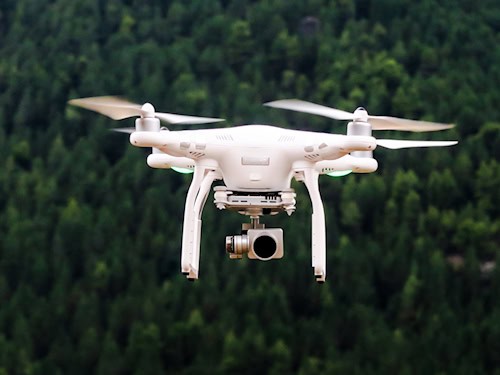

Drones can land on this tractor
Drones can take off and land on the roof of a new tractor at HTW Dresden. The footage they capture can be used to study how the wind carries away pesticides during spraying.
Read Aloud
0:00
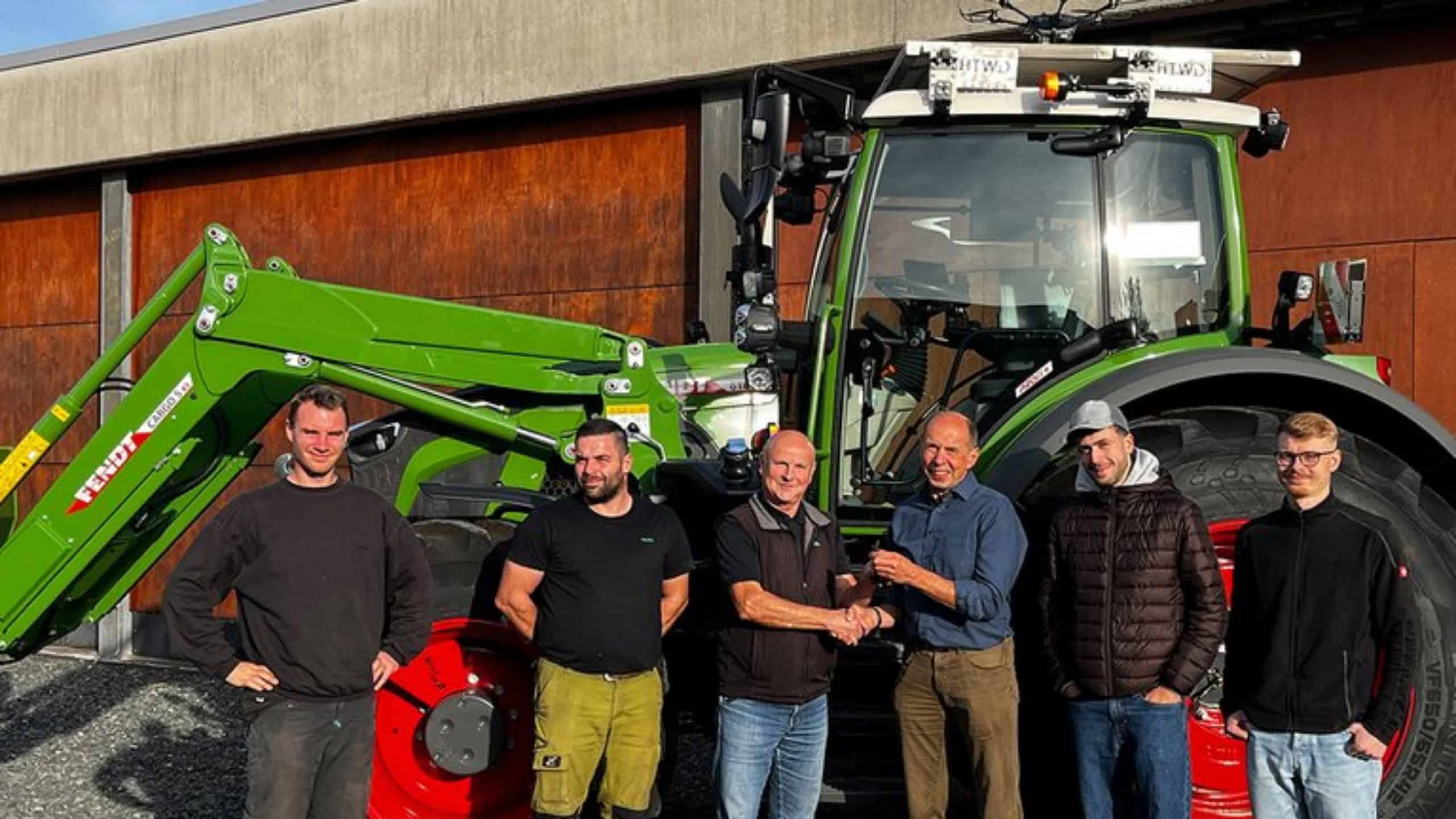
Drones can take off and land on the cab roof of HTWD's new experimental tractor. © HTWD
Drones are currently finding more and more applications. The Dresden University of Applied Sciences (HTWD) is now taking them out into the field as well. A new experimental tractor developed by the university features a dedicated takeoff and landing pad right on the cab roof. The HTWD has patented this idea.
When tractors spray pesticides, the wind can carry fine droplets of the chemical into the surrounding area – including neighboring fields. Experts refer to this as drift. The researchers want to use the drones to investigate how much pesticide drifts in such cases.
What the drone sees from above
The tractor is a Fendt 618 and is located at the HTWD campus in Dresden-Pillnitz. The university developed the platform on the roof of the driver’s cab itself. From there, the drone can take off and capture aerial footage of the field.
Meanwhile, the tractor on the ground records how it and the attached implements are operating. Later, the researchers can analyze this data together with the measurements taken from the air. For example, by observing the movement of the plants, they can determine the direction and strength of the wind. Such information can help distribute fertilizer more evenly.
“With this tractor, we’re creating an extraordinary connection between modern agricultural technology, sensor technology, automation, and drone technology,” says Prof. Karl Wild. "At the same time, the platform opens up new possibilities for research projects because we can collect, merge, and scientifically analyze data from the tractor, the attachment, and aerial imagery together."
Someone is still behind the wheel
Other teams are also combining agricultural machinery and drones for joint tasks. For example, a Chinese research team tested a system in an orchard in which a drone and a small ground vehicle spray pesticides. At the University of Nebraska–Lincoln, a team worked on using a drone to deliver seeds to a field robot in order to replenish its supply.
With the test tractor, HTWD also aims to investigate how work steps can be automated in the future. It is also interested in how the tractor can exchange data with its attached implements. Students use it to practice working with sensors, driver assistance systems, and automated driving functions under real-world conditions.
Technically, the tractor can perform many work steps largely on its own. However, according to the university, a human driver is still required for its current use. The vehicle cost 400,000 euros and was financed through the “Großgeräte der Länder” program.