Researchers find microplastics in the blood of tapirs
Even in remote regions of Brazil, wild animals ingest microplastics. This is shown by a study involving researchers from Görlitz. What role does distance from humans play in this?
Read Aloud
0:00
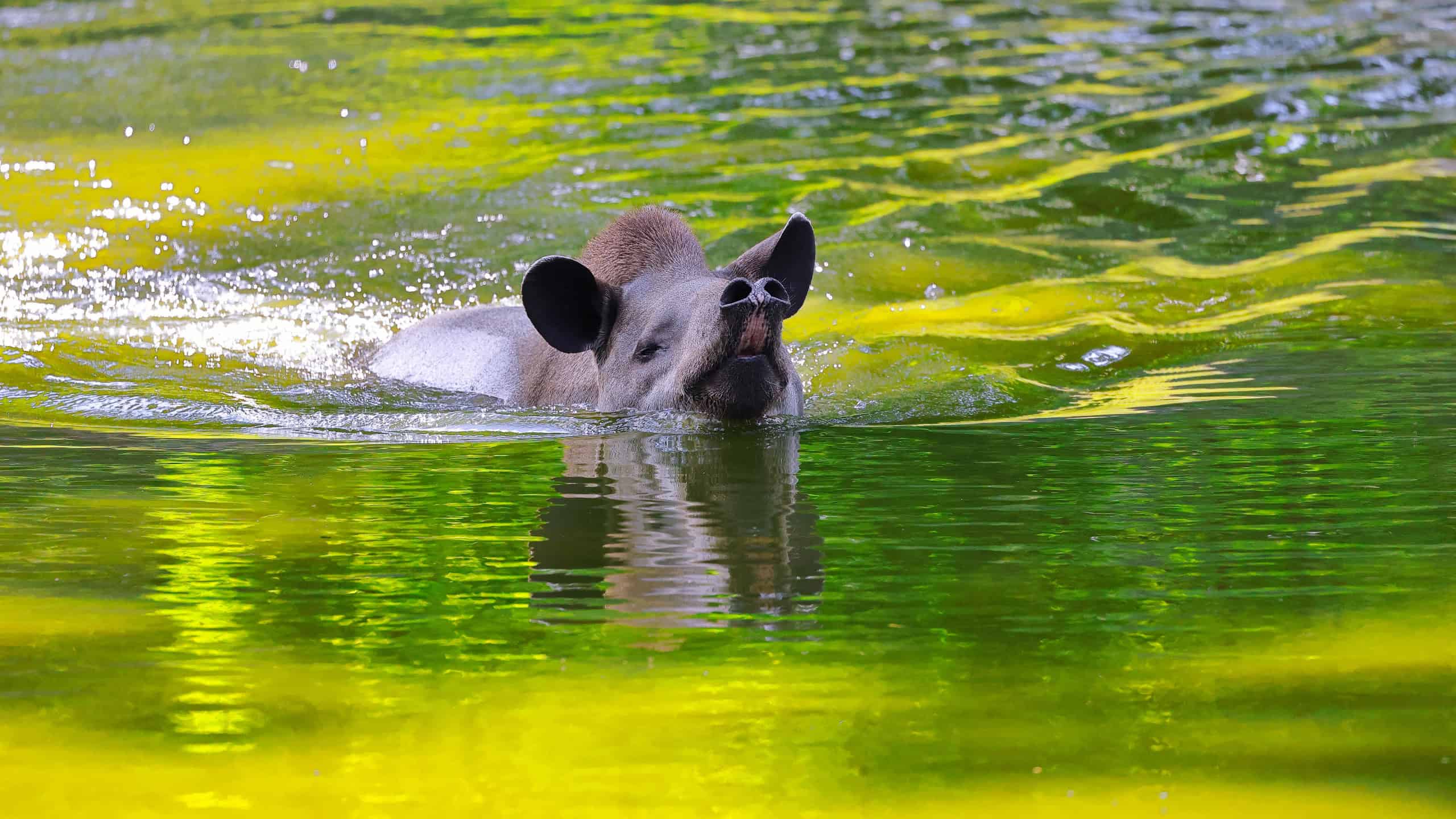
A research team that included members from Görlitz analyzed the blood of tapirs in Brazil. It detected microplastics in the blood of the majority of the animals. © sharkolot/pixabay
Plastic is all around us in our daily lives. Our food is often packaged in plastic; it’s found in car tires and even in many items of clothing. According to the recently published industry study “Material Flow Map of Plastics in Germany 2025,” plastic consumption in Germany last year totaled just under 11 million metric tons. In 2023, it was 11.25 million metric tons.
Some of this plastic ends up in the environment. Over time, it breaks down into smaller and smaller pieces. If these plastic particles are smaller than five millimeters, they are referred to as microplastics. Wind and water can carry the particles long distances.
In Brazil, a research team found microplastics in the blood of tapirs and anteaters. The study has now been published. Researchers from the Center for Advanced Systems Understanding (CASUS) in Görlitz were also involved.
What GPS data reveals about habitats
Concentrations tended to be higher when the animals lived in areas that had been more heavily altered by humans. Even in the remote Pantanal wetland, the researchers found microplastics in the blood of all the animals examined there.
The international team led by Marcia Ferraz of the University of British Columbia studied a total of 26 lowland tapirs and 21 giant anteaters in the Amazon region, the Cerrado, and the Pantanal. Researchers from Görlitz helped link the blood test results to the animals’ movements.
For several years now, CASUS has been an expert in animal movement. A GPS transmitter records where an animal was at specific times. Software later helps estimate how it moved between the measurement points. The research team used a program that Justin Calabrese – a researcher from Görlitz and a collaborator on the study – and his team have been developing for years.
Using this, the team estimated which areas the animals regularly use. They then compared these areas with maps showing the extent to which humans have altered the landscape. This allowed them to establish a connection between the blood values and the animals’ habitats.
Microplastics in the blood even in the remote Pantanal
According to the findings, the concentration of microplastics in the animals’ blood depends on whether they were in areas more heavily altered by humans or not. If they were, the concentration was higher. This was also true for animals living near waste disposal facilities.
In the remote Pantanal, the levels were lower. Although the animals there lived, in extreme cases, more than 65 kilometers away from human settlements, they, too, had microplastics in their blood. And this was despite the fact that, according to GPS data, they were in areas without any discernible human impact. How the particles got there or how the animals ingested them remains unclear.
The study measures microplastic concentrations in the blood. It does not clarify what consequences this has for the health of tapirs and anteaters.
Based on the correlation with proximity to waste facilities, the research team proposes possible protective measures. According to the research team, improved waste management around settlements and the establishment of buffer zones around protected areas could reduce exposure. However, the extent to which these measures would be effective would need to be investigated.
Original publication:
Marcia de Almeida Monteiro Melo Ferraz et al.: Human land use drives microplastic abundance in terrestrial wildlife, in Nature, 2026