Saxony helps develop a new treatment for type 2 diabetes
Viacure Therapeutics is working with partners in Saxony to develop a drug designed to improve pancreatic function. The goal is to conduct initial human trials.
Read Aloud
0:00
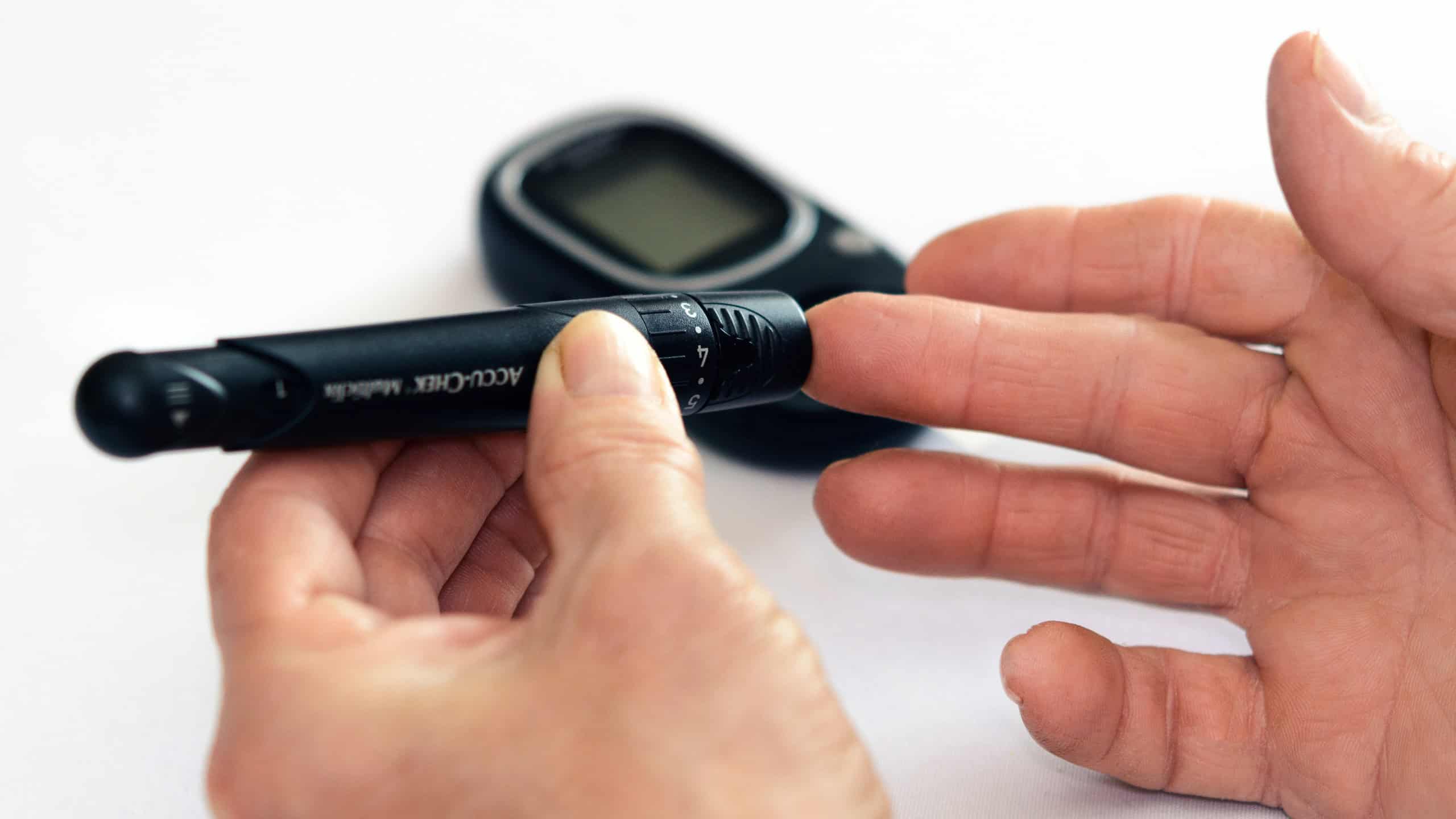
For many people with diabetes, checking their blood sugar is part of their daily routine. A research team working with partners in Leipzig and Radeberg is developing an antibody designed to protect insulin-producing cells in people with type 2 diabetes. © AS Photographie/pixabay
Diabetes is a widespread disease. According to information from the German Diabetes Society, approximately 9.5 million people in Germany currently live with type 2 diabetes. In Saxony, according to a 2024 survey by AOK Plus, one in eight people is already affected. The Free State of Saxony thus lies well above the national average.
Regular blood sugar monitoring, pills, or even injections are part of everyday life for people with diabetes. Their body’s sugar metabolism is disrupted. We consume carbohydrates with our food, which are converted into glucose during digestion. This glucose enters the bloodstream. Insulin helps the body’s cells absorb the sugar and use it as a source of energy.
Insulin is produced in the beta cells of the pancreas. However, in diabetes, this very process does not function properly. Viacure Therapeutics is now working with partners from Saxony to develop an antibody that ensures insulin production. It is designed to protect the insulin-producing beta cells and improve their function
Protein inhibits insulin production
Viacure is a spin-off of Helmholtz Munich. The Saxon partners involved are the Fraunhofer Institute for Cell Therapy and Immunology IZI in Leipzig and CUP Laboratories Dr. Freitag in Radeberg. Nearly ten million euros have been allocated for the development. The Free State of Saxony and the European Union are jointly funding 80 percent of this amount.
In type 2 diabetes, many of the body’s cells respond less effectively to insulin. To compensate, the beta cells initially produce more insulin. The more the disease progresses, the more the beta cells lose this function or die off.
As early as 2021, the team led by researcher Heiko Lickert at Helmholtz Munich described a protein called Inceptor. In beta cells, it reduces the effect of insulin signals. Later, the researchers also showed that Inceptor contributes to the breakdown of insulin within the cells.
The new antibody is intended to block Inceptor in the future. This has already been tested in the laboratory. The researchers treated human beta cells with the antibody. Afterward, the cells contained more insulin. When the team increased the glucose concentration, the cells released more insulin than untreated cells. In another experiment, the researchers knocked out the gene for Inceptor. In this scenario, more beta cells survived.
Leipzig paves the way for potential studies
The Fraunhofer IZI is now tasked with developing a process to produce the antibody at the quality level required for a human trial. In animal model experiments, the scientists also plan to examine how the active ingredient works and whether it causes any harm.
The partners aim to complete the investigations by the end of 2028. If they reach a positive conclusion, an initial human trial would be conceivable. However, approvals would first be necessary for this. Clinical trials would then have to demonstrate whether the antibody is safe and effective in people with type 2 diabetes.
Helmholtz Munich and the Saxon partners are not the only ones focusing on beta cells to find new ways to combat diabetes. For example, in 2024, a team from New York transplanted human pancreatic tissue into mice. They administered a combination of the plant compound harmin and the active ingredient exendin-4 to the animals. As a result, the mass of the human beta cells increased.
The project between Munich and Saxony now aims to protect the existing beta cells. Whether this will work remains to be seen in a few years.