Needle-free injections: Microgels as tiny helpers
A jet of liquid instead of a needle prick. Tiny, soft particles could help deliver medications through the skin more reliably.
Read Aloud
0:00
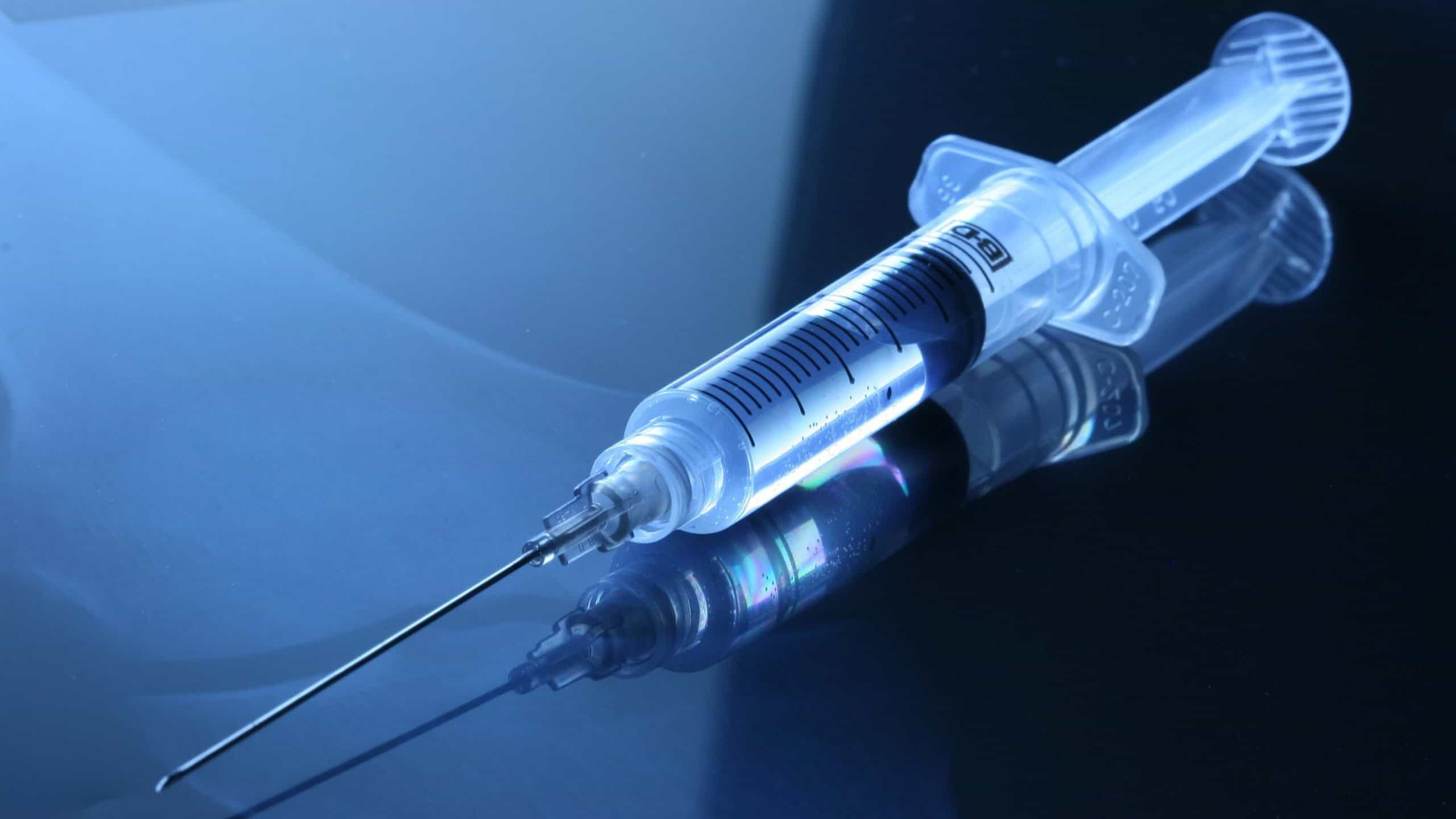
Will syringes no longer be necessary in the future? Fine streams of liquid could deliver medication under the skin. Microgels are expected to help. © Triggermouse/pixabay
This would be good news for people who are afraid of shots: receiving medication without a needle piercing the skin. This could be made possible by extremely thin liquid jets that deliver the active ingredient through the skin. Researchers led by TU Darmstadt have now discovered how to make such jets more stable. Tiny, soft particles – known as microgels – play a key role in this process. Researchers from the Leibniz Institute for Solid State and Materials Research Dresden (IFW Dresden) also participated in the study.
Microgels are less than one-thousandth of a millimeter in size. When water and air come into contact, the soft particles can attach themselves to the water’s surface. There, they reduce the surface tension – that is, the force that holds the water’s surface together. Surfactants – found, for example, in soap or dishwashing liquid – work in a similar way. The microgels used in the study are non-toxic.
Soft particles stay together longer
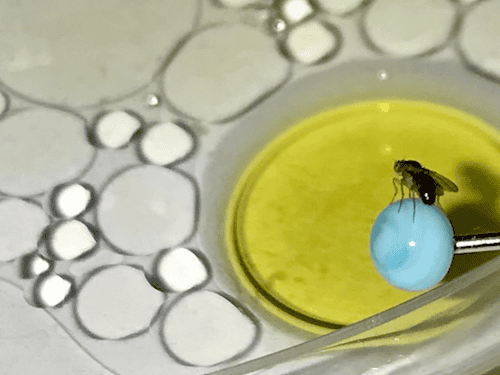
For their experiments, the researchers mixed microgels into a drop of water. A special chip caused the drop to vibrate in such a way that an extremely thin stream of water formed. A high-speed camera recorded how long it remained stable.
This revealed a surprising effect. Although the microgels are tiny, their properties influence a liquid jet that extends over one centimeter. “The softer the particles were, the longer the water jet remained stable,” says Amin Rahimzadeh of the Technical University of Darmstadt.
The researchers were able to vary the stiffness of the microgels during the manufacturing process. The softer particles deform and stretch more. As a result, they remain more firmly connected to one another at the surface of the water jet. Stiffer microgels separate more easily from one another. This causes the jet to become unstable and break up sooner. Computer simulations confirmed this relationship.
Needle-free medications
Needle-free injections already exist. In this process, the liquid medication is forced through a tiny opening and accelerated so strongly that the fine jet can penetrate the skin. Depending on the method, the active ingredient enters the skin or is deposited just beneath it. Such systems are used, for example, for vaccines or insulin.
The new study now shows how such a liquid jet can remain as stable as possible and what role microgels can play in this process. The better the jet can be controlled, the more reliable such systems would be in the future and the more widely they could be used. In the long term, this could also reduce medical waste from disposable needles.
The technology for the experiments came from Dresden. Andreas Winkler and Mehrzad Roudini from IFW Dresden developed the experimental setup that the researchers used to generate the thin liquid jets. They are now working to further improve this technology so that the jets can be generated and controlled with even greater precision.