How the brain responds when language processing is disrupted
For a study, researchers in Leipzig briefly disrupted a region of the brain that helps with word comprehension using magnetic pulses. Other areas became more active. What this means.
Read Aloud
0:00
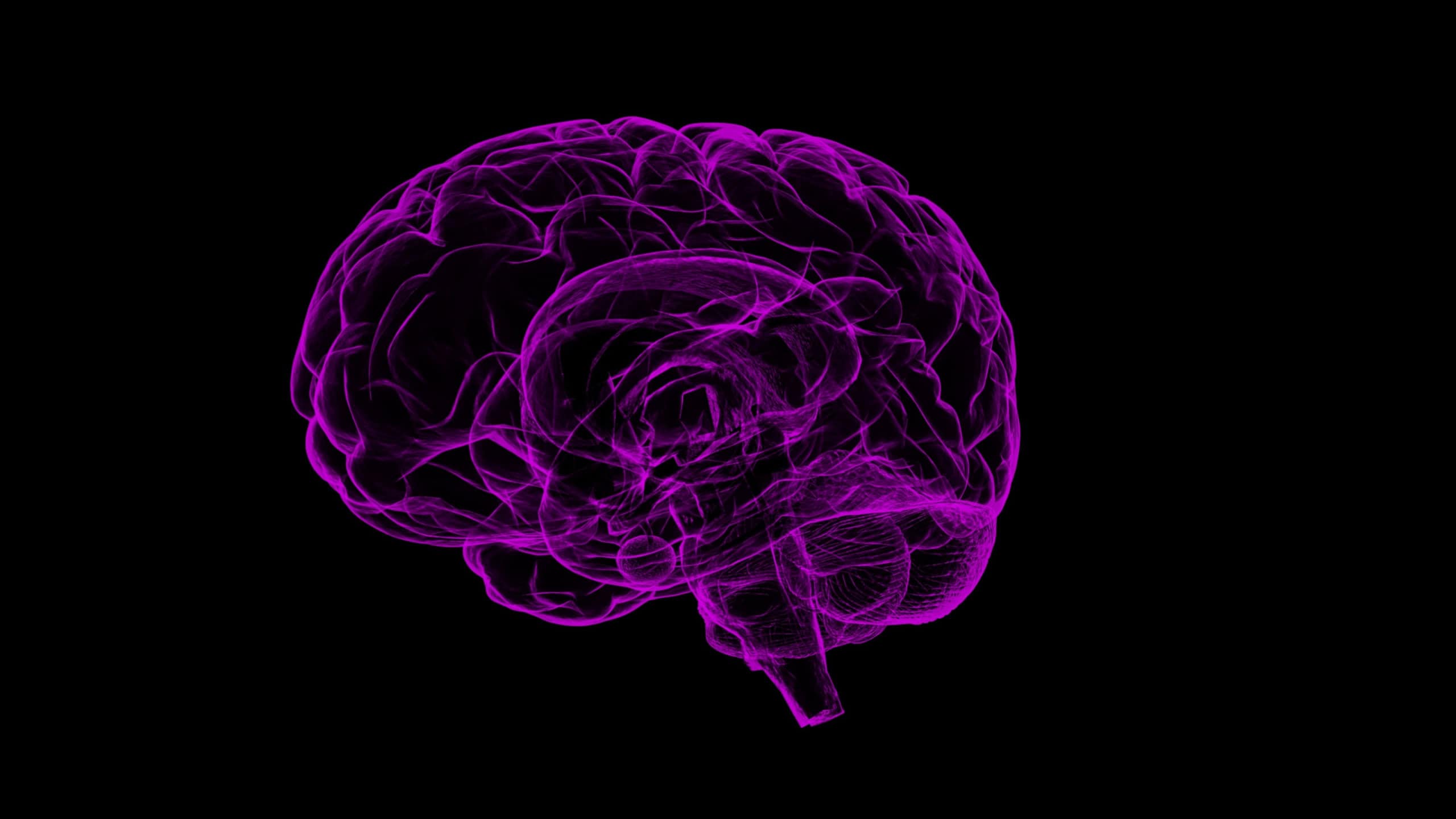
Several regions of the brain work together to process words. Researchers in Leipzig are studying how this network responds to a temporary disruption. Symbolic illustration. © Raman Oza/pixabay
A restaurant on a Saturday night. All the tables are full; people are talking and laughing. Somewhere, a cell phone rings. Background music blares from the speakers. Despite the noisy surroundings, we can still follow the conversation with the person across from us. Researchers from Leipzig wanted to know how our brain reacts when it has more difficulty processing language. This could also be important for stroke therapy.
For a study, a team from the University of Leipzig and the Max Planck Institute for Cognitive and Neural Sciences temporarily disrupted a specific brain region in study participants. This region is responsible for understanding the meaning of words. During this process, other areas of the brain became more active. This could explain why language performance was less severely impaired in some participants.
Alternating magnetic pulses and brain scans
The team led by Gesa Hartwigsen, professor of cognitive and biological psychology at the University of Leipzig, combined two methods for the study. These are otherwise used separately in such studies. Using short magnetic pulses from outside the head, the researchers temporarily disrupted a small area in the left temporal lobe of the study participants. This procedure is called transcranial magnetic stimulation, or TMS for short. Between pulses, the team used a brain scanner to detect which areas showed changes in activity. This method is called functional magnetic resonance imaging, or fMRI for short.
In this way, the team tracked how the disruption affected other brain regions. During the experiment, 25 healthy young adults performed tasks involving word meanings. The region directly affected by the disruption became more active. The more its activity increased, the slower the participants’ responses were. In more distant areas of the frontal lobe, the opposite relationship was observed. When these areas were more active, the participants found the language task less difficult.
These areas also assist with other cognitive tasks. “This suggests that disruption and compensation in the brain do not occur sequentially, but simultaneously,” says Hartwigsen. Other brain regions may therefore partially compensate for the disruption.
What the study means for stroke research
Gesa Hartwigsen has long been investigating how the interaction between brain regions changes when language processing is disrupted. This is also relevant to stroke research. After a stroke, some people must relearn how to better understand speech. Could brain regions that also play a role in many other cognitive tasks help with this?
The findings from the Leipzig researchers now provide an important clue as to which areas need to be examined more closely. In the long term, this could help develop new therapies for language recovery.
It remains to be seen whether the brain reacts similarly during conversations in noisy environments as it does during laboratory tests. Further studies must also determine whether the findings can be applied to older adults or to people who have suffered a stroke.