
Storing cold with liquid ice
Refrigeration consumes a lot of electricity in the food industry. That’s why a facility in Brandenburg uses solar energy when it’s available and stores cold for later use. Researchers from ILK Dresden are helping with this—in part by using liquid ice.
Read Aloud
0:00
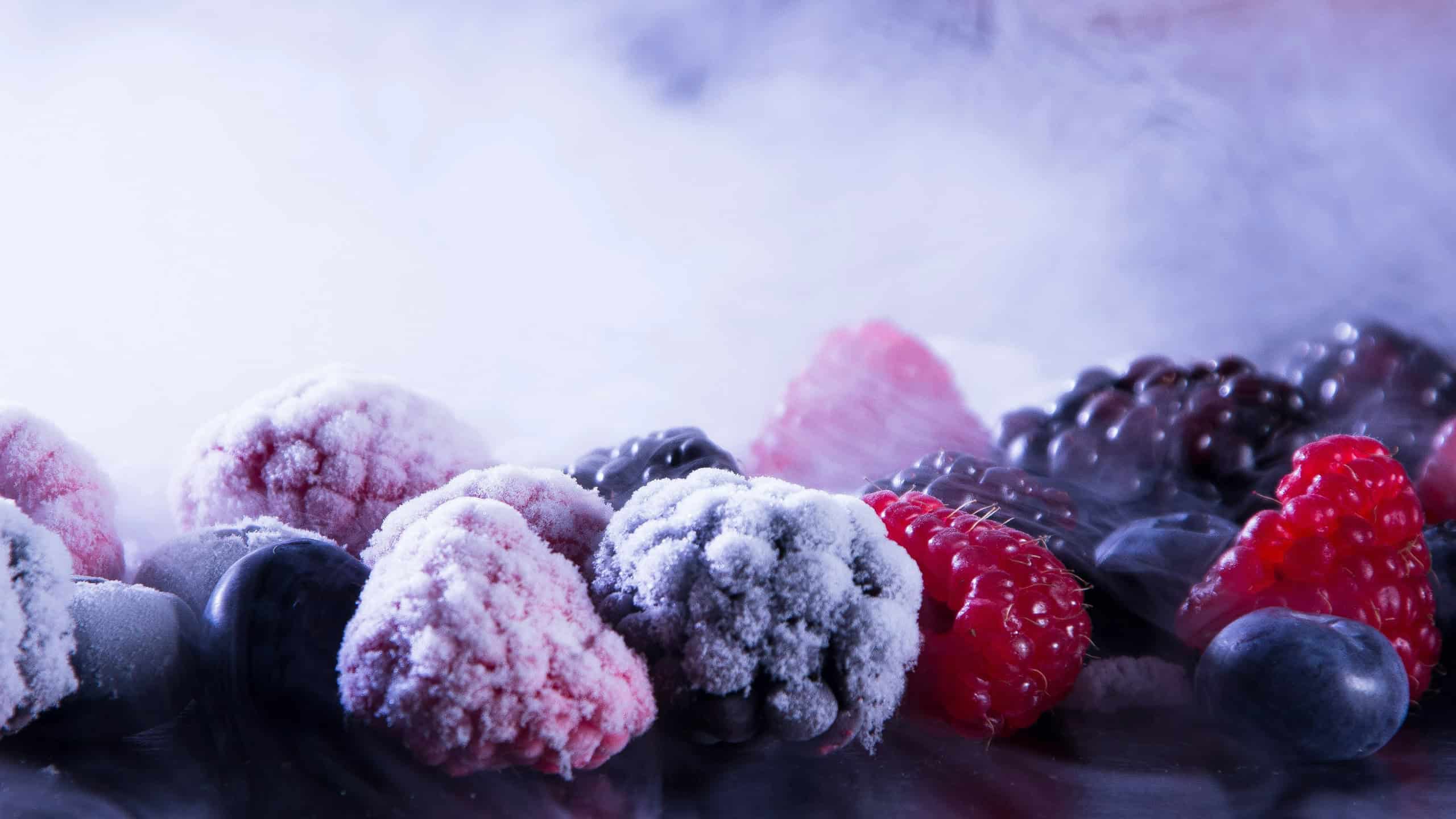
Food must be refrigerated. That uses electricity. A company in Brandenburg is collaborating with ILK Dresden to test how to generate cold using solar power and store it for later use. © Devin Rajaram/Unsplash
Yogurt, frozen vegetables, and fruit have already been through a lot of cooling before they end up in our shopping carts. In the food industry, refrigeration is one of the biggest energy guzzlers. When electricity prices rise, it gets expensive. A family-run business in Brandenburg, in collaboration with researchers from Dresden, is demonstrating how things can be done differently. The idea: generate cold when there is an abundance of the company’s own solar power and store it for later use. Liquid ice, among other things, helps make this possible.
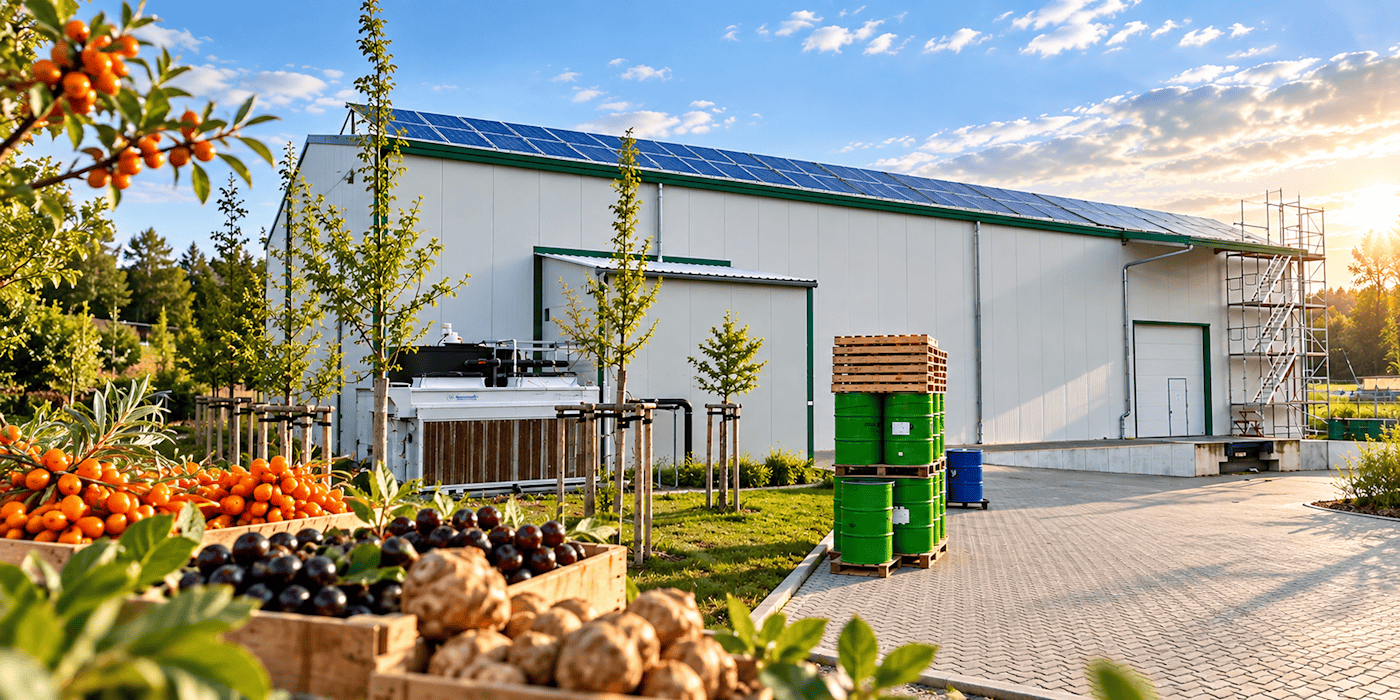
Lienig Wildfruchtverarbeitung in Zossen processes local fruits such as elderberries, sea buckthorn, and Jerusalem artichokes. In 2021, the company built a new warehouse. The temperature inside ranges from 14 to 18 degrees. There is also a cold storage room maintained at 2 to 8 degrees and a deep-freeze room kept below minus 18 degrees. The energy supply system was developed by the Institute for Air and Refrigeration Technology in Dresden (ILK Dresden). The system has been in operation since 2022.
Cold storage in reserve
Electricity is supplied by a solar system on the warehouse roof. However, the sun does not align with cooling demand. That is why the system generates cold in advance. If the solar system produces more electricity than is currently needed, the fresh and frozen food storage areas can be pre-cooled more thoroughly. They then store the cold themselves for a period of time. Any additional surplus can be stored in the liquid ice storage system. The cold is then available later when less solar power is being generated.
The system also relies primarily on natural refrigerants, such as propane and carbon dioxide. A monitoring system is currently tracking the system’s energy flows. As part of a funded research project, the ILK is further developing the existing control system. In the future, the system is designed to operate proactively and adapt autonomously. Already, the largest energy consumers are primarily operated when the sun is generating electricity.
Of interest to dairies and similar businesses
“We were able to significantly reduce our energy costs while making an important contribution to sustainability,” says Helmut Lienig, managing director of Lienig Wildfruchtverarbeitung.
It wasn’t an easy journey. The devices in the facility speak four different technical languages that first had to be reconciled. In fact, four different systems operate in the facility, through which devices and control systems exchange data. The company waited about two and a half years for the grid operator’s approval of the solar system – even though it intends to consume the electricity itself.
According to the ILK Dresden, this principle could also work in cold storage facilities, dairies, and meat and fruit processing plants. Cooling is generated whenever possible when a large amount of the facility’s own solar power is available. Any excess that isn’t needed immediately is stored and used later.