
"Saxony should be a driving force in nuclear fusion"
Saxony is investing – even though it remains to be seen when these ideas will actually turn into power plants. Science Minister Sebastian Gemkow explains why he sees opportunities.
Read Aloud
0:00
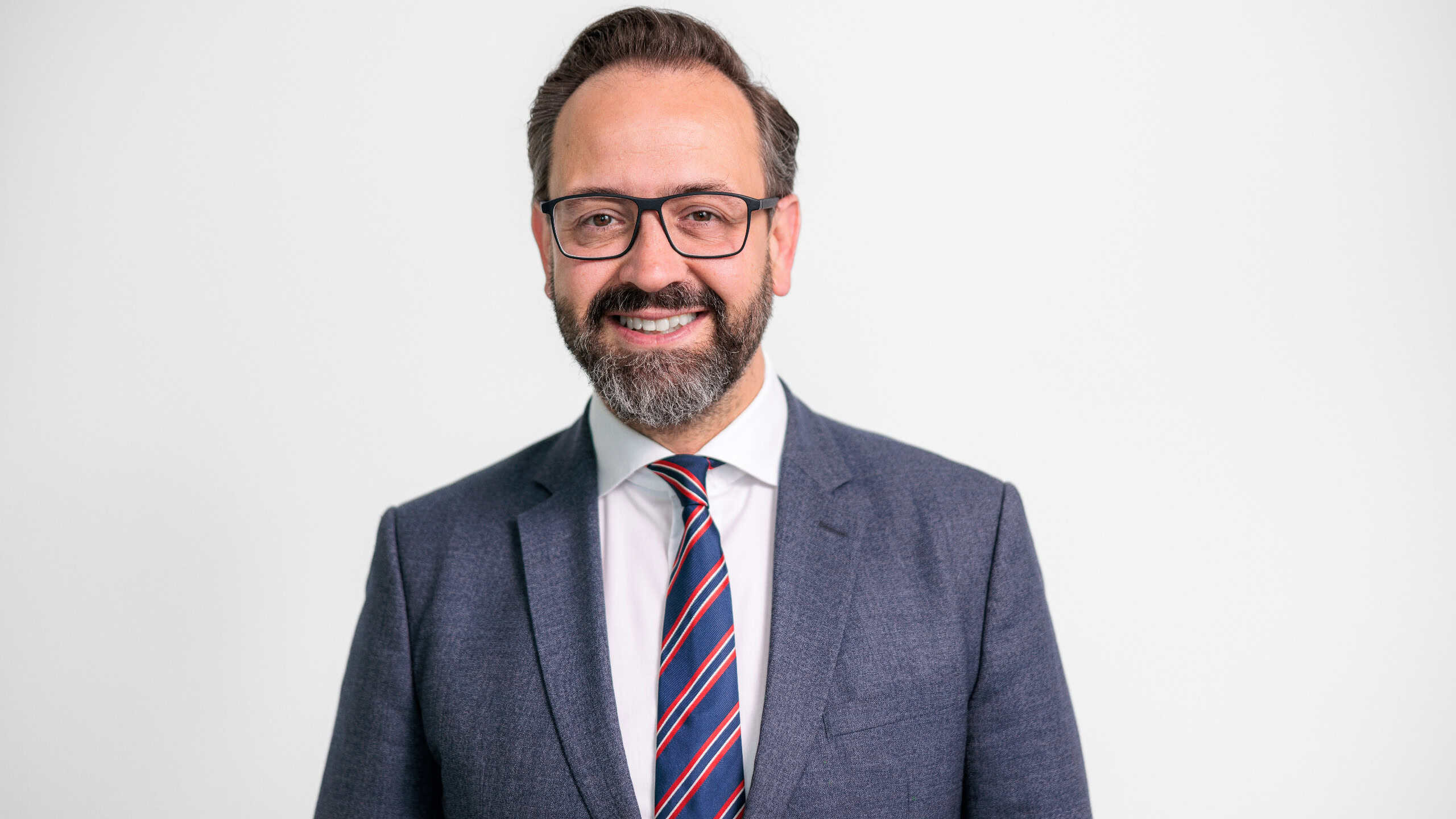
Saxony's Minister of Science, Sebastian Gemkow, wants to position the Free State as a hub for nuclear fusion. © SMWK
Saxony wants to play a role in the development of nuclear fusion. Through SAXFUSION, the Free State is already supporting a network designed to bring together research and industry in this field. However, not a single fusion power plant in the world is currently generating electricity. In this interview, Saxony’s Minister of Science Sebastian Gemkow explains why the state is nevertheless committed to this technology.
Mr. Gemkow, nuclear fusion has been the subject of research for decades. Why is Saxony placing greater emphasis on it right now?
Research has now advanced to the point where the transition to building a prototype seems realistic. This applies, for example, to magnetic confinement fusion. Work on this is being conducted, among other places, at the Wendelstein 7-X research facility in Greifswald and as part of the large-scale international ITER project in France. At the same time, laser inertial fusion has recently made progress. In the U.S., fusion processes have been successfully replicated in experiments. Additional momentum is coming from the federal government’s high-tech agenda and several startups working on fusion technologies in Germany.
How does Saxony plan to benefit from this momentum?
We want to make a significant contribution to the construction of Germany’s first fusion power plant. At the same time, we want to ensure that these developments also bring economic benefits to Saxony. Backed by our strong research institutions, we see great potential for the transfer of research results and the resulting value creation in Saxony.
Germany already has important centers of fusion research in Greifswald and Garching. What can Saxony contribute?
Greifswald and Garching are centers for experimental magnetic confinement fusion. In addition, laser inertial fusion represents a different technological approach. However, both face common challenges. These include the handling of tritium and the development of materials for the first wall of a reactor. The Dresden-Rossendorf Research Center likely operates the most extensive research facilities for laser-driven fusion in Germany at present. Furthermore, Saxony has a strong presence in materials research. It is precisely in this area that major challenges remain on the path to a fusion power plant – challenges that Saxony can help solve.
Why is a network like SAXFUSION needed for this?
There is a great deal of specialized knowledge at Saxony’s universities and research institutions. I am quite certain that the vast majority of these institutions can contribute to the development of a fusion power plant – and in some cases, they are already doing so. The challenge lies in bringing the right people together to drive joint projects forward. Such projects are particularly complex and demanding, especially in the field of nuclear fusion. This is precisely where SAXFUSION comes into play, facilitating targeted networking among the key players.
SAXFUSION will receive 2.4 million euros in funding from EU and state sources from 2025 to 2027. What happens after that?
Research networks like SAXFUSION initially receive seed funding. The goal is to establish structures that will be financially self-sustaining in the medium to long term. In addition, the Free State continues to invest in research projects and the necessary infrastructure. After all, if we want to succeed in fusion research, we must invest in research and development over the long term. However, the amount of funding available for this also depends on the budget and on the economic potential we see for Saxony.
No fusion power plant in the world is currently generating electricity. Why should the government invest money in a technology whose economic success is uncertain?
Many technologies that we take for granted today took decades to reach market maturity. Consider lithium-ion batteries, mRNA technology, GPS, touchscreens, or OLED displays. One thing is clear: nuclear fusion is among the most challenging technologies of all. Such developments take time. We see every day that nuclear fusion works in principle – just look at the sun. And various experiments have now shown that fusion reactions can also be generated technically. The task now is to join forces and take the next step toward technical application.
Some private fusion companies are already promising the first power plants as early as the 2030s. Many researchers are significantly more cautious. Aren’t expectations being raised that the current state of the art doesn’t yet justify?
Certainly, the timelines of some startups are very ambitious. But companies also need such ambitious goals. This creates a dynamic that publicly funded fusion research must also contend with. This competition can drive both sides forward, and I view that very positively. The large sums of venture capital that startups in the fusion sector are raising also show that it’s not just policymakers who believe in the technical application of nuclear fusion in the near future – the business community does, too.
Are there already companies in Saxony that are making money with fusion technologies?
There are companies that are already active in the field of nuclear fusion today and, for example, supply components for ITER. In addition, welding processes are being developed for Wendelstein 7-X, as well as sensors. As the market grows, new business opportunities for companies could emerge relatively quickly. Some Saxon companies could likely already supply certain parts and components for a fusion power plant today. For other components, further development work is still needed. New specialized companies may emerge specifically for this purpose. The market and companies will need to develop together to some extent in this area.
What happens to the investments if nuclear fusion ultimately fails to gain a foothold, either technically or economically?
On the path to a fusion power plant, there will certainly be setbacks, but also many inventions and technical developments that can be used for other purposes. Even a failure would therefore not automatically mean that the effort was not worth it. For a laser-driven fusion power plant, for example, you need lasers that are both powerful and very cost-effective. Such lasers could also be used in many other fields. The same applies to materials that must withstand extreme conditions. These, too, can give rise to technical solutions for other fields.
Nuclear fusion has come too late for the current energy transition. What role, then, can it still play?
Nuclear fusion is not a solution for our current energy transition. We need to think in longer time frames and on a global scale. As industrialization continues, global energy demand is rising. Currently, the use of AI is also a major driver. While efficiency gains can mitigate this increase, they cannot prevent it.
In your view, are renewable energies insufficient in the long term?
Renewable energies will make an important contribution to the energy supply. However, their expansion will eventually reach its limits simply due to the available land. In my view, alongside nuclear fission, nuclear fusion is the most promising technology for meeting energy demand beyond that point. For me, therefore, it’s less a question of “if” and more a question of “when” this will happen.
What specific criteria will you use to measure the success of SAXFUSION? Is there a point at which policymakers would have to admit: “Expectations have not been met, and further public funds would be better spent in other areas of research”?
SAXFUSION is a research network. We expect such networks to bring stakeholders together, increase their visibility, promote collaboration, and represent shared interests. That is also how we must measure success. In my view, SAXFUSION is on the right track.
Where should Saxony stand in terms of nuclear fusion by 2035?
By 2035, Saxony should continue to be regarded as a driving force in the development of fusion power plants. As part of the federal government’s High-Tech Agenda, three fusion hubs are to be established: one for magnetic confinement fusion, one for laser inertial fusion, and one for materials and the fuel cycle. Saxony is currently involved in all three hub proposals that have been submitted. If Saxon institutions continue to collaborate in these hubs in 2035 and make an important contribution to their development, I would consider today’s investments a success.