
Nuclear fusion: A piece of the sun on earth
Nuclear fusion aims to harness the process that powers the sun. This has already been achieved in the lab. However, there is still a long way to go before it can be used in a power plant. Here’s how Saxony is helping to shorten that path a bit.
Read Aloud
0:00
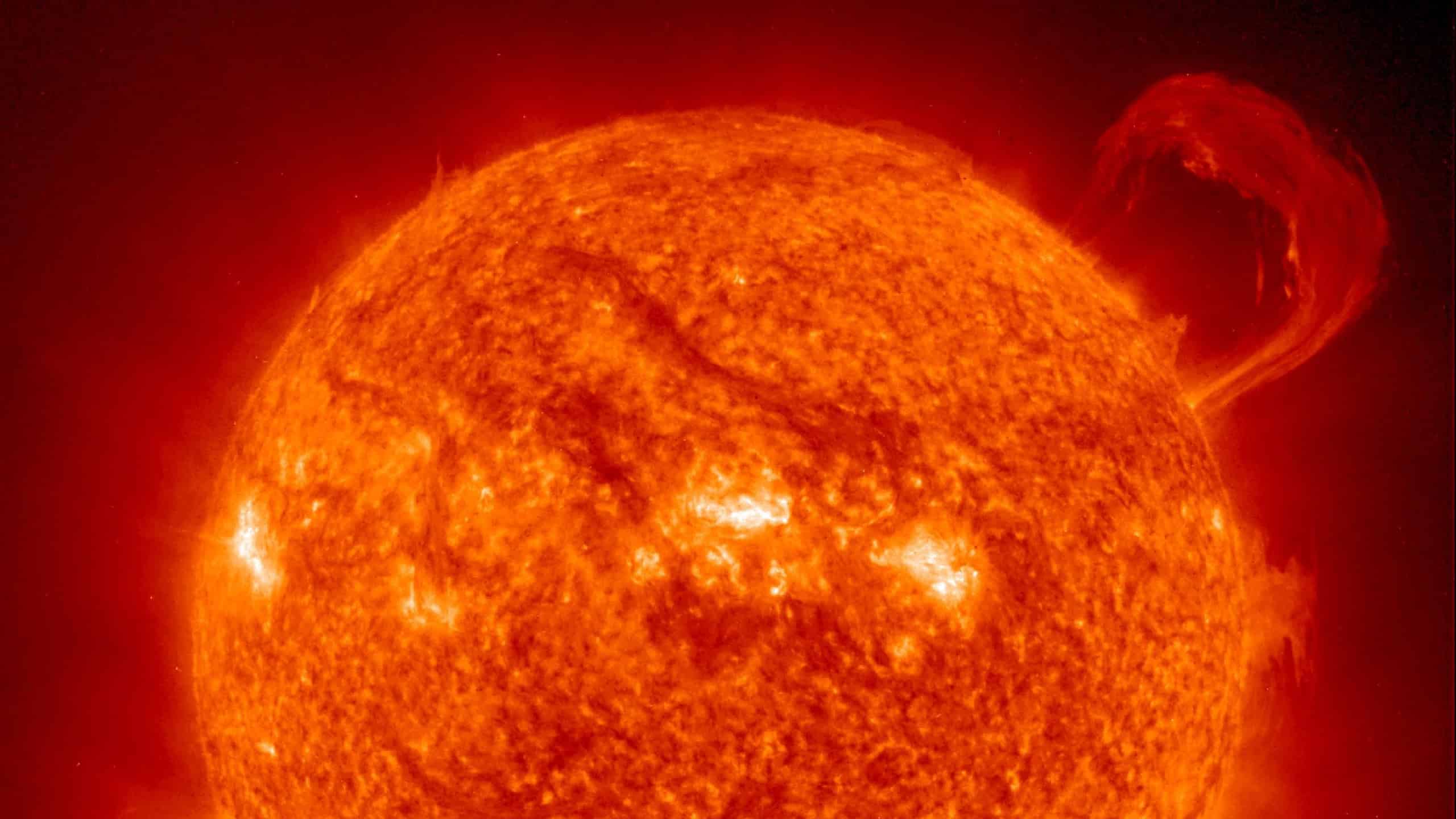
The Sun derives its energy from nuclear fusion. Researchers have been trying for decades to harness this process on Earth. © ESA/NASA/SOHO
Temperatures of more than 100 million degrees Celsius are required. Matter must reach this temperature for something to happen on Earth that stars like our Sun have been doing for billions of years: the fusion of atomic nuclei. This process is called nuclear fusion. Researchers have been trying to replicate it on Earth for about 70 years. If this could be achieved in a power plant, nuclear fusion could become a new source of energy for humanity in the future. This process could generate a great deal of energy from a comparatively small amount of fuel.
“We’re bringing the sun to Earth,” says Dutch fusion researcher Tony Donné. At the “Future Day: Nuclear Fusion” event at the Fraunhofer Institute Center in Dresden, he speaks to scientists and representatives from politics and Saxon companies. He particularly wants to inspire the latter with the idea of nuclear fusion. His image of the sun illustrates this idea well. But it also oversimplifies it.
Conditions on Earth are very different from those in the sun. Up there, the enormous gravitational force ensures that the atomic nuclei come close enough together to fuse. On Earth, this pressure is lacking. For fusion to work down here, the plasma – a gas of charged particles – must be heated to more than 100 million degrees Celsius.
The long road to a power plant
Over the years, research has moved step by step closer to this goal. Nuclear fusion has already been achieved in experiments. In 2022, researchers at the National Ignition Facility laser research facility in the U.S. succeeded for the first time in releasing more energy during fusion than had previously been transferred to the fuel. At the end of 2023, the European experimental nuclear fusion facility JET in Oxford generated a total of 69 megajoules of fusion energy.
But such an experiment is still a long way from becoming a power plant. For the process to eventually produce large amounts of electricity, several technical solutions still need to be developed. Tony Donné has been working on this topic for 40 years. For ten years, he headed EUROfusion, the European consortium for fusion research. Nuclear fusion is “the Holy Grail,” he says. “If it works, we’ll solve a major energy problem.”
But fusion research is changing in the meantime. “Until 2020, fusion was really just the domain of public research institutes,” says Donné. Since then, numerous private companies have joined the effort. They’re bringing new ideas to the table and could accelerate development – including from Saxony.
Now engineers are in demand
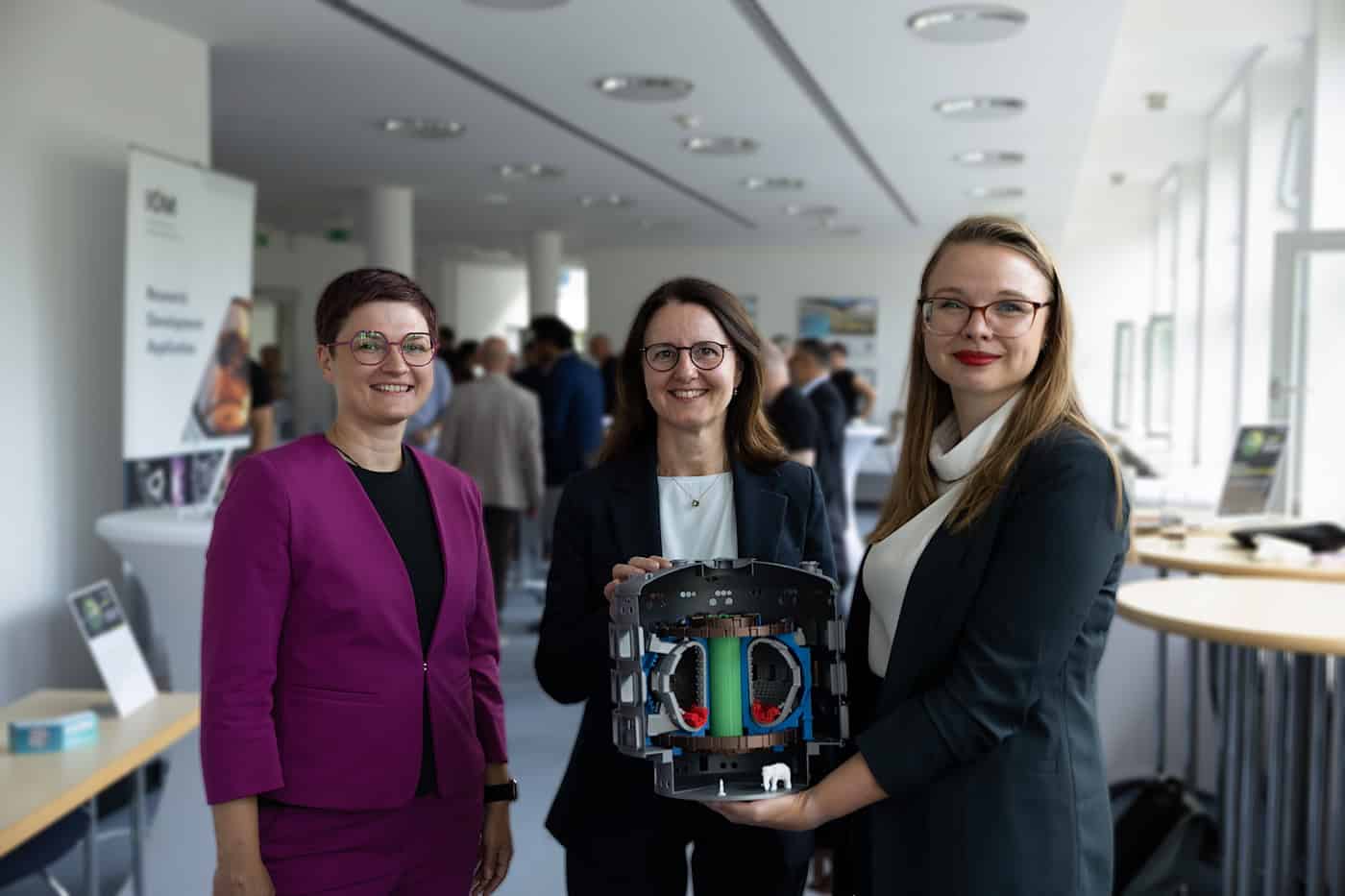
In Dresden, Claudia Keibler-Willner and Moritz Greifzu are among those who want to drive this next step forward. Neither of them originally came from the field of fusion research. Keibler-Willner is a mechanical engineer who studied production engineering. Greifzu is an aerospace engineer who works on manufacturing processes at the Fraunhofer Institute for Materials and Beam Technology (IWS). Today, both are working to bring together research and industry for nuclear fusion.
A glance at a future fusion power plant reveals just how many different specialists are needed for this endeavor. “There are a great many sub-technologies in fusion that must interact and work together,” says Keibler-Willner. This is where SAXFUSION comes in. The Saxon research network brings together experts from research and industry. It is coordinated by the Helmholtz Center Dresden-Rossendorf (HZDR) and the Fraunhofer IWS. Keibler-Willner coordinates the network at the HZDR, while Greifzu contributes to the effort on behalf of the Fraunhofer IWS.
In many planned fusion power plants, two forms of hydrogen are intended to serve as fuel. They are called deuterium and tritium. For their nuclei to fuse, they must come very close to one another. Under extreme heat, they move so fast that this process occurs. This creates a new atomic nucleus – helium – and releases energy. This energy can be converted into heat and ultimately into electricity.
One challenge, explains Keibler-Willner, is controlling this extremely hot plasma under Earth-based conditions. There are various approaches to this. One is magnetic fusion. In this process, strong magnetic fields keep the hot plasma away from the walls of the facility. This approach is being pursued, for example, by ITER, an international experimental facility currently under construction in southern France. Laser fusion works differently. Powerful lasers target a tiny capsule containing deuterium and tritium. The fuel inside is compressed and heated intensely for a very brief moment. At that moment, the atomic nuclei can fuse together.
Saxony’s expertise in fusion
But a fusion power plant requires far more than just the technology to fuse atomic nuclei. It needs materials that can withstand extreme stresses. And processes for manufacturing components or measuring instruments. This is precisely where Greifzu sees an opportunity for Saxony. “Ultimately, the power plants have to be built,” he says. Much of the expertise needed for this is already available in the Free State. “We have companies with extensive expertise in metalworking, manufacturers of scientific equipment, and firms involved in hydrogen technology.” In addition, there are research institutions working on materials, lasers, simulations, and new manufacturing processes. SAXFUSION aims to identify which of these areas of expertise can be leveraged for nuclear fusion and to connect the appropriate partners.
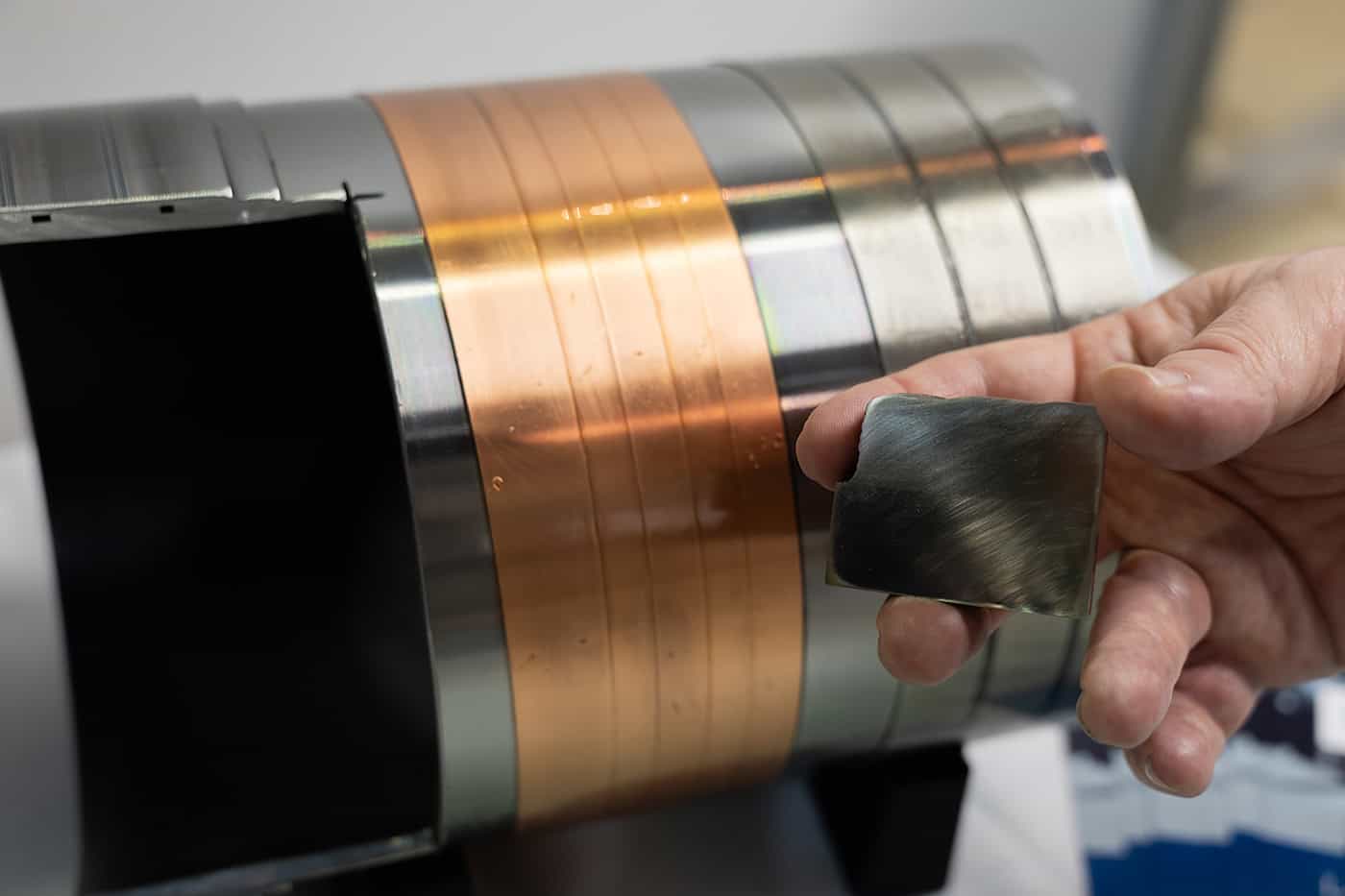
After all, a solution that works in an experiment is by no means guaranteed to be suitable for a power plant. To make it work, components must later be manufactured in large quantities – and at reasonable costs. For experiments, components can be manufactured using complex processes or expensive materials. “If I end up needing over a million of these later on, it’s just going to get too expensive at some point,” adds Greifzu.
How much longer will it take?
Both are aware that it is far from certain whether this path will actually lead to fusion power plants. “Nuclear fusion is a very visionary idea,” says Greifzu. There are legitimate critics who consider the technology too complicated or doubt that it will work. “That’s exactly what motivates me.” After all, research could lead to more than just a new energy source. Other technologies could also benefit from it. “So many things can come out of this that will move us forward.”
Claudia Keibler-Willner shares this sense of uncertainty. “In the end, no one knows what the outcome will be. There’s no guarantee.” Nevertheless, she enjoys working passionately on nuclear fusion. “It just gives me the feeling that I can do something for the next generation.”
Tony Donné recalls an old joke from the world of research. When asked when the first fusion power plant will go online, the answer has been the same for decades: in 30 years. But he’s become more optimistic in the meantime. “I’d say we’re now talking about 15 or 20 years.” And maybe it will even happen sooner.