
Into the unknown with your own expertise
The company ALOtec Dresden is not a fusion expert. Nevertheless, ALOtec is now involved in several research projects for future fusion power plants. A first-hand account.
Read Aloud
0:00
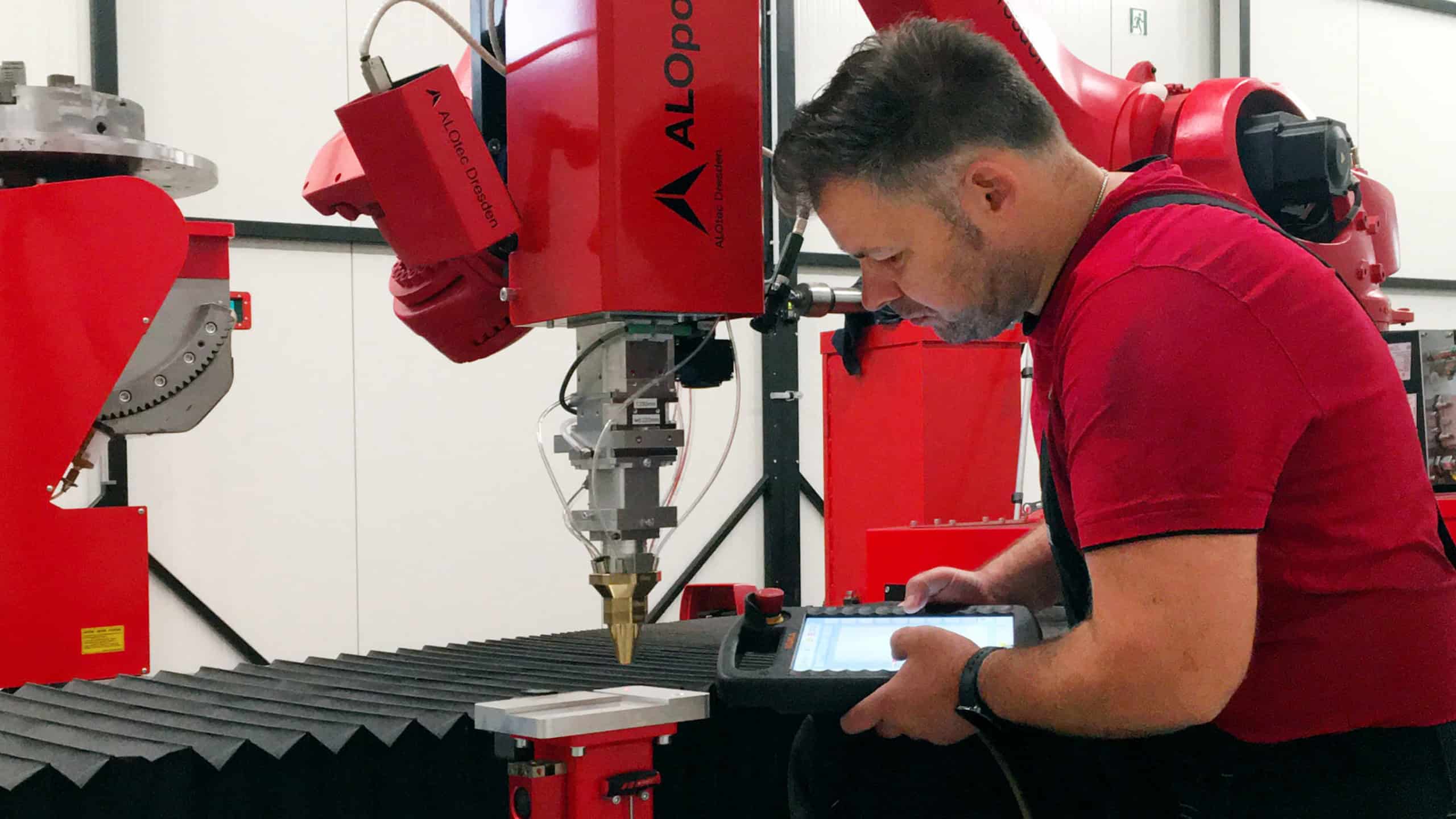
The company ALOtec Dresden is contributing its expertise in laser technology to several research projects for future fusion power plants. © ALOtec
Nuclear fusion sounds like rocket science. It brings to mind experiments, large-scale research facilities, and pretty complicated equations. Any company that wants to get involved in this field has to be thoroughly familiar with all of that. At least, that’s what one might assume. Clemens Kuhn disagrees. “I’m still no expert in nuclear fusion – and far from it,” says the managing director of ALOtec Dresden GmbH. Nevertheless, the Kesselsdorf-based company is now involved in several nuclear fusion research projects.
The company brings something else to the table – more than 25 years of experience. The company builds systems that process metal components using lasers. In laser hardening, the surface is selectively heated to make it more durable. In laser cladding, additional metal is applied, for example, to repair worn components or modify their surface.
A phone call leads to nuclear fusion
For a long time, ALOtec had little to do with nuclear fusion. That changed about two years ago. Through an existing contact, Kuhn came across a research project. The project was seeking a solution to a problem that could play an important role in future fusion power plants. “Our mobile plant technology was a good fit,” says Kuhn.
The ISEGRIM research project focuses on components that are directly exposed to the extremely hot plasma in a fusion reactor. These so-called plasma-facing components, or PFCs for short, are made of tungsten, among other materials. Over time, this heat-resistant metal is eroded.
The project partners, including the Jülich Research Center and the Fraunhofer Institute for Production Technology IPT in Aachen, therefore aim to develop a process for repairing such components. Instead of replacing them entirely, a laser will be used to deposit tungsten back onto the surface. The process will first be developed and tested. “The goal is to end up with a concept that can later be integrated into a fusion power plant,” explains the ALOtec managing director.
For him, this marked the beginning of a new world. But he quickly realized that the knowledge from his previous business couldn’t simply be transferred one-to-one. A project like this draws on the expertise of many people. “Whether a research institution or a company, each partner contributes a different piece of the necessary knowledge.”
Every system is different
However, this way of working isn’t entirely foreign to ALOtec. The company, with about 20 employees, doesn’t simply sell the same machine over and over again. “Every system is different because every customer has different requirements.” In nuclear fusion, these requirements are no small matter. For example, systems and components must function under vacuum. Added to this are very high temperatures and materials that are difficult to machine. Tungsten is one such challenging material.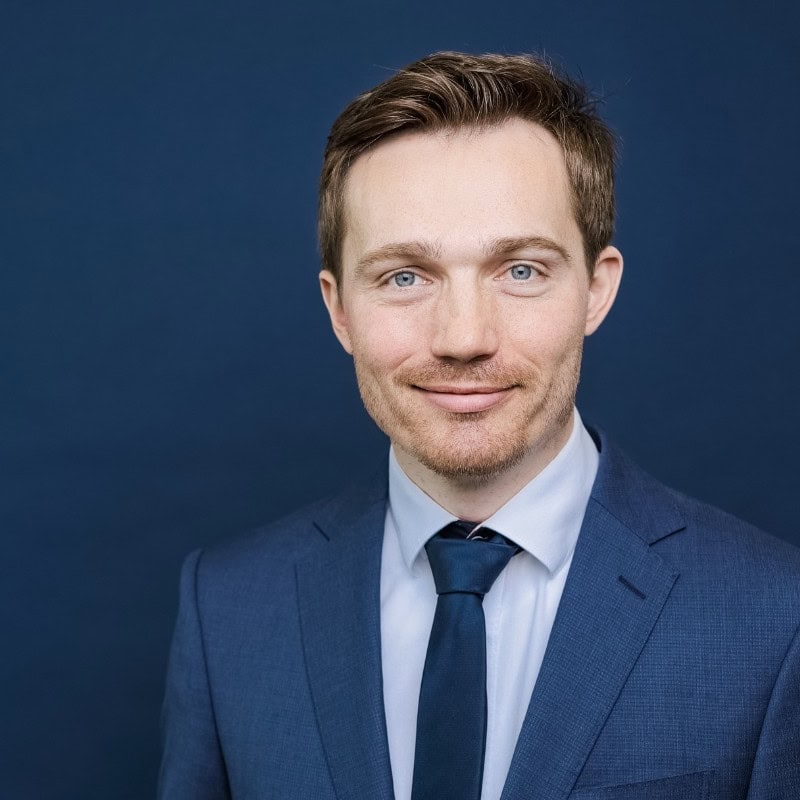
ALOtec has since taken another step forward. The company is collaborating with the Fraunhofer Institute for Materials and Beam Technology (IWS) in Dresden and other partners on the AM-SHIELD research project. This project focuses on new materials and manufacturing processes for components of future fusion reactors. ALOtec leads the consortium of companies and research institutions and coordinates the collaboration.
Kuhn also sees this as a message to other small and medium-sized enterprises. At first, nuclear fusion might seem like rocket science. “They shouldn’t let that deter them.” The key, he says, is to be aware of one’s own capabilities. “What is my niche, the area where I traditionally operate? What are my core competencies, and how can I apply them to the field of fusion?”
It won’t work without courage
The answer to that isn’t always obvious. That’s why Clemens Kuhn recommends reaching out to research institutions and networks like SAXFUSION. There, companies can learn which problems remain unsolved. And then assess whether their own knowledge can help find a solution.
However, this also requires courage and a willingness to engage with a market that doesn’t yet exist in this form. No fusion power plant in the world is currently generating electricity. It remains to be seen when – and if – this will develop into an economically significant market. For Kuhn, getting involved is therefore a strategic decision. “As a company, you don’t have to reinvent yourself right away,” he says. “Those who gain experience early on can have a head start if nuclear fusion does indeed become a market.”
ALOtec therefore intends to remain committed to this field. Kuhn doesn’t need to become a fusion researcher to do so. For him, something else is crucial: knowing what his own company does particularly well. “And exactly where that expertise is needed.”