
"When political opponents become enemies, we have a problem"
Four out of five respondents believe Germany is divided. This is shown by the 2026 Polarization Barometer. An interview with Dresden-based political scientist Hans Vorländer.
Read Aloud
0:00
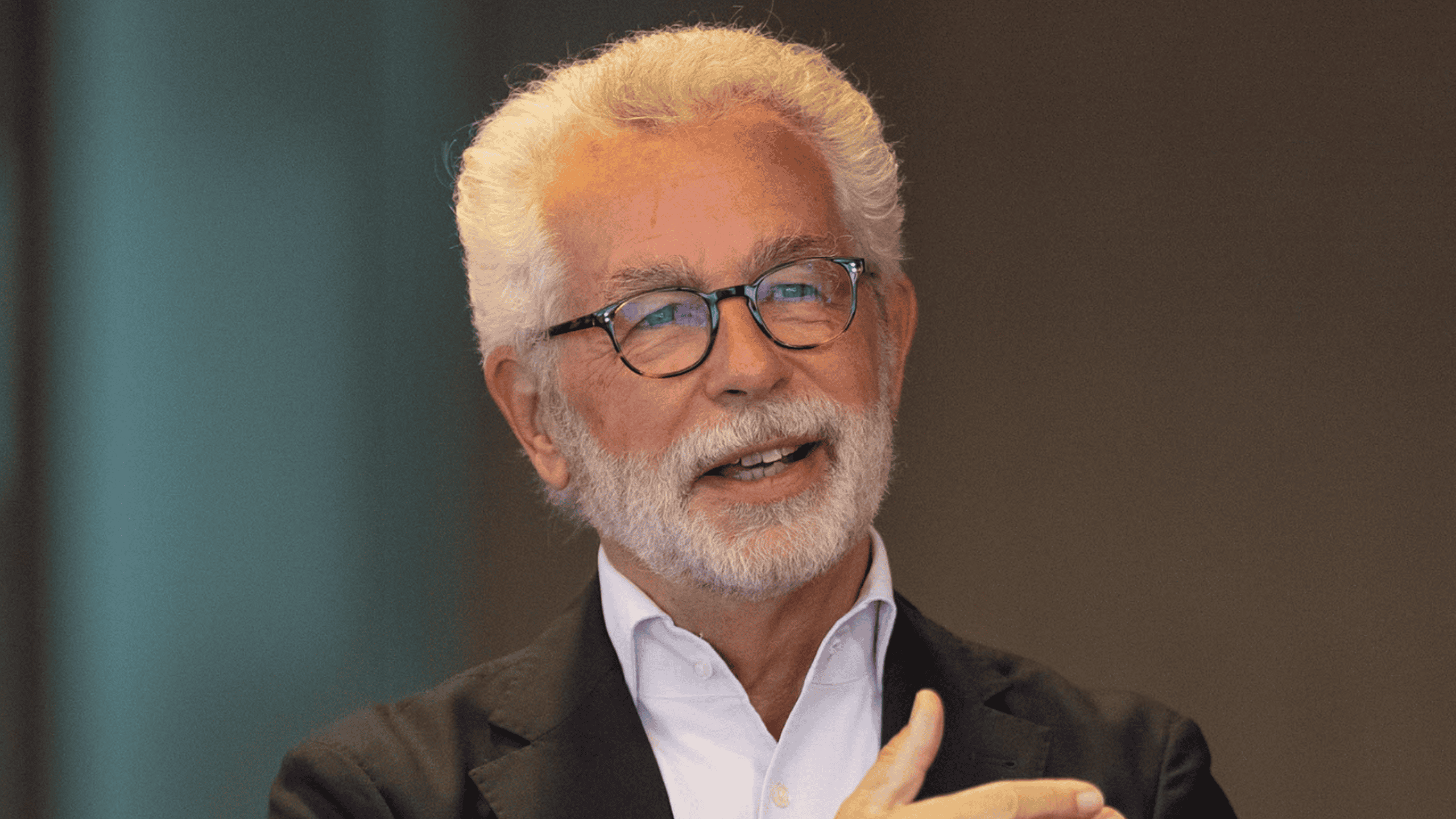
Hans Vorländer, a political scientist from Dresden, is a co-author of the 2026 Polarization Barometer. © TK/dpa Picture-Alliance/Ronald Bonss
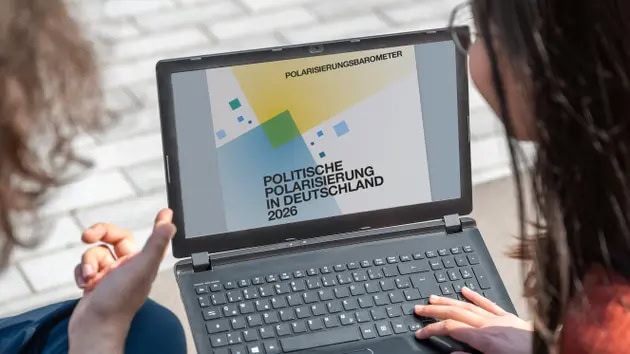
How widely do political opinions differ in Germany? And how do people view those who disagree with them? For the 2026 Polarization Barometer, a research team from the Technical University of Dresden (TUD), in collaboration with the online market research and data analysis firm YouGov, surveyed approximately 19,700 people in eight EU countries – including nearly 2,800 from Germany – for the second time. The survey focused on 15 controversial political issues. In an interview with Wissensland, study author Hans Vorländer from the Mercator Forum on Migration and Democracy (MIDEM) at TUD discusses the findings.
Professor Vorländer, on no other topic in your study is the mutual rejection between the different camps as pronounced as it is regarding support for Ukraine. Why is this the case with this issue in particular?
The survey alone cannot explain why this is so. To do that, one would also have to look at how the public debate is unfolding. Continued support for Ukraine still enjoys broad backing. We see that in the data. At the same time, positions on the fringes have become more polarized, especially among those who advocate closer ties with Russia. The camps are drifting apart, and mutual rejection of the other side is very pronounced. Until now, this emotional rejection was strongest on the issue of immigration. Now it’s the Ukraine issue.
On the Ukraine issue, the polarization in Germany is stronger than in all other countries surveyed, including Poland. How do you explain that?
That, too, cannot be answered directly from the data. In Germany, the public debate over support for Ukraine has gained momentum. Some may fear that Germany is spending too much money on this or that it further jeopardizes peace in Europe. Others see Ukraine as a country that is also defending Europe’s freedom and the sovereignty of European states. In Poland, the threat from Russia is perceived as more immediate. In my view, that is one reason why support for Ukraine is stronger there.
There has also been a shift regarding the issue of integration. More respondents expect immigrants to adopt German culture and way of life. Do you know what people mean by that?
We cannot tell from the answers what individuals mean by that. In Germany, we use a question that is also asked in other countries. Respondents can state their position on whether learning the language and abiding by the law are sufficient for successful integration. Or whether they also expect immigrants to adapt to the culture and way of life. This broader expectation has grown stronger.
Opinions differ when it comes to the understanding of integration. Nevertheless, the camps are relatively close in their views. What could be the reason for this?
Possibly because we talk much less frequently in public about what constitutes successful integration. The debate focuses much more often on the question of whether immigration should be limited. How a topic is discussed in public plays a key role in how polarizing it becomes.
Polarization has decreased in the controversy over rainbow flags in public spaces. Have people changed their minds on this issue, or are they judging the opposing side more leniently?
Both are possible. We cannot explain from the survey why the issue is less polarizing. It may play a role whether there is currently a specific occasion to argue about a rainbow flag – because it was hung somewhere or taken down. At the time of the survey, this issue was apparently less prominent. Questions about the economy, income redistribution, and immigration seem to be of greater concern to people. The debate over such value-based issues seems somewhat secondary at the moment.
83 percent of respondents believe society is divided. What does this figure tell us?
It shows how respondents perceive society. We asked them whether they believe society is divided. At the same time, we see that on certain issues, opposing camps of opinion have been locked in a standoff for years. These include immigration and climate protection. The Ukraine issue also has a particularly strong divisive effect.
This was the second wave of the survey; a third will take place next year. What happens with the results? Who can and should work with them?
We hear from local governments, administrative bodies, churches, and other interested parties. They want to know more precisely how these conflicts are unfolding and what they can do at the local level. We also collaborate with civil society initiatives and have long been in dialogue with people who are active in local communities or neighborhoods. In my view, what matters in political and media debates is discussing contentious issues more objectively and treating people with different views with respect.
When does a political dispute become a problem for democracy?
Disagreement is part of democracy. We need clear distinctions between the positions of political parties and politicians. At the same time, we must be willing to reach understanding and make compromises. When political opponents become enemies, then we have a problem. Anyone who treats those with differing views with anger, incitement, or hatred makes mutual understanding very difficult. For me, that’s the tipping point. When respect for those with differing views is lost, it endangers democracy.
The Polarization Barometer at a glance
- Support for Ukraine is the most divisive issue. This is where opinions diverge the most and the camps are most at odds. 54.1 percent want to continue supporting Ukraine and distance themselves further from Russia. 28.8 percent want closer ties with Russia. This group has grown slightly smaller. However, the share of all respondents who most clearly advocated for closer ties with Russia rose from 13.7 to 17.3 percent.
- 83 percent believe society is divided. About a quarter see it as very deeply divided. East Germans, people with right-wing political views, those sympathetic to the AfD, and people with low incomes are particularly likely to perceive this division. Across all 15 topics, there is no general increase in polarization.
- More respondents expect cultural assimilation. 47 percent expect immigrants to adopt German culture and way of life (up seven percentage points). For 39 percent, knowledge of German and compliance with the law are sufficient. The two camps are comparatively less at odds with each other.
- The influx of foreign skilled workers is more controversial. 56 percent want to make it easier (2025: 61 percent). Opposition rose from 23 to 27 percent.
- On climate protection, the two camps in Germany are furthest apart. This holds true for all three climate-related questions when comparing the eight EU countries. 43 percent consider the measures insufficient, while 37.8 percent consider them too far-reaching.
- 52 percent want higher defense spending. 23.4 percent want to reduce it. The polarization is decreasing, but those who want to spend less view the opposing side more negatively than in 2025.
- The controversy over rainbow flags is losing its intensity. This is the only issue where both polarization and mutual rejection have declined significantly. In 2025, rejection predominated; today, approval (31 percent) and rejection (30.1 percent) are almost evenly split.
The detailed study results are available here.