
Even young children want to belong
How does a sense of togetherness develop? Even children help their group and make sure others follow the rules. Psychologists in Leipzig believe there is a deep-rooted need behind this.
Read Aloud
0:00
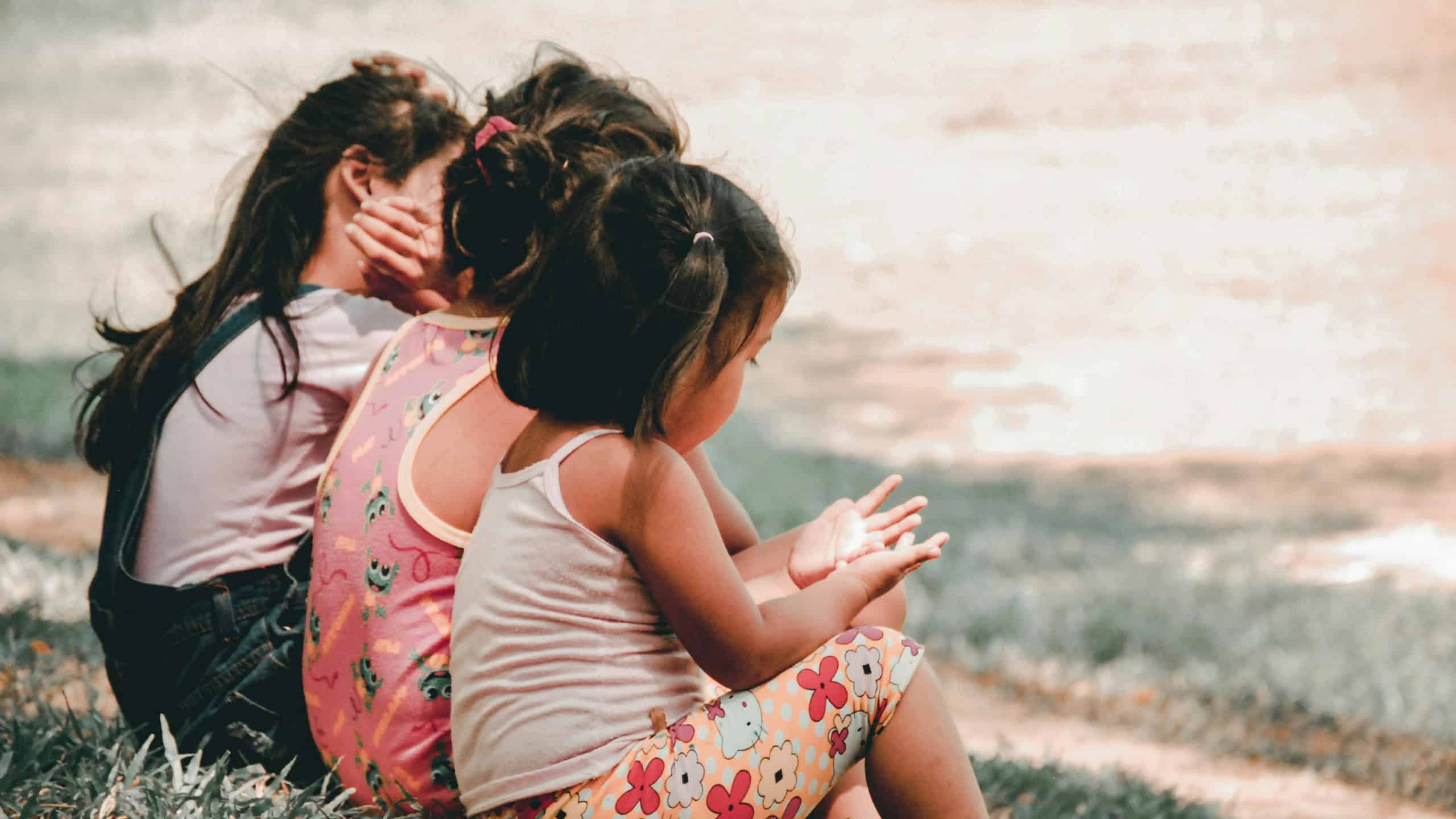
Even at preschool age, group membership influences whom children help and with whom they share. Psychologists in Leipzig are searching for the evolutionary origins of this sense of belonging. © Charlein Gracia/Unsplash
One moment they were playing together, but then the doll suddenly leaves, leaving the child alone. Even three-year-olds think that’s mean. In a 2019 study, children protested more strongly when the doll – their playmate – left the game without warning. If the doll announced beforehand that it was leaving, the reactions were less intense.
Experiments like these show how early children begin to form expectations regarding collaborative behavior. Belonging to a group also influences their behavior from an early age. But why is this sense of “we” so important to us? Psychologists at the University of Leipzig are searching for explanations in human history.
Better odds for group member
Humboldt Fellow Dr. Leon Li and Assistant Professor Dr. Sebastian Grüneisen, together with Michael Tomasello of Duke University, compiled findings on great apes and children. From this, they developed a theory of social identity. By this, they mean the sense of belonging to a group.
In a recently published academic article, the authors describe two stages of development. Even our early ancestors first learned to cooperate primarily with people they knew well. For example, when they searched for food together. Later, however, larger communities emerged. In these communities, not everyone knew each other personally.
The researchers speculate that this transition occurred around 130,000 years ago. As groups grew larger, competition for resources intensified. According to the scientists’ theory, those who cooperated and coordinated their efforts may have had an advantage.
Genuine conviction or concern for one’s reputation?
For the individual, this brought about an important change. Anyone who wanted to survive had to belong to a group. The authors therefore speculate that this gave rise to the desire to live up to the expectations of one’s own community. Humans’ earliest sense of belonging would thus have been linked to the desire to be a good member of the group.
The researchers also see evidence of this in child development. Even four- to five-year-olds in experiments already show a preference for their own group, even when it is defined solely by the color of their clothing. They are more likely to help or share with members of their group. In some cases, even three-year-olds ensure that their own group adheres to shared rules.
For their study, the authors reviewed existing research to find an explanation. No new experiments were conducted. The behavior of today’s children allows us to infer the development of our ancestors only indirectly.
The scientists encourage further testing. Important aspects regarding the emergence of a sense of “we” remain unclear. For example, to what extent do personal beliefs and concern for one’s reputation influence children’s behavior? This could be investigated, for instance, in situations where no one is directly watching. Future studies should also take the children’s cultural background into account to a greater extent.
Original publication:
Leon Li, Sebastian Grueneisen, Michael Tomasello; Evolutionary foundations of social identity. Phil. Trans. R. Soc. B November 10, 2026; 381 (1962): 20250157.