TU Dresden aims to generate energy from nuclear waste
TU Dresden plans to build an experimental reactor in Saxony to test whether spent nuclear fuel can be reused. Could the process make a permanent repository for nuclear waste unnecessary?
Read Aloud
0:00
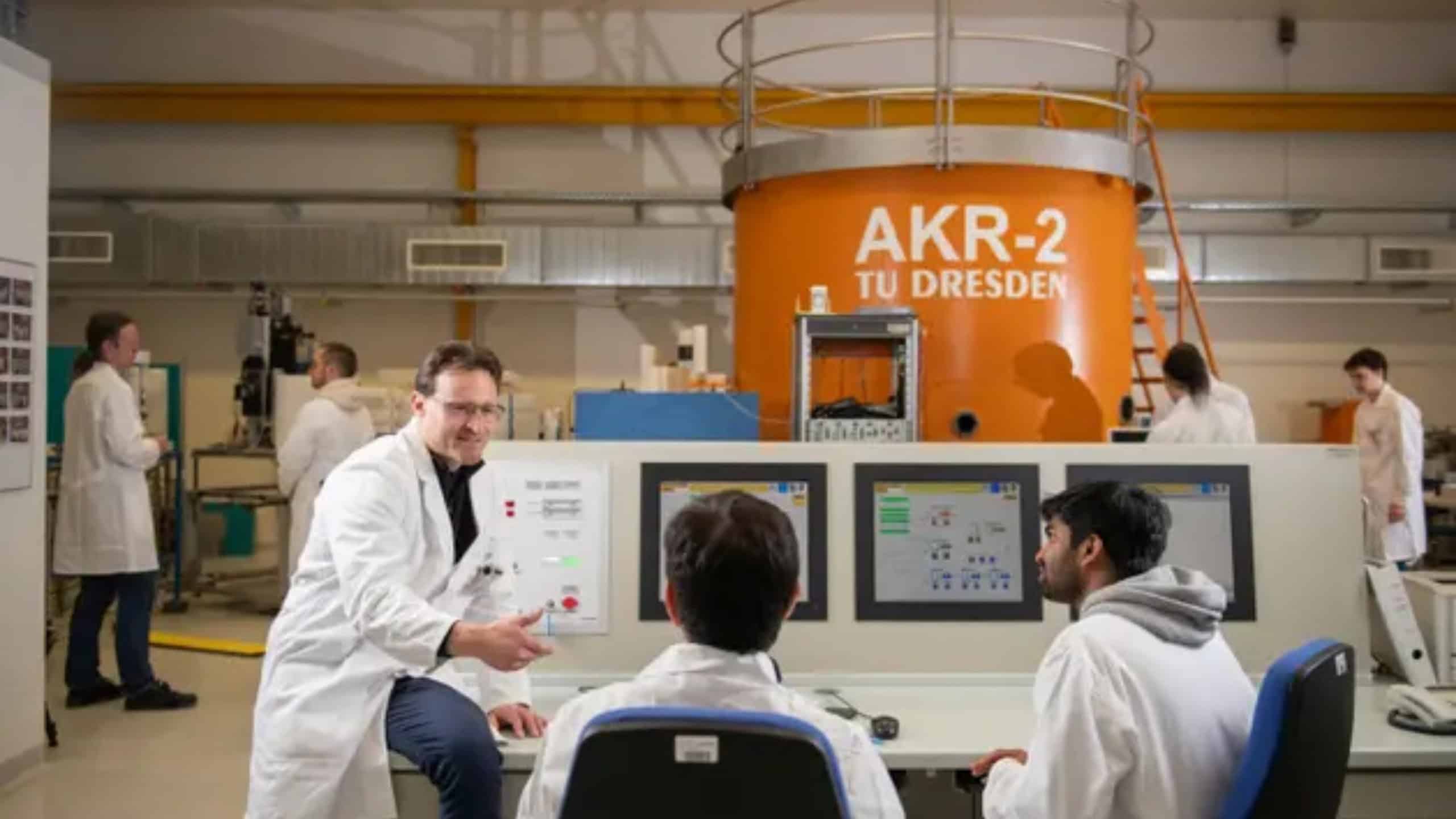
The TUD's AKR-2 training reactor also played an important role in the feasibility study for the planned DEMO test reactor. © Sven Ellger/TUD
In April 2023, the last three nuclear power plants in Germany were taken offline. The spent fuel assemblies from 60 years of nuclear power generation are now stored in interim storage facilities. The country is currently searching for a site for a final repository for nuclear waste. It will take decades before one is found.
The Technical University of Dresden (TUD) is now proposing a different approach to handling the waste. In a new experimental reactor, it plans to test whether long-lived radioactive materials from the fuel assemblies can be reused to generate energy.
In today’s nuclear power plants, the fuel is contained in solid rods. It provides the energy for the reactor. When its atomic nuclei are fissioned, heat is generated. In the planned Dresden experimental reactor, the fuel is to be dissolved in molten salt. To this end, TUD plans to use spent fuel rods and radioactive waste that has already been encapsulated in glass for safe storage.
Normally, during reprocessing, the materials in old fuel rods are chemically separated from one another. The Dresden researchers intend to dispense with this process. In a recent press release, they leave open how they plan to prepare the waste for the reactor instead.
Three possible sites in Saxony
The new reactor, called DEMO, is based on transmutation. In this process, tiny neutrons split long-lived atomic nuclei. This process generates heat. The products resulting from this process also remain radioactive. However, according to the TUD’s concept, they are expected to decay more quickly than their source materials. The researchers also intend to use the facility to produce radioactive substances for medicine and technology, known as radionuclides.
The experimental reactor is designed for up to 50 megawatts of thermal power and 20 years of operation. According to the press release, possible locations for it include the research campus in Dresden-Rossendorf, as well as Schwarze Pumpe and Boxberg in Lusatia. Five years are planned for development and construction. Approximately 1.95 billion euros in public funds would need to be invested for this purpose. The research team compiled all of this information for a feasibility study, which also incorporated work on TUD’s current training reactor, the AKR-2.
Could Germany do without a final repository?
According to their study, the researchers believe it is possible that, with their approach, Germany could dispense with the need for a final repository for nuclear waste in accordance with current legal requirements. The Federal Office for the Safety of Nuclear Waste Management has reached a different conclusion regarding the transmutation processes examined so far. According to its assessment, highly radioactive waste remains that requires a final repository.
For the Dresden approach, therefore, the decisive factors are what waste actually remains after treatment and how it can be stored safely. DEMO is intended to first demonstrate whether the process works in a laboratory setting. The TUD cites commercial power plants starting in 2045 as a possible future scenario. However, this would require an amendment to the Atomic Energy Act.
According to TUD estimates, nuclear waste still holds an energy potential equivalent to about 300 times Germany’s annual electricity consumption. It remains to be seen how much of this can actually be utilized. Should the process prove successful, the university also sees it as an economic opportunity for Saxony. Companies from the region could take on a leading international role in the development of such reactors and sell the technology abroad.