A call to Carla: Startups with new ideas for old problems
AI answers calls, uncovers hidden knowledge, and speeds up calculations. Three startups show how this technology is being integrated into everyday work.
Read Aloud
0:00

All it takes is a phone call: Carla, the AI voice, guides customers of the van rental company "Carl & Carla" through the process of returning their rental vehicle. © Vitaly Gariev/Unsplash, PR/Carl&Carla, Collage: ChatGPT
Carla likes things clean. She wants to know if the car has been swept out and is free of debris. Anyone who answers “yes” to this question and has also turned off the lights and the radio can put the car keys in the glove compartment and close the doors. Carla then locks the car. All without a key and from a distance. Her voice can only be heard over the phone. When she has to, she talks on the phone with dozens of people at once who want to return their rental cars. No one has to wait. Carla can do that. She isn’t a person – she’s an AI.
Marvin Matthes and his colleagues at Impact Labs in Dresden have, so to speak, brought Carla to life. The van rental company “Carl & Carla,” founded in Dresden and now operating throughout Germany, asked them for help. “Especially in the evenings, many people return their rental vehicles, and the call center was extremely overloaded,” Matthes explains, describing the challenge. The return process needed to be automated.
For tasks like this, Impact Labs developed ILAI, an AI agent for customer service. The founders conducted research for years at HTW Dresden. “The speech technology for ILAI stems from research on robots in the care sector, which we helped develop there,” he explains further. In that context, speech recognition must work even under difficult conditions. ILAI is therefore designed to understand people who speak unclearly, with a strong dialect, or in a noisy environment.
Carla is based on this technology. A single phone call is all it takes to initiate the return process.In doing so, she draws on knowledge that “Carl & Carla” have accumulated over the years through contact with customers. Did real people at the call center have to leave their jobs to make way for the artificial Carla? Matthes says no. “Carla handles routine returns; if there are problems, she forwards the call to the call center.” However, the workload there is no longer as heavy as before, and customers are no longer stuck on hold.
Unlocking valuable knowledge
Meanwhile, the Leipzig-based company Prodlane GmbH is managing a veritable treasure trove. The immense knowledge of industrial companies lies in technical documentation, reports, and databases. Much of it, however, exists only in the minds of experienced employees. For Mathias Jakob, co-founder of Prodlane, this scattered knowledge is a valuable raw material. “It’s a pile of gold containing very good answers.” If you know where to find those answers.
That’s exactly where MAIA comes in. The Leipzig-based company’s AI-powered software searches through a company’s knowledge, gathers new information, and makes everything accessible through questions. Instead of working their way through folders and reports, employees ask their questions directly to the system. MAIA searches for relevant information and shows which sources the answer comes from.
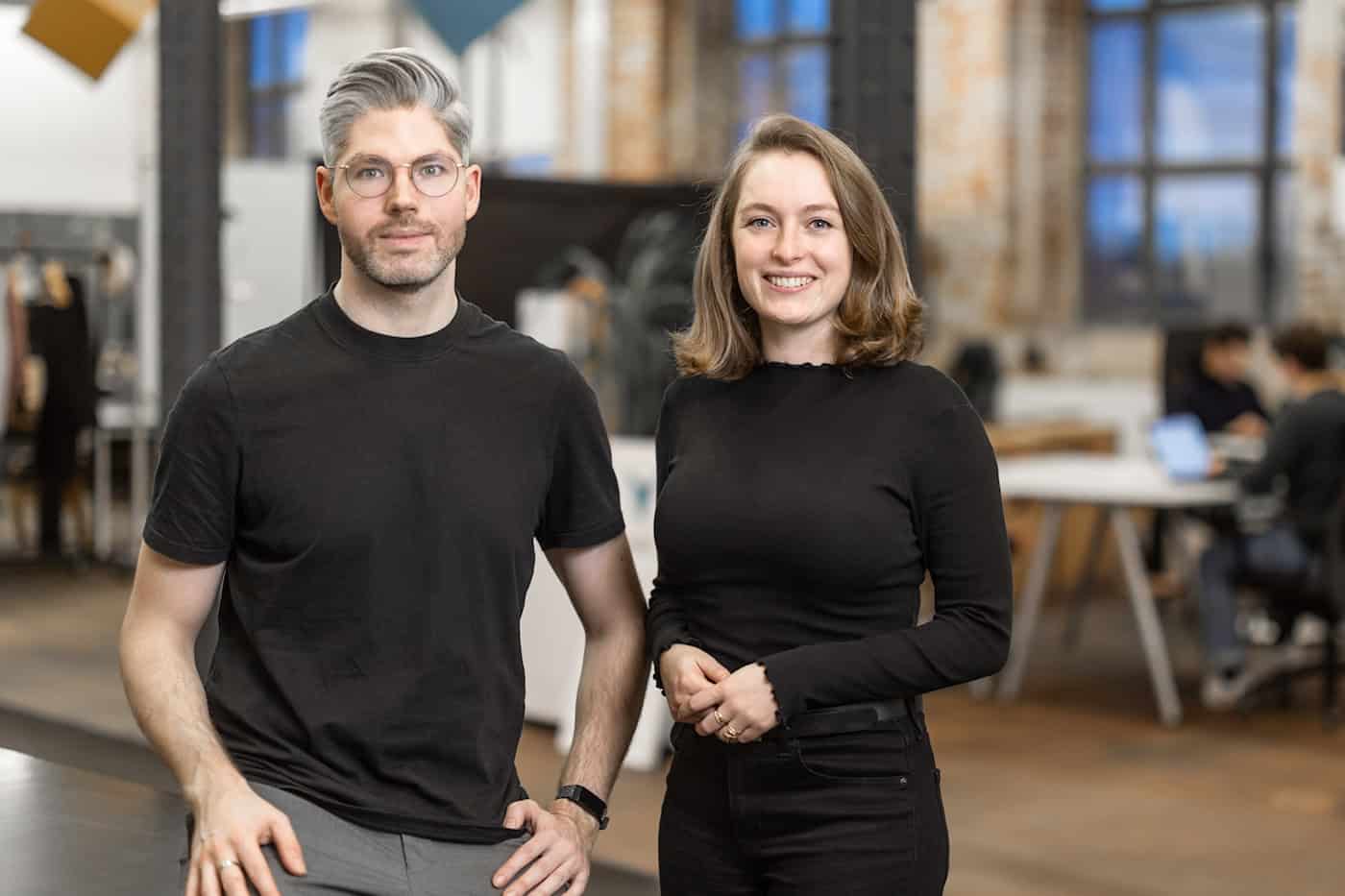
The idea arose from a problem Jakob investigated during his master’s thesis. Employees at industrial companies spend a lot of time searching for product information. According to his figures, this amounts to an average of about two and a half hours a day. In late 2021, he founded Prodlane together with Carolin Maier and Moritz von Hammerstein. Initially, the team developed a central platform where companies could collect their own knowledge. But customers were primarily interested in one feature: AI-powered search within their own data. This led to the creation of MAIA.
According to Mathias Jakob, Prodlane now works with around 30 companies, both large and small. Trust plays a crucial role, especially when it comes to sensitive corporate data. For some time now, he has observed a desire among his customers to be less dependent on major U.S. providers for AI models. The Leipzig-based company therefore plans to rely more heavily on independent European models in the future.
Turning weeks into minutes
Christian Götze keeps a close eye on time. He himself worked in the plastics industry for ten years. He understands the pressure companies face when a request for a new component comes in. Anyone who wants to win an order has to calculate quickly and offer a price that’s as low as possible compared to the competition.
Götze likes to explain just how time-consuming this can be using the example of a bumper. A company receives design data and a specification sheet detailing the requirements for the component. Then the work begins: analyzing data, calculating costs, finding potential suppliers, and obtaining quotes. “In the worst-case scenario, it might take three or four weeks before I get feedback and can send out my quote,” says Götze.
With TOOLPLACE, a company he founded in 2022, the Leipzig-based entrepreneur aims to significantly shorten this process. The proprietary platform automates individual analysis steps for such inquiries, utilizing AI and algorithms to do so. Based on the available project data, companies should be able to generate initial calculations within minutes. As Götze explains, the platform brings together the expertise of a wide variety of specialists in one place.
TOOLPLACE currently has seven employees. According to the company, more than 150 companies from nine countries are already using the platform. So far, it has been used primarily in the plastics industry, but in the future, it’s also expected to be used more extensively for metal components. For the company’s founder, it’s about more than just speed. Especially in situations where a few hours or days can determine who wins a contract, AI becomes a competitive tool. “AI isn’t going away. Anyone who wants to capitalize on its advantages needs to get started now.”